The 6 Best Science Fantasy Books Released Since 2000, Ranked

Sign in to your Collider account
Most people who read fantasy don't really touch actual sci-fi, and most sci-fi readers roll their eyes at swords and prophecies. I get it, mixing the two sounds messy on paper, like nobody bothered deciding what rules the story actually follows. It's an easy genre to be skeptical of before you actually try it.
These six don't bother explaining that either. Some pages read like straight-up magic, then a few chapters later something shows up that's clearly just really advanced tech dressed up to look mystical. Once you stop trying to sort which is which, you just start enjoying the ride. So here are some of the best reads that cover science and fantasy perfectly.
6 'The Book of M' — Peng Shepherd

People start losing their shadows in this book, and along with the shadow goes a piece of their actual memory, sometimes big enough to reshape reality around them. A man forgets his wife exists, and she actually starts fading out of the world because of it. Ory searches for his wife, Max, after she loses her own shadow and runs off specifically so she won't hurt him by accident.
This book still messes with my head months after reading it. Peng Shepherd never explains the actual mechanics behind any of it, there is no science, no spellbook, but a slow, dreamlike apocalypse where forgetting something is enough to unmake it. The plot is more interested in what memory actually holds a person together in the first place.
5 'The City of Brass' — S. A. Chakraborty

Nahri survives as a con artist and small-time thief in eighteenth-century Cairo, right up until she accidentally summons an actual djinn warrior named Dara during a fake exorcism. That single mistake drags her into Daevabad, a hidden city built entirely around centuries of tension between different djinn tribes and the half-djinn population everyone else looks down on.
The book is based on a lot of Cairo and Islamic mythology and S. A. Chakraborty clearly did her homework on the actual folklore behind djinn long before Western fantasy got interested in it. The political stuff hits just as hard as the magic does, actual caste systems, actual generational grudges, nothing here feels invented just to raise the stakes.
4 'The Fifth Season' — N. K. Jemisin
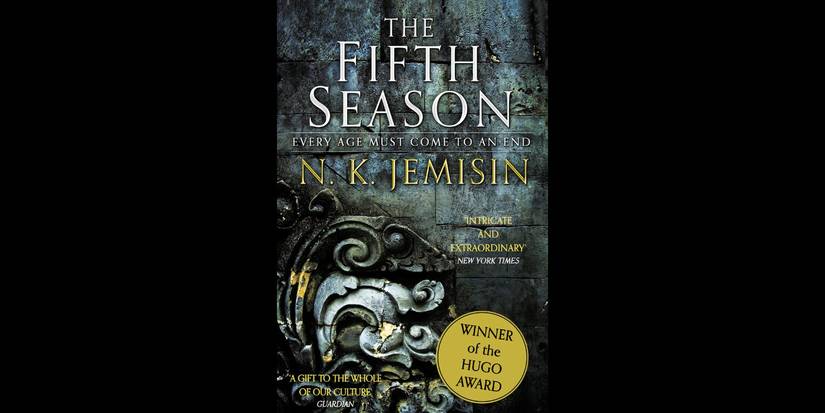
The world in this book gets destroyed on a schedule, catastrophic geological disasters called Seasons that wipe out civilizations every few generations. Some people, called orogenes, can actually control that seismic energy, and the state either enslaves them for it or kills them outright depending on how useful they seem.
It won the Hugo Award for Best Novel three years running, once for each book in the trilogy, a record nobody else has come close to matching. N. K. Jemisin structures the book around three separate timelines that all turn out to be the same woman at different points in her life. The reveal recontextualizes basically everything you thought you understood up to that point.
3 'Gideon the Ninth' — Tamsyn Muir

Gideon, a foul-mouthed swordswoman who'd rather be anywhere else, gets forced into serving as bodyguard to Harrowhark, a necromancer she can't stand. They travel together to a decaying gothic palace to compete against other necromancer houses in a deadly trial, and the two of them barely manage to cooperate long enough to survive the first day.
There's an actual locked-room murder mystery buried inside all the gothic horror and sword fighting, bodies turning up in ways nobody can explain. Tamsyn Muir writes Gideon's voice like she wandered in from a completely different, much funnier book, memes and sarcasm crashing directly into skeleton armies and ancient magic, and the entire tone of it never actually breaks.
Collider Exclusive · 8 Questions · 2 Minutes What Fantasy World Do You Belong To? Middle-earth · Grand Line · The Continent · Camp Half-Blood
Pick your magic, your crew, where you want to wake up and who you would rather be fighting, and we will tell you which world you actually belong in. Four are open to you: an ancient kingdom living through its last good age, an endless sea full of pirates, a continent that pays people to kill monsters, and a summer camp where the Greek gods are extremely real and mostly a nuisance.
💍Middle-earth(Rings of Power)
👒Grand Line(One Piece)
🐺The Continent(The Witcher)
🔱Camp Half-Blood(Percy Jackson)
01
What kind of power do you want? Every one of these worlds runs on a completely different sort of magic.
02
Who is travelling with you? Nobody gets through any of these stories entirely on their own.
03
Where do you want to wake up tomorrow? The best fantasy is usually just somewhere you would genuinely like to live.
04
How are you making a living out there? Even in fantasy somebody has to pay for the horse.
05
There is something in the woods. What do you do about it? All four of these worlds keep something unpleasant out there in the dark.
06
Who is the villain of your story? The enemy tells you far more about a world than the hero ever does.
07
What do you actually believe in out there? Every world hands its heroes one rule and asks them to hold onto it.
08
A thousand years from now, how are you remembered? Eight questions in, this is the one that decides your world.
The Map Is Drawn Your World Is…
Four worlds and four completely different ideas of what a good life looks like. This is where you belong, what it would ask of you, and what you would get back in return.
Middle-earth
You belong somewhere old enough that the mountains have names and somebody can still tell you who gave them. Middle-earth is for people who think the right thing is worth doing even when it will not be finished in their lifetime.
- This is the only world on the list where doing good is understood as a very long defeat, fought anyway, by people who will never see how it ends.
- You are drawn to grandeur, to white cities and deep forges and the sense that almost everything you touch is older than your entire family line.
- The Rings of Power is set in the last good age before it all goes wrong, which gives every quiet scene in it a slightly unbearable weight.
- You would take the hard road, and you would take it on foot.
The Grand Line
You want the sea, a crew, and absolutely nobody telling you where you are allowed to go. The Grand Line is the world for people whose main ambition in life is finding out what is over there.
- One Piece has run for decades on one very simple engine, which is a group of people who each want something impossible and have decided to go and get it together.
- You collect people. Your ideal crew is a set of misfits who were each written off somewhere else before you turned up and offered them a better idea.
- The world is enormous and deliberately ridiculous, and the emotional gut punches land harder because of that rather than in spite of it.
- You would set sail knowing the map runs out, which is more or less the entire point of it.
The Continent
You would rather be feared and useful than liked and useless. The Continent is a world where the monsters are the straightforward part of the job and the people are where it all gets complicated.
- Witchers get paid to do what nobody else will and resented for existing at all, which is a trade most people would refuse and you would probably accept.
- You have no real illusions about which side is the good one, largely because on the Continent that question tends to have a disappointing answer.
- The best of these stories are not about the fighting. They are about somebody with a rigid code being repeatedly cornered into caring about people.
- You would take the coin, finish the job properly, and be out of town before the story got told wrong.
Camp Half-Blood
You want the myths to be real and loose in the actual world, and you want to find out at about thirteen that you were never anywhere near as ordinary as everybody kept telling you.
- Percy Jackson takes the oldest stories we have and drops them into car parks and diners, which makes the gods considerably funnier and a great deal worse.
- You would be the kid every school gave up on, who turns out to have been built for something nobody thought to test for.
- The series is genuinely about friendship rather than destiny, and it says so out loud every time a prophecy tries to get in the way.
- Camp Half-Blood is the real fantasy here: a place where the thing that made you difficult everywhere else is the thing that makes you belong.
2 'Harrow the Ninth' — Tamsyn Muir

The sequel throws out almost everything familiar from the first book, and it is told mostly in second person, which follows a narrator whose own memories have been deliberately altered and erased. Harrowhark barely recognizes pieces of her own story as she tells it, and neither do you, which is clearly the point Muir's making about what grief actually does to memory.
Some readers bounce off this one hard on a first pass, and their reaction is built into the design of the book as well. Once the second read happens, and a second read actually rewards you here, the disorientation starts feeling like the whole emotional argument of the book.
1 'The Spear Cuts Through Water' — Simon Jimenez

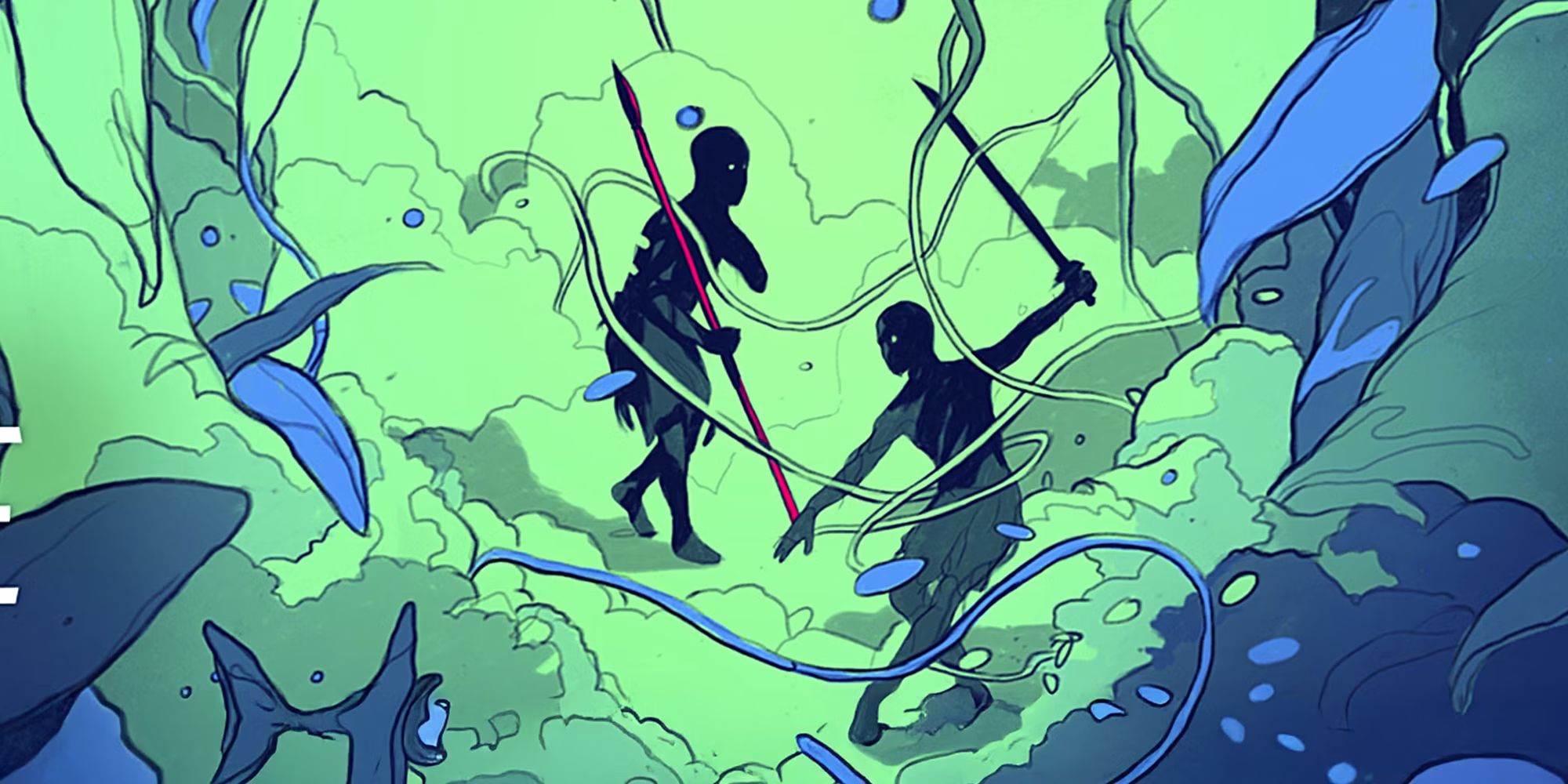
A soldier and a runaway demigod prince end up transporting an imprisoned goddess across a war-torn fantasy landscape, and the whole story gets framed as a myth being told aloud to a grandchild sitting somewhere in the present day. That framing device sounds like a gimmick, but it turns the entire book into something closer to a performance than a straightforward novel.
Simon Jimenez writes it like someone is actually telling this story out loud to a room of listeners, with little interruptions from that audience scattered right into the text. It's about two men falling for each other while smuggling a goddess across a war-torn land, and underneath that, it's also quietly about colonialism and family pain passed down over generations.

The Spear Cuts Through Water
- Author
- Simon Jimenez
- Genre
- Fantasy, Sci-Fi, Romantasy
- Pages
- 525
- Publication Date
- August 30, 2022
KioskNews shows a cleaned-up reading view extracted from the publisher’s page — the original always lives on their site, not ours.