A Clay City Will Rise in Abuja This December to Tell the Story of Nigeria

For five days this December, a hand-built clay city will rise in Abuja, creating an immersive setting where visitors can encounter Nigeria’s cultural heritage not as separate traditions, but as chapters of one shared story.
Carnival of Stories, a new cultural festival, will take place from December 1–5, 2026, under the theme “This Is Nigeria: Chapter By Chapter.” Created by JT Agency, the festival brings together architecture, history, art, and traditional practices in a physical environment designed to let visitors walk through and experience Nigeria’s cultural memory.
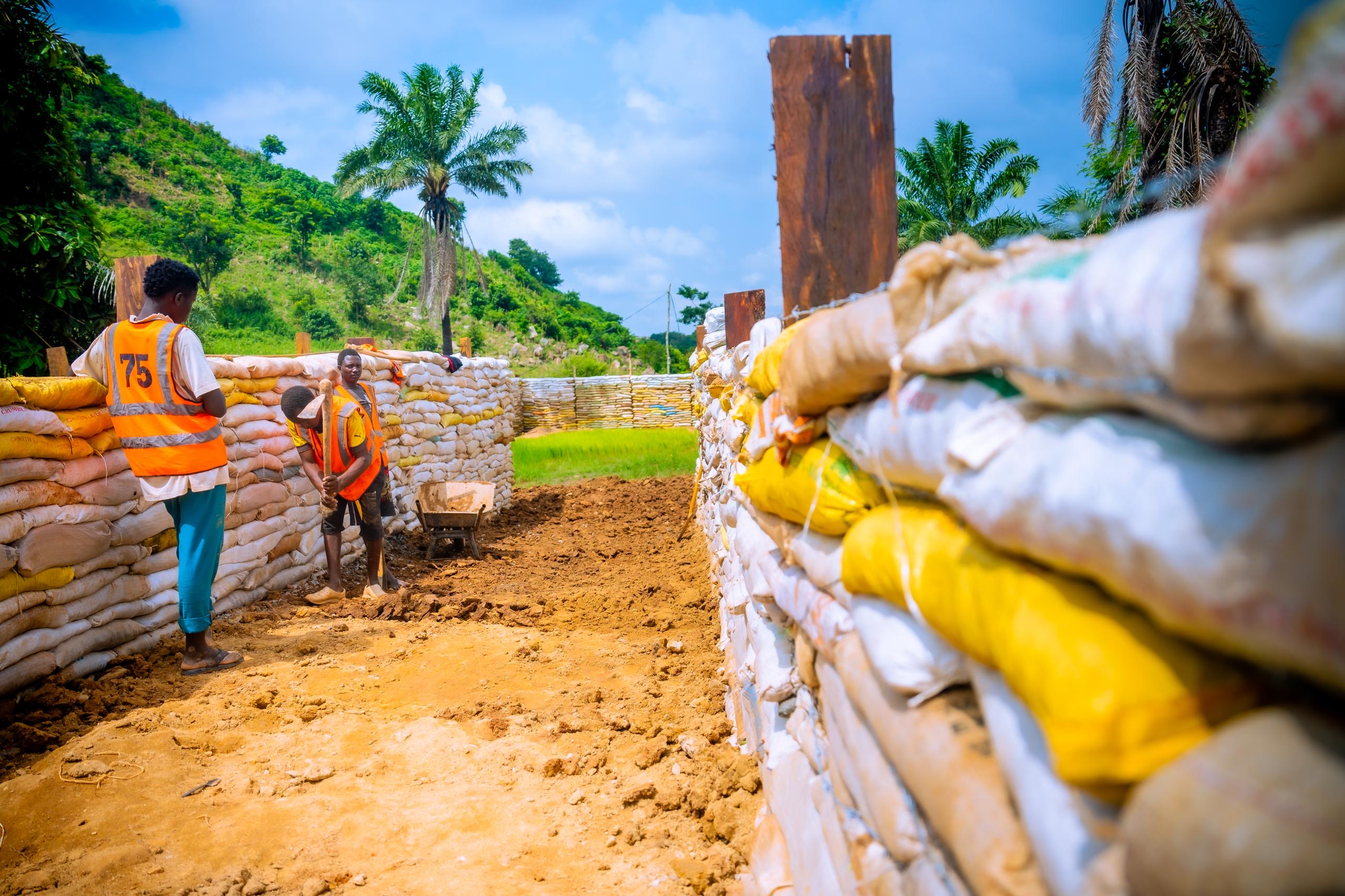
At the heart of the festival is a city of clay, built by hand. Earth has long been used as a building material across Nigeria, and research shows that, when locally sourced and properly designed, it can have low embodied energy and help regulate indoor temperatures. At a time when construction faces growing environmental pressures, these old methods offer useful lessons for how we build today. Carnival of Stories returns to this knowledge not as a recreation of the past, but as a living practice: making, building and passing it on.

The city is designed around the idea that Nigeria’s story has rarely been experienced as one continuous narrative. Instead, its traditions and histories are often encountered separately, shaped by region, generation, community and circumstance. Carnival of Stories reframes that diversity as a collection of chapters, each distinct in its identity but connected to a larger Nigerian story.
“With JT Agency, we have never been interested in simply telling Nigerian stories in the conventional way,” said Bayo Omoboriowo, CEO, JT Agency, Executive Producer and Lead Curator, Carnival of Stories.
“We keep asking: what else can this story become? How else can it be told? Carnival of Stories is an extension of that thinking, building a clay city where our stories can leave the frame, become physical and immersive, and give people a new way to experience Nigeria.”
The experience begins at the Zaure, a traditional space associated with hospitality and welcome, before leading visitors through a series of distinct cultural environments, including the Grove of Ancestors, Durbar Court and Court of Masks, and ultimately to the Impluvium, a space designed for reflection and stillness.
According to Nduwhite Ndubuisi Ahanonu, Co-Lead Curator, Carnival of Stories and Founder, International Institute for Creative Development (IICD), the festival is rooted in the idea that cultural memory is something inherited and shared.
“Every Nigerian carries a story they did not write alone, handed down at a doorway, sung over a drum, told under the moonlight,” said Ahanonu. “Carnival of Stories gathers these inherited narratives into a single compound of clay and asks: what do we remember when we remember together? This is not a museum. It is a reliving.”
The festival responds to two related cultural gaps: the growing distance between younger Nigerians and the traditions that shaped previous generations, and the limited opportunities for Nigerians to experience the cultures of communities beyond their own.
While Nigeria’s cultural heritage is widely celebrated, much of that knowledge remains concentrated within the communities that preserve it. Carnival of Stories seeks to create a space where Nigerians can encounter one another’s histories, traditions and creative expressions in a shared environment.
Across five days, visitors will engage with immersive experiences spanning history, food, spirituality, art and architecture, alongside cultural showcases led by custodians and practitioners connected to the traditions represented within the city.

Adeorike Aderibigbe, the Creative Director & project lead, Carnival of Stories, said the festival is as much a statement of identity as it is a physical experience.
“Nigerian creativity has always been world-class, you see it in our craftsmanship, in our visual language, in the way our art travels and is recognised far beyond our borders. But what makes us extraordinary isn’t just the talent, it is the range of it. We are not one story told one way; we are hundreds of expressions of the same spirit. Carnival of Stories exists to hold that range in one space, to show that our diversity isn’t something we manage or explain away, it is the very thing that makes our identity so rich”.
KioskNews shows a cleaned-up reading view extracted from the publisher’s page — the original always lives on their site, not ours.