The 6 Best Fantasy Books Released Since 2010, Ranked

Sign in to your Collider account
People often treat fantasy like it’s just pure escapism. But the best books of the last fifteen years do the exact opposite. They build impossible worlds to make our real-life struggles feel even more immediate. Magic is more than just a fun parlor trick here, it comes with heavy, messy consequences. If a fantasy book doesn't leave a bit of a mark, it's not doing its job.
These six books pass that test in completely different ways. Some hit you with massive, earth-shattering stakes, while others feel like a quiet, unsettling fairy tale. Ranked from great to absolute best, these are the modern stories that stopped trying to help you hide from reality, and started making you feel it instead.
6 'The Way of Kings' (2010)
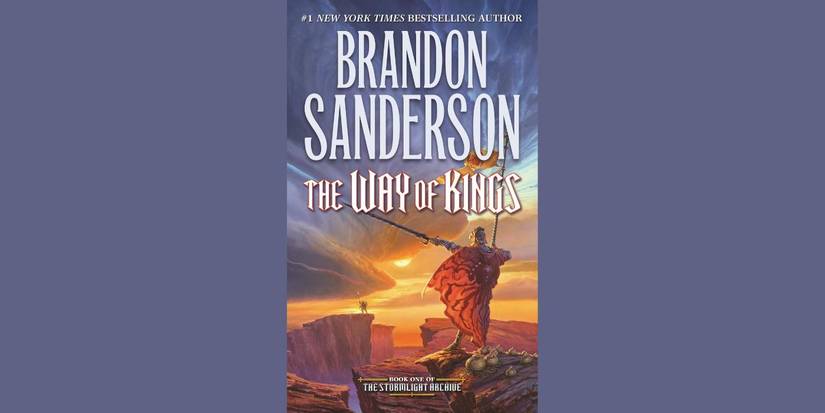
The Way of Kings opens its heart in the worst possible place, the Shattered Plains, where Kaladin has been stripped, branded, sold, and turned into a piece of battlefield equipment. He carries bridges. That sounds simple until Brandon Sanderson makes you feel the weight of the wood, the mud, the sprint, the arrows hitting inches from bare skin, and the awful routine of men being marched out as bait.
That is why the book hits so hard before the wider epic machinery even takes over. Kaladin is surrounded by condemned outcasts who have already been taught to expect death. His choice to train them, protect them, and make Bridge Four stand upright again feels genuinely huge because it starts from nothing. Dalinar’s visions and Shallan’s scholarship broaden the world, but Kaladin’s bridge runs are the soul. This is fantasy as endurance.
5 'Babel' (2022)

R.F. Kuang makes Oxford feel like a trap lined with polished wood, Latin quotations, and beautiful lies. Robin Swift arrives hungry for belonging, and it is painfully easy to understand why the prestigious institute seduces him. The libraries, lectures, languages, and rituals feel like a door into greatness. Then he learns what the silver bars are really doing. Translation is being mined. Meaning is being weaponized. His education is part of the machine grinding his homeland under empire.
Babel moves fast because every classroom scene has pressure under it. Robin adjusts the coat, lowers his eyes, gives the correct answer, and still feels the violence behind every compliment. The magic system is brilliant, but the real punch is his moral fracture. Comfort on one side. Resistance on the other. Kuang turns academia into a battlefield where politeness can feel completely suffocating.
4 'Uprooted' (2015)

Naomi Novik’s Uprooted has the shape of an old fairy tale and the pulse of something running barefoot through mud. The book follows Agnieszka, who expects her best friend Kasia to be taken by the Dragon, the cold wizard in the tower, because that is how stories like this are supposed to go. Then he chooses Agnieszka instead, messy hair, dirt, clumsiness, stubbornness, and all.
The fun is how quickly her magic refuses to behave politely. Sarkan wants clean spellwork. Agnieszka’s power comes out tangled, instinctive, alive, and furious. The Wood is the real nightmare here, a rotting, intelligent force leaking black sap, twisting bodies, and pressing against the valley like hunger with roots. Uprooted makes the tower, the village, and the forest feel close enough to touch. The book works because it balances dark folklore terror with the thrill of watching a girl trust her own wildness.
3 'Circe' (2018)
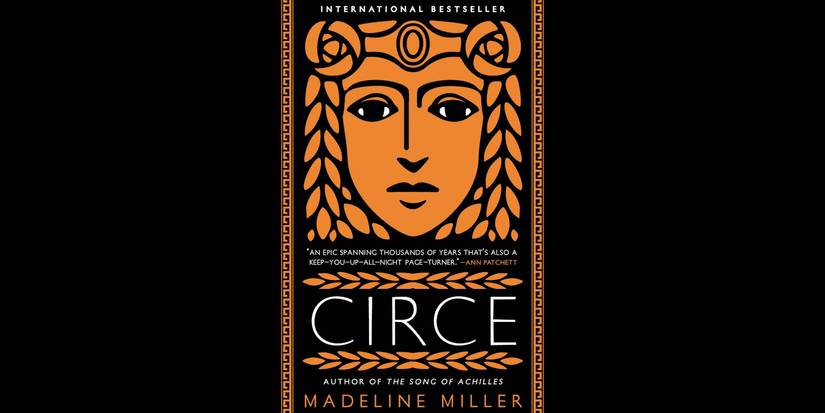
Circe takes a woman myth usually leaves on the edge of someone else’s adventure and gives her the whole island, the whole wound, the whole voice. The story follows Circe, who begins in the golden halls of Helios, mocked and dismissed by gods who treat cruelty as weather. Exile should destroy her. Instead, Aiaia becomes the place where she learns the weight of her own hands.
The plot moves with quiet force. Herbs are crushed. Tinctures brew. The loom waits. Sailors land with hunger in their eyes, and Circe learns that mercy without power can become another kind of vulnerability. Turning men into swine becomes less like a curse than a boundary drawn in blood and magic. Odysseus matters, yes, but the book belongs to her solitude, her anger, her tenderness, and the spine she builds over centuries. Madeline Miller’s voice makes myth feel intimate enough to breathe.
2 'Piranesi' (2020)

Piranesi is the kind of book that feels impossible to explain without ruining the spell, so the best place to begin is the House. Endless halls. Marble statues. Birds. Tides rushing through staircases. Seaweed gathered like daily bread. Piranesi moves through it all with bare feet, careful notebooks, tide charts, and a devotion so pure it almost hurts.
The mystery creeps in gently. A sixteenth person. The Other’s warnings. Journal entries that no longer fit together. Bones, birds, wet stone, and statues watching over everything in silence. Susanna Clarke trusts the reader to sense the darkness before Piranesi can name it, which makes his innocence even more devastating. The puzzle is elegant, but the emotional anchor is his goodness. He tends the House. He thanks it. He believes in beauty even after cruelty has stolen so much from him. Entirely singular.
1 'The Fifth Season' (2015)

N.K. Jemisin's The Fifth Season is probably the most important fantasy novel of the last fifteen years. That's not a compliment, exactly. Important books are not always the ones you want to read. But this one? This you cannot stop reading. The novel follows Essun, a hidden orogene, someone who can sense and manipulate seismic forces with her body, living as an ordinary teacher in a quiet town, and the book begins with her husband murdering their young son on the day the world ends. Not metaphorically. The continent splits. Ash starts falling.
What Jemisin does beyond the world-building, which is peerless, is structural. She writes Essun in second person. You walk into the room, you see what he's done. You cannot hold the book at arm's length. The ash lands on you. The grief is yours whether you consent or not. Jemisin used this novel to shatter what fantasy was structurally permitted to do, to say, and to demand from its reader. The genre has been recalibrating around that impact ever since.
Collider Exclusive · 8 Questions · 2 Minutes What Fantasy World Do You Belong To? Middle-earth · Grand Line · The Continent · Camp Half-Blood
Pick your magic, your crew, where you want to wake up and who you would rather be fighting, and we will tell you which world you actually belong in. Four are open to you: an ancient kingdom living through its last good age, an endless sea full of pirates, a continent that pays people to kill monsters, and a summer camp where the Greek gods are extremely real and mostly a nuisance.
💍Middle-earth(Rings of Power)
👒Grand Line(One Piece)
🐺The Continent(The Witcher)
🔱Camp Half-Blood(Percy Jackson)
01
What kind of power do you want? Every one of these worlds runs on a completely different sort of magic.
02
Who is travelling with you? Nobody gets through any of these stories entirely on their own.
03
Where do you want to wake up tomorrow? The best fantasy is usually just somewhere you would genuinely like to live.
04
How are you making a living out there? Even in fantasy somebody has to pay for the horse.
05
There is something in the woods. What do you do about it? All four of these worlds keep something unpleasant out there in the dark.
06
Who is the villain of your story? The enemy tells you far more about a world than the hero ever does.
07
What do you actually believe in out there? Every world hands its heroes one rule and asks them to hold onto it.
08
A thousand years from now, how are you remembered? Eight questions in, this is the one that decides your world.
The Map Is Drawn Your World Is…
Four worlds and four completely different ideas of what a good life looks like. This is where you belong, what it would ask of you, and what you would get back in return.
Middle-earth
You belong somewhere old enough that the mountains have names and somebody can still tell you who gave them. Middle-earth is for people who think the right thing is worth doing even when it will not be finished in their lifetime.
- This is the only world on the list where doing good is understood as a very long defeat, fought anyway, by people who will never see how it ends.
- You are drawn to grandeur, to white cities and deep forges and the sense that almost everything you touch is older than your entire family line.
- The Rings of Power is set in the last good age before it all goes wrong, which gives every quiet scene in it a slightly unbearable weight.
- You would take the hard road, and you would take it on foot.
The Grand Line
You want the sea, a crew, and absolutely nobody telling you where you are allowed to go. The Grand Line is the world for people whose main ambition in life is finding out what is over there.
- One Piece has run for decades on one very simple engine, which is a group of people who each want something impossible and have decided to go and get it together.
- You collect people. Your ideal crew is a set of misfits who were each written off somewhere else before you turned up and offered them a better idea.
- The world is enormous and deliberately ridiculous, and the emotional gut punches land harder because of that rather than in spite of it.
- You would set sail knowing the map runs out, which is more or less the entire point of it.
The Continent
You would rather be feared and useful than liked and useless. The Continent is a world where the monsters are the straightforward part of the job and the people are where it all gets complicated.
- Witchers get paid to do what nobody else will and resented for existing at all, which is a trade most people would refuse and you would probably accept.
- You have no real illusions about which side is the good one, largely because on the Continent that question tends to have a disappointing answer.
- The best of these stories are not about the fighting. They are about somebody with a rigid code being repeatedly cornered into caring about people.
- You would take the coin, finish the job properly, and be out of town before the story got told wrong.
Camp Half-Blood
You want the myths to be real and loose in the actual world, and you want to find out at about thirteen that you were never anywhere near as ordinary as everybody kept telling you.
- Percy Jackson takes the oldest stories we have and drops them into car parks and diners, which makes the gods considerably funnier and a great deal worse.
- You would be the kid every school gave up on, who turns out to have been built for something nobody thought to test for.
- The series is genuinely about friendship rather than destiny, and it says so out loud every time a prophecy tries to get in the way.
- Camp Half-Blood is the real fantasy here: a place where the thing that made you difficult everywhere else is the thing that makes you belong.
KioskNews shows a cleaned-up reading view extracted from the publisher’s page — the original always lives on their site, not ours.