‘This job doesn’t leave me with a single penny’: DTC drivers’ strike enters Day 3
Rs 862. This is how much a Delhi Transport Corporation (DTC) bus driver earns in a day. For many of them, the money is already spoken for long before the month is over. While for drivers like Joginder Singh, even getting to work takes a sizable bite out of that amount, for others, the wage is stretched between household expenses, loans and other costs incurred daily.
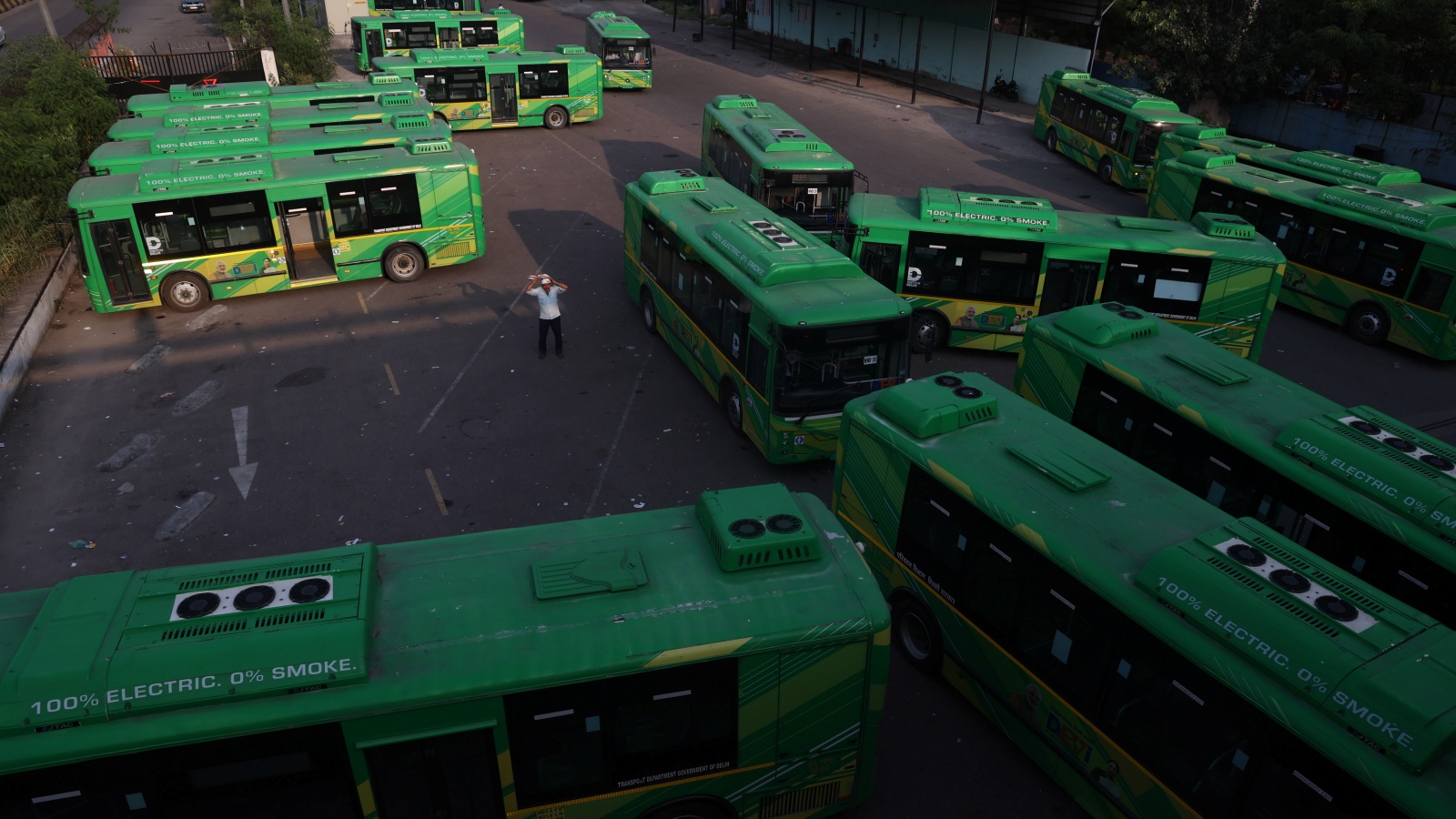
This calculation played out across Delhi’s bus depots on Thursday, when more than 10,000 drivers stayed off duty on the third day of their strike, leaving most of DTC’s 6,840 public buses parked.
The striking drivers are demanding improved service conditions, including a minimum daily wage of Rs 2,000, annual bonus, payment for working on government holidays, and medical insurance, among others.
Transport Minister Pankaj Singh said on Thursday that all the demands — except an increase in wages — have been accepted.
“I met the drivers today. Regarding their demands —whether related to medical facilities, leave, compensation for additional kilometres driven, or providing employment to a family member in the event of an unfortunate incident — I ensured that the concessionaire accepted all of them. I have secured approval for all their demands from the concessionaire,” he said.
“I also assured them that after consulting the Labour department and determining an appropriate amount, we would ensure that they receive a pay hike,” Singh added.
However, Lalit Chaudhary, president of the DTC Karamchari Ekta Union told The Indian Express that none of the demands of the drivers have been met by the government in their negotiations. “The strike will continue on Friday,” he said.
Story continues below this ad
Rs 80 to get to work
At Wazirpur, 150 buses stood inside the depot while drivers sat on mattresses outside. Among them was Singh (36), who has been driving for the DTC for three years. Every day, he travels from Jhajjar to Delhi to report for work, spending Rs 80.
“I need to support my two children, whose school fees are between Rs 2,500 and Rs 3,000 per month. Even travelling to work every day is a strain on my monthly expenses,” he said.
Singh drives around 105 km every day, making three rounds between Wazirpur and Nand Nagri. By the end of the month, he said, there is nothing left.
Story continues below this ad
“I am currently asking friends to pay the EMI for my motorbike,” he added.
Petrol takes its share
The scene was similar at GT Karnal depot, where 121 buses remained parked and drivers sat outside.
A driver, Ashu Panchal (28) rides his motorbike from Sonipat to work every day. “The petrol alone costs me Rs 150-200, and the long commute adds to the cost of maintaining the bike,” he said.
Panchal drives Route 442, between Azadpur and Nehru Place. Lunch, tea and snacks cost him around Rs 100 a day, he said, while vegetables and groceries for home cost another Rs 200-300.
Story continues below this ad
A graduate of Maharishi Dayanand University, Panchal also works on a gig ride platform while returning home to Sonipat. He is thinking of starting an e-commerce business. “I will leave this job once I set it up,” he said.
‘What does Rs 862 mean today?’
Imran Alvi (36) has been driving a DTC bus for five years.
“What does Rs 862 mean in today’s world? If you go to the market, you buy things that cost more than Rs 1,500,” he said at Rajghat depot 1.
Alvi drives between Mayur Vihar 3 and Lado Sarai, a route that takes him through some of Delhi’s busiest roads.
Story continues below this ad
Maintaining that a small accident or damage to the bus can cost drivers, he said, “These are big buses, and Delhi is so crowded. Even if someone hits the bus from behind and dents it, or someone else knicks our mirror, Rs 500 deducted is from our pay.”
Around 50 drivers at the depot have been camping at their restroom inside the depot since Tuesday.
‘Treated like daily-wage labourers’
Sunil Kumar (56), who has driven public buses for more than two decades, spoke about the poor conditions under which the drivers work.
Story continues below this ad
“Driving in Delhi is extremely stressful and requires real skill. But still, we are treated like daily-wage labourers,” he said at Shadipur depot.
“We don’t get any leaves or holidays: our salary is cut on the day we don’t come. We don’t get any medical or accident insurance. If a driver dies or gets injured, all of us pool money and pay for the treatment,” he added.
Kumar has taken loans for the education of his two sons, one in school and the other pursuing BTech. “I have to borrow from friends and family to pay the EMIs. I don’t know how I will pay them back. This job doesn’t leave me with a single penny,” he said.
Kumar said even the incentives are difficult to earn. “Drivers must stop at all designated stops and complete their routes within a fixed time. In Delhi’s traffic, that is just not possible.” Those on the morning shift get Rs 50 if they achieve this, and those on the evening roster get Rs 100. Most of them do not manage to achieve this, Kumar said.
© The Indian Express Pvt Ltd

Devansh Mittal is a Correspondent at The Indian Express, based in the New Delhi City bureau. He reports on urban policy, civic governance, and infrastructure in the National Capital Region, with a growing focus on housing, land policy, transport, and the disruption economy and its social implications. Professional Background Education: He studied Political Science at Ashoka University. Core Beats: His reporting focuses on policy and governance in the National Capital Region, one of the largest urban agglomerations in the world. He covers housing and land policy, municipal governance, urban transport, and the interface between infrastructure, regulation, and everyday life in the city. Recent Notable Work His recent reporting includes in-depth examinations of urban policy and its on-ground consequences: An investigation into subvention-linked home loans that documented how homebuyers were drawn into under-construction projects through a “builder–bank” nexus, often leaving them financially exposed when delivery stalled. A detailed report on why Delhi’s land-pooling policy has remained stalled since 2007, tracing how fragmented land ownership, policy design flaws, and mistrust among stakeholders have kept one of the capital’s flagship urban reforms in limbo. A reported piece examining the collapse of an electric mobility startup and what it meant for women drivers dependent on the platform for livelihoods. Reporting Approach Devansh’s work combines on-ground reporting with analysis of government data, court records, and academic research. He regularly reports from neighbourhoods, government offices, and courtrooms to explain how decisions on housing, transport, and the disruption economy shape everyday life in the city. Contact X (Twitter): @devanshmittal_ Email: devansh.mittal@expressindia.com ... Read More
Stay updated with the latest - Click here to follow us on Instagram
KioskNews shows a cleaned-up reading view extracted from the publisher’s page — the original always lives on their site, not ours.