‘Singapore is not boring’: Meet the urban explorer revealing the city's hidden stories
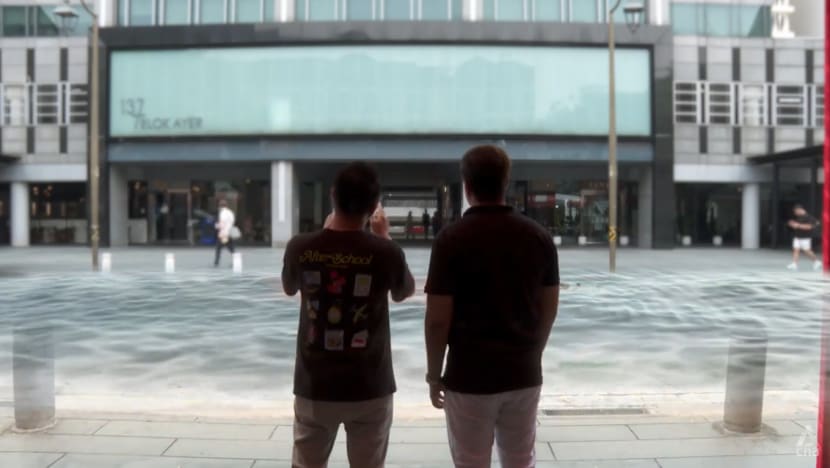
Ho Yong Min, better known as The Urbanist, has built a following by uncovering the hidden stories behind Singapore's streets, buildings and public spaces.
New: You can now listen to articles.

This audio is generated by an AI tool.

19 Oct 2026 10:05AM (Updated: 19 Oct 2026 10:16AM)
Most people walking along Telok Ayer Street today would not realise they are standing where Singapore's shoreline once was.
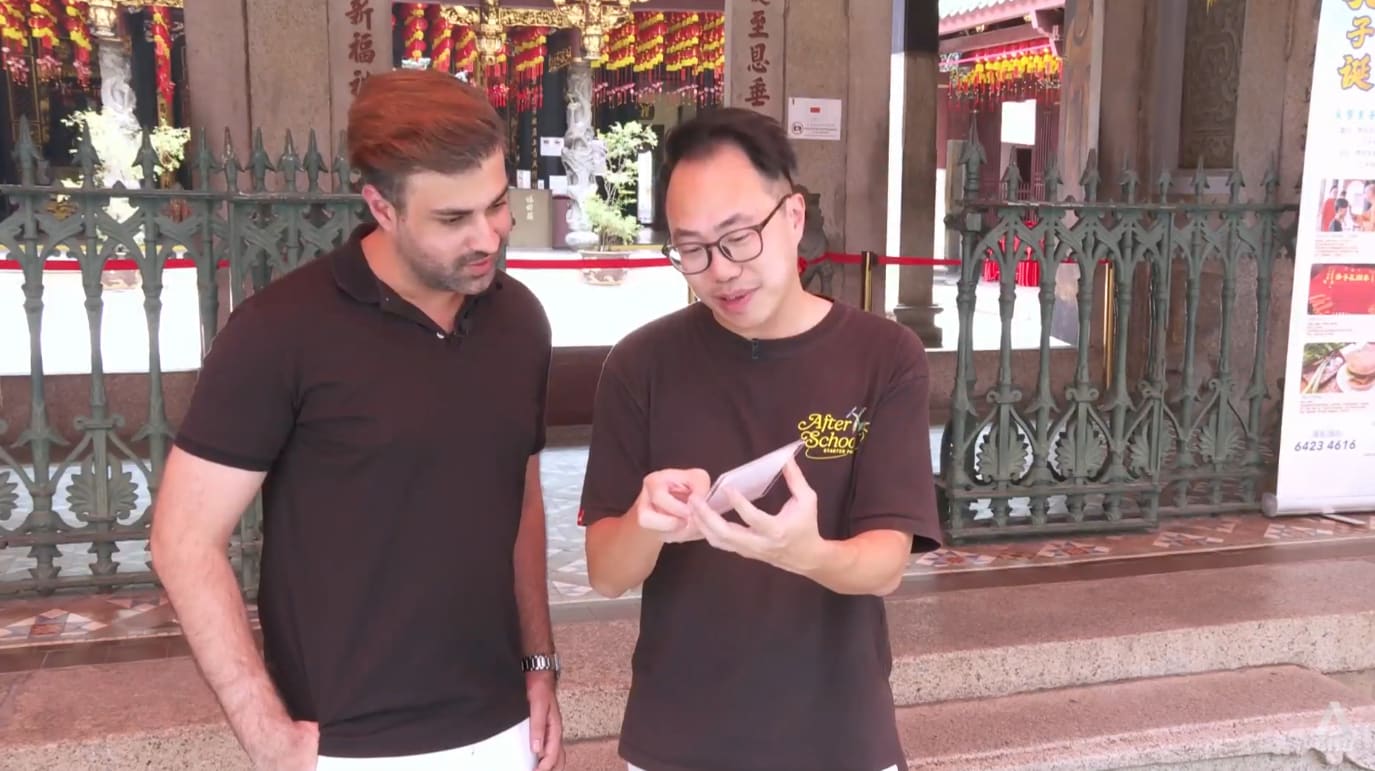
But to former urban planner Ho Yong Min, better known as The Urbanist, clues to the area’s history are everywhere.
A temple’s orientation. A street name. Inscriptions on a stone tablet.
"If you look around, you don't see any remnants of the sea at all," he told CNA while on a walk through the area.
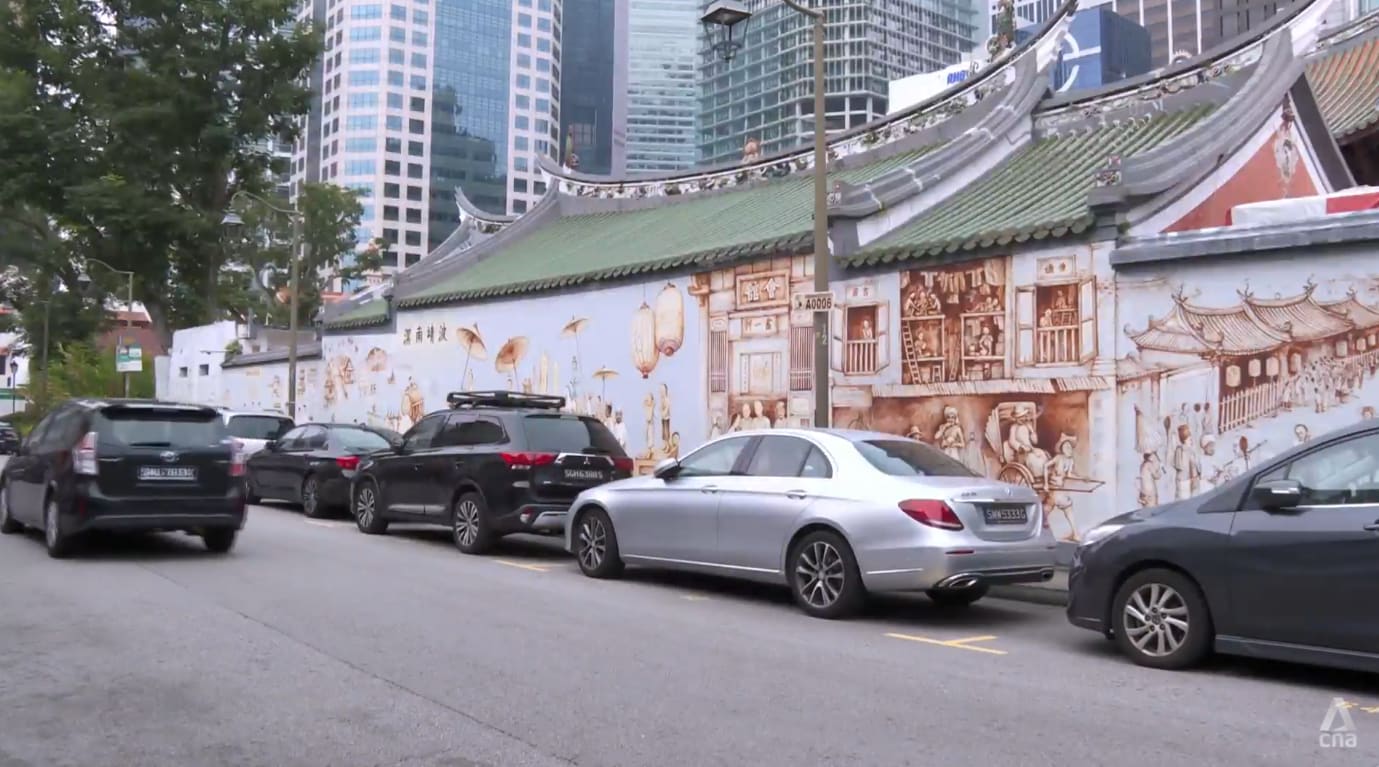
"But there are clues in our city that tell you that this temple used to face the sea."
Telok Ayer, Ho explained, used to be a bay that once greeted immigrants arriving by boat. Many would stop at Thian Hock Keng Temple, built in 1842, to pray and give thanks for a safe voyage before embarking on new lives in Singapore.
The district's name, which means "bay water" in Malay, also hints at its past as a point of entry for new arrivals.
That maritime past is also etched into the temple itself: A stone tablet mounted on its wall bears repeated inscriptions of the Chinese character for “boat”.
"Back in the day, when you're on a voyage from China to Singapore, just being able to land in Singapore is already a blessing because you may have been shipwrecked or gotten ill along the way," Ho said.
"That's why temples were pretty much established along the shoreline. If you look at the places of worship along Telok Ayer, you notice there are quite a number of them, and they all tell the same story of the safe arrival of immigrants in the past."
Finding hidden stories in familiar places is at the heart of Ho's work as founder of The Urbanist Singapore, a content platform dedicated to heritage storytelling and urban design.
Through social media videos, guided walks and school programmes, the 42-year-old Singaporean has built a growing audience, including more than 62,000 followers on Instagram, by uncovering the tales behind Singapore's streets, buildings and public spaces.
FAMILIAR STREETS, UNTOLD STORIES
Some of Ho’s most popular videos begin with a simple question about something most people might walk past without a second thought.
One such vlog explored an unusual feature along a tiny stretch of the underground CityLink Mall: Why visitors have to take an escalator further down, only to head back up another mere metres away.
The dip exists to avoid the Stamford Canal above.
The canal, which stretches from Tanglin to Marina Bay, passes through Orchard Road and City Hall, including the area now occupied by Plaza Singapura and CityLink Mall.
In the past, Indian laundry workers known as dhobies washed clothes there before laying them out to dry on the grounds where Singapore Management University's School of Economics now stands. The washing activity gave rise to the area's name, Dhoby Ghaut.
As Singapore developed, newer structures had to work around the canal's path, creating unexpected quirks in the urban landscape, including the one Ho highlighted at CityLink Mall.
When Ho posted the video online explaining the canal’s influence on the mall’s design, he was surprised by the response. He got over 700,000 views on TikTok and more than 130,000 views on Instagram, along with hundreds of comments.
"When I woke up the next day and saw more notifications than I've ever seen in my life, I noticed that people actually connected," he said.
For many viewers, he added, the video offered a new perspective on a place they thought they knew well.
"I think people are generally still curious," he said. "They just need someone to share it with them in a way (that is) understood."
LEAVING CORPORATE LIFE BEHIND
What started as an interest in Singapore's urban landscape and its stories eventually became more than a side project.
About two years ago, Ho left his corporate job as an associate director of education strategy at the Singapore Management University to do this full-time.
Today, he splits his time between producing content, researching new tours, acting as a heritage guide and working with students.
Ho said his decision was driven partly by concerns that younger Singaporeans are increasingly distracted by the endless stream of online "brain rot" content competing for their attention.
"I wanted people to realise that Singapore is not boring," he added.
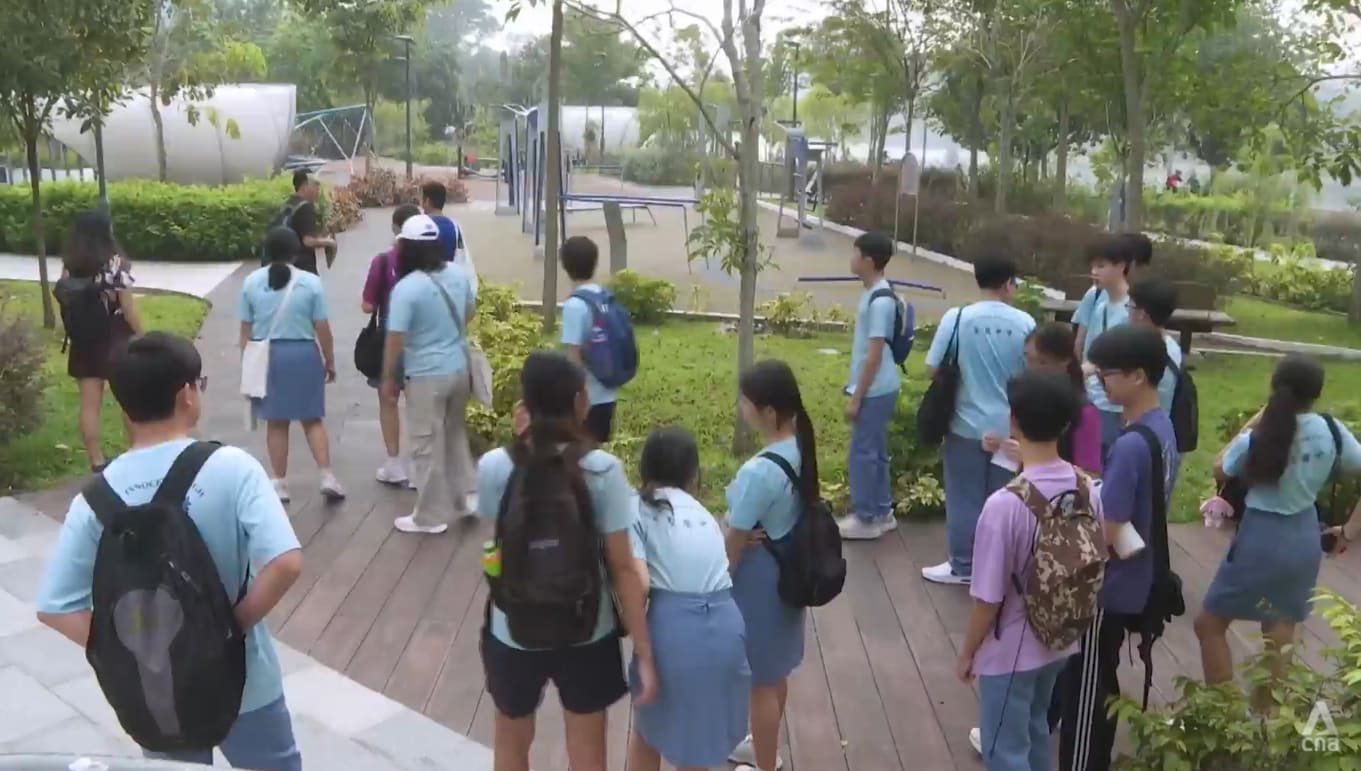
Much of his work now involves introducing students to heritage research and trail guiding in person, with the hope of nurturing a lasting curiosity about the places around them.
"I really see myself as just presenting the door to our younger generation," he said.
"Hopefully, they open it, they like what they see … and they can take further steps into exploring our heritage."
CHILDHOOD CURIOSITY
Ho’s curiosity goes back to his childhood.
When he was growing up, his grandparents often took him on bus rides around Singapore, including trips to newly opened McDonald’s outlets in the 1980s.
While travelling across the island, he found himself wondering about the buildings and the origins of street names they passed.
Those questions never went away and as an urban geography student, he became fascinated by what he described as the "different layers" of Singapore and the process of "peeling them back".
That passion translates into up to four to five months of research for every new tour Ho develops.
Research, however, is only part of the challenge.
"It's not just research," he said. "It's about the translation.
"How do we tell it in a story that would resonate and linger on after the tour?"
SEEING SINGAPORE WITH FRESH EYES
For Ho, the goal is not simply to preserve history.
It is also to help people feel more connected to the place they call home.
"I want people to see that Singapore … is not just buildings and more buildings," he said.
"There are stories behind them. There is interesting history behind road names and street orientation."
He believes such stories can help Singaporeans feel more rooted and perhaps even "fall in love with Singapore all over again".
"Curiosity is a great teacher," Ho added.
"Pause, slow down, start to observe. Why is the road curved this way? Why is a building shaped this way?
"You might be surprised at the stories it tells you."
In a country that is constantly evolving and focused on what comes next, Ho's message is straightforward: look again.
The next discovery, he suggests, may not require travelling somewhere new.
It may simply mean looking at a familiar place with fresh eyes.
KioskNews shows a cleaned-up reading view extracted from the publisher’s page — the original always lives on their site, not ours.