The 10 Best Film Noir Movies of the Last 75 Years, Ranked

Ryan Heffernan is a Senior Writer at Collider. Storytelling has been one of his interests since an early age, with his appreciation for film and television becoming a particular interest of his during his teenage years.
This passion saw Ryan graduate from the University of Canberra in 2020 with an Honours Degree in Film Production. In the years since, he has found freelance work as a videographer and editor in the Canberra region while also becoming entrenched in the city's film-making community.
In addition to cinema and writing, Ryan's other major interest is sport, with him having a particular love for Australian Rules football, Formula 1, and cricket. He also has casual interests in reading, gaming, and history.
Sign in to your Collider account
Film noir is one of the defining pillars of Old Hollywood grandeur, with the genre’s boom through the 1940s ushering in an era of suspense and complexity that has influenced everything from crime mystery to thriller cinema. Between The Maltese Falcon, Double Indemnity, and The Third Man, it gave us some of the most iconic pictures ever made, with its elaborate plotting working beautifully in tandem with its chiaroscuro black-and-white visuals to create some of the most transfixing and atmospheric movies of all time.
However, film noir has evolved far beyond its inaugural masterpieces of the 1940s. While its popularity bled into the 1950s—and several of the decade’s best films feature on this list—it also spanned to the neo-noir eruption of the ‘70s and even to bold, genre-meshing gems in more recent decades. To celebrate how film noir has evolved and endured in the decades since its heyday, these are the greatest movies the genre has seen since 1951.
10 'Strangers on a Train' (1951)
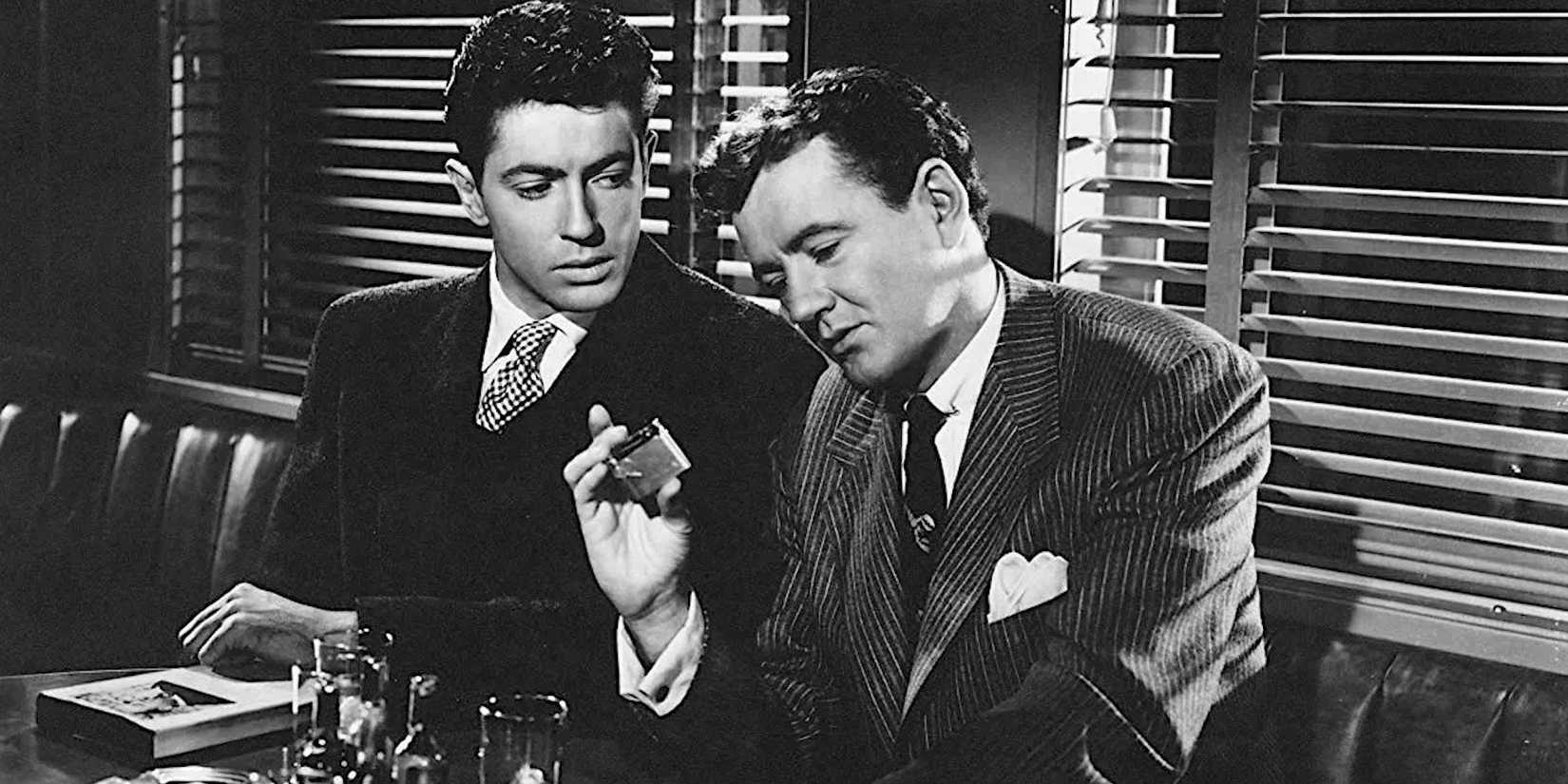
2026 marks 75 years since Strangers on a Train premiered, and the Alfred Hitchcock classic has only grown in stature as the decades have elapsed. Like so many of the director’s defining masterpieces, it thrives as a wicked descent into immorality and murder, with the story revolving around two strangers’ sinister scheme to kill each other’s nemeses. While tennis star Guy Haines (Farley Granger) dismisses the conversation as idle fantasy, he finds himself entangled in a dangerous game when Bruno (Robert Walker) kills his wife and expects Guy to murder his father in return.
Hitchcock, unsurprisingly, excels at extracting every ounce of psychological suspense from the screenplay, creating a viewing experience that is as sinfully addictive as it is frightfully volatile. Everything from brilliant cross-cutting sequences to precise and fiendish dialogue, meticulous plotting, and high-stakes dread accentuates the story’s ability to blur the line between guilt and innocence. With Walker’s performance as the psychotic and deranged Bruno Antony making for one of the most underappreciated villains cinema has ever seen as well, Strangers on a Train shines as a captivating noir thriller from its opening, inciting conversation through to its scintillating showground climax.
9 'L.A. Confidential' (1997)

The noir movies of the 1940s were all about character complexity, elaborate plotting, and basking in the atmosphere of ‘30s-‘40s era America. The neo-noir movies that emerged decades later used these tropes to emphasize issues of systemic corruption. L.A. Confidential feels like the perfect marriage between two visions of noir cinema as it revolves around three LAPD detectives in the early ‘50s whose investigation of multiple homicides unearths a web of corruption and conspiracy within their own department.
Condensing James Ellroy’s labyrinthine novel into a lean and frenetic narrative, L.A. Confidential engrosses viewers with its propulsive descent into institutional evil. It is only bolstered by its ability to capture the seedy atmosphere of ‘50s Hollywood that lurked beneath the visage of glamour and sunshine, a point emphasized by both Dante Spinotti’s cinematography and tabloid publisher Sid Hudgen’s (Danny DeVito) sleazy infatuation with the city’s sinful secrets. Also benefiting from a brilliantly interlocked screenplay, three exceptional and unique lead performances, and a clever knack for blending fiction with history, L.A. Confidential is a gem of traditional noir styling imbued with all the bells and whistles of modern cinema.
8 'Ace in the Hole' (1951)

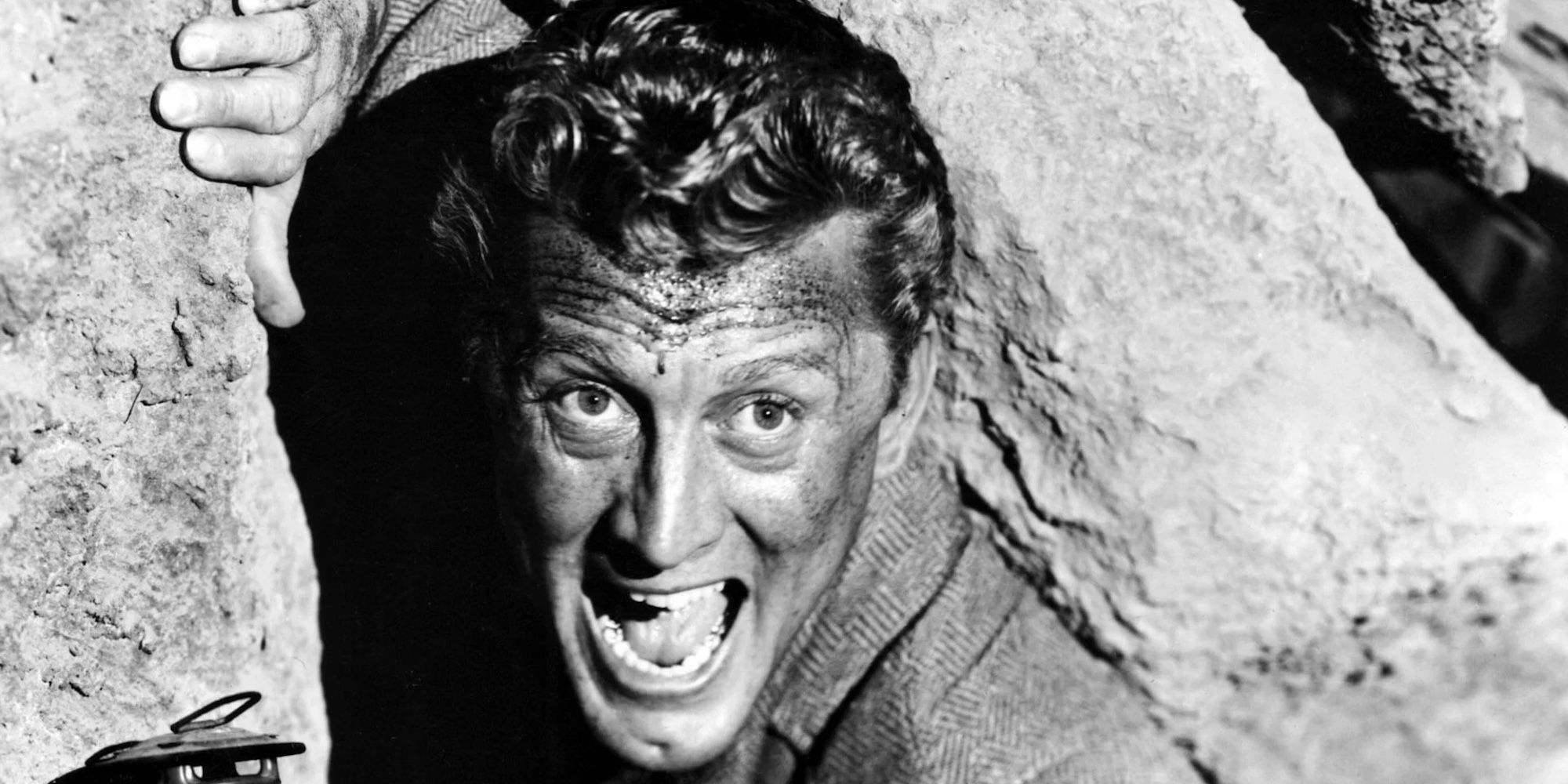
Another fantastic film from ’51, Ace in the Hole may not mark Billy Wilder’s most acclaimed foray into noir cinema, but it arguably stands as his most timeless and terrifying take on the genre. Kirk Douglas stars as Chuck Tatum, a fiendishly amoral journalist who sensationalizes a story of a treasure hunter trapped in a mineshaft to bolster his dwindling career. His unethical efforts to draw out the story for self-gain yield instant rewards, but his ambition constantly teeters on the cusp of disaster.
Upon release, Ace in the Hole was dismissed as a crude satire that was too cynical to be taken seriously. Today, however, the tale of media manipulation, journalistic corruption, and presenting news as entertainment holds a palpable gravitas, especially as it extends its skewering eye to the public’s simmering, morbid interest in the unraveling tragedy. Anchored by Douglas’ outstanding performance and Wilder’s brilliant talent for blending noir tropes with social commentary, the 1951 classic is a quintessential film noir gem that, sadly, only grows more potent as time goes on.
7 'Nightcrawler' (2014)

Film noir has always been about amorality, the gulf complex characters find themselves stranded in when torn between duty and desire. Nightcrawler boldly reinvents that emphasis by exploring the bleakest, most heinous depths of sociopathic evil. Jake Gyllenhaal delivers a terrifying performance as Lou Bloom, a petty thief who finds work filming horrific incidents of violent crime and selling the videos to a local news station. Desperate to stay ahead of the competition, Bloom scours L.A. not only in search of new stories, but with a growing appetite to invent his own as well.
More so than just a volatile character study, Nightcrawler also excels at realizing the neon-drenched nightlife of Los Angeles as a character in itself, a ruthless and sinister predator preying on any sense of ill-fortune or tragedy. Further complimented by Rene Russo’s excellent performance as Bloom’s major client, the morning news director and effective femme fatale of the film, Nightcrawler delivers a sprawling cesspit of malevolent ambition and media corruption that makes for one of the most underrated and impressionable movies of the 2010s.
6 'Blood Simple' (1984)

Not only is Blood Simple one of the defining noir pictures of the 1980s, but it also marks what is an astonishing directorial debut from the Coen Brothers. Their mastery of tone and tension on full display from the outset, with the film unfolding as a bar owner hires a private eye to find evidence that his wife is having an affair with one of his bartenders. When his suspicions are confirmed, he enlists the investigator to murder them, igniting a deadly web of deceit and betrayal that yields deadly consequences.
Replacing the rain-soaked streets of the West Coast with the vast expanses of rural Texas works a charm for the movie, conjuring an air of dust-coated seediness that basks in cinematographer Barry Sonnenfield’s rich visuals of imposing shadows and haunting neon glow. Complimented by strong performances, including a brilliant debut from Frances McDormand, Blood Simple simmers magnificently as a vibrant and volatile descent into human folly.
5 'The Night of the Hunter' (1955)

While it didn’t get the acclaim it so thoroughly deserved until decades after its release, The Night of the Hunter today stands tall as the best noir thriller of the 1950s. There is a bittersweetness to it being directed by Charles Laughton, with the universally adored actor displaying a striking talent for tension, style, and storytelling, but never making another movie due to the poor initial reception it received. Considered too abrasive for its time, it unfolds as a misogynistic serial killer poses as a preacher in order to get close to the family of a recently executed bank robber, hoping his grieving wife or impressionable children will reveal where he stashed the money.
Robert Mitchum is outstanding in the lead role, personifying the calculated, predatory nature of evil which stands in stark contrast to the innocence conveyed by the family he preys upon. The rich imagery that blends classic film noir styles with strong notes of German Expressionism only fuels this eerie thematic focus, producing some incredible shots that are as gorgeous as they are haunting. It’s cutting, callous, and quite timeless, and it remains a criminally underrated masterpiece of noir suspense despite its retrospective praise.
4 'Mulholland Drive' (2001)

David Lynch’s mystical yet imposing style was applied to film noir several times over the course of his illustrious career, with Blue Velvet and Lost Highway both exceptional pictures that play with genre tropes. However, it is hard to look beyond Mulholland Drive as being his crowning achievement, with the film being an era-defining masterpiece of suspense that uses arresting filmmaking, an enigmatic mystery, and evocative storytelling beats to push the form of noir cinema to bold new limits.
The bulk of the movie follows Betty Elms (Naomi Watts), a bubbly young actress with dreams of Hollywood fame who helps a woman suffering amnesia to investigate her past and ascertain her true identity. The mosaic 147-minute movie compounds its central mystery with a scathing descent into Hollywood’s seedy underbelly, using essential noir characters like ruthless mobsters and ominous crooks to embellish its exploration of the grim, corrosive reality that hides beneath the veneer of glamour and fame. On all fronts, Mulholland Drive is a true cinematic triumph, an endlessly compelling labyrinthine tale of identity, reality, and ambition that remains one of the most fiercely discussed films of the 21st century, even 26 years on from its release.
3 'No Country for Old Men' (2007)
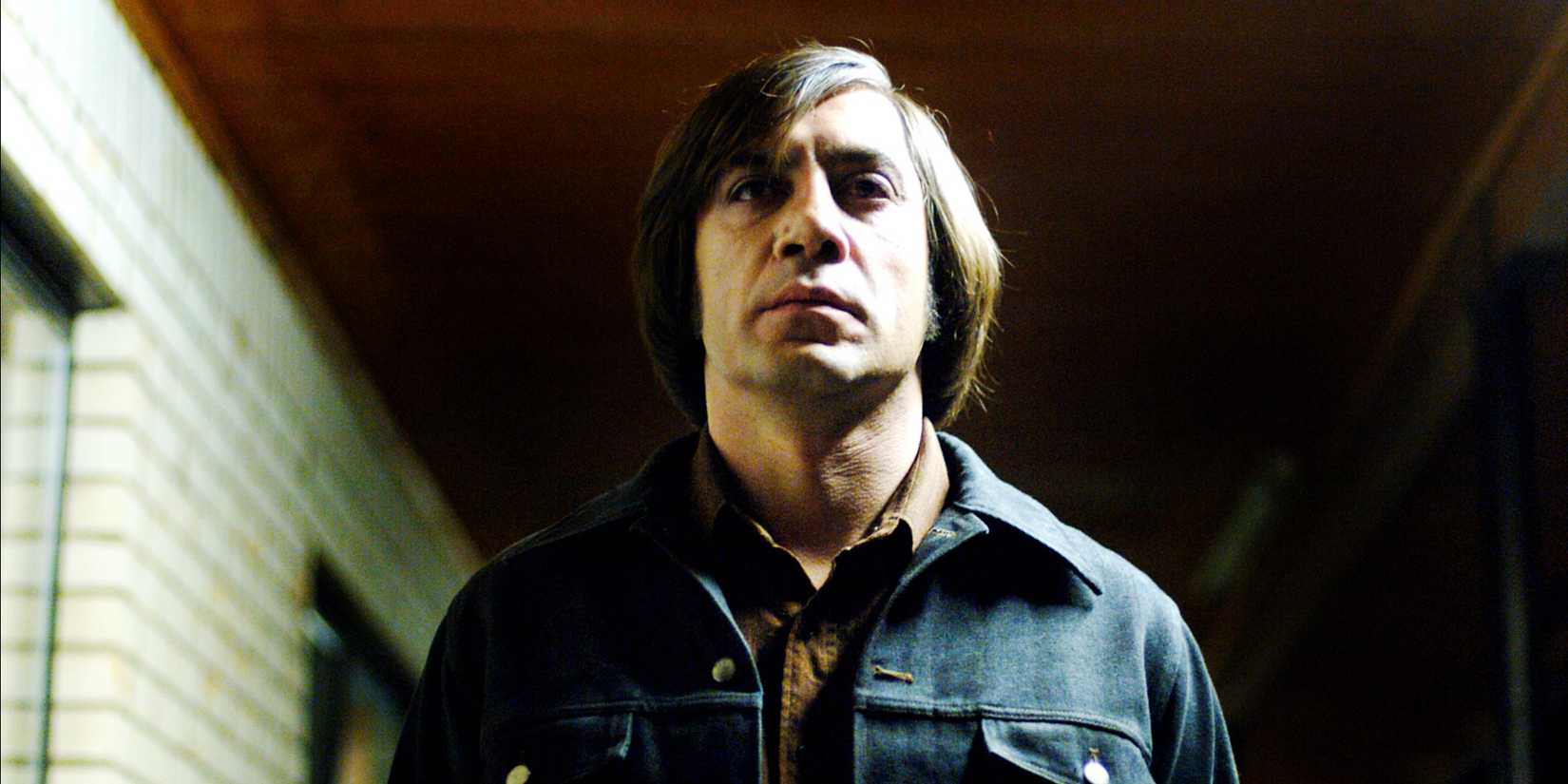
One of the most fascinating elements of film noir in the 21st century has been the endeavor of filmmakers to explore it as a playground for genre-meshing tension. No Country for Old Men is the epitome of this, with the Coen Brothers’ adaptation of Cormac McCarthy’s novel unfurling as a pulsating neo-noir, neo-Western crime thriller revolving around a hunter who has stolen a case of money from the scene of a cartel shootout and the psychotic cartel hitman who has been tasked with retrieving the money and killing the thief.
The sun-scorched Texas desert fills in for seedy city alleyways perfectly, while the cat-and-mouse nature of the story is imbued with enrapturing suspense courtesy of the screenplay’s commitment to defining characters through their actions. Tommy Lee Jones’ turn as the word-weary sheriff doesn’t just heighten its noir pedigree, it serves as a fascinating examination of the changing landscape of crime, with his resigned acceptance that the world has evolved beyond his understanding a poignant thematic overtone that compliments the gripping intensity the film presents from beginning to end.
Collider Exclusive · 8 Questions · 2 Minutes Which Coen Brothers Movie Would You Thrive In? Lebowski · O Brother · Fargo · No Country
Nobody writes people like the Coen brothers. The decent ones. The talkers. The ones who stopped trying years ago. And the ones who can already see how bad this is going to get. Four films, four completely different ways of handling trouble. Eight questions decide which one you would actually walk out of.
🎳Lebowski(1998)
🎸O Brother(2000)
❄️Fargo(1996)
🪙No Country(2007)
01
A bag of money lands in your lap. What happens next? Every Coen film starts roughly here. It never goes smoothly.
02
Somebody is being completely unreasonable with you. How does it go? Coen dialogue is mostly people failing to understand each other.
03
What is your actual relationship with work? Everyone in these films is either working far too hard or not at all.
04
Long drive, bad weather, nobody else on the road. How are you? There is always a drive in these films. It is never a good drive.
05
You are offered a shortcut that is not quite legal. This is the moment where the Coens find out who you really are.
06
The plan has fallen apart completely. What is your move? In a Coen film the plan always falls apart. That is the genre.
07
Which of these sounds most like something you would say? Nobody writes a line quite like the Coens. Which one is yours?
08
How does your film end? Eight questions in, this is the one that decides your movie.
The Verdict Is In Your Coen Film Is…
Four films, four completely different ways of handling money, trouble and other people. This is the one you would survive, why it suits you, and what it would cost you to be there.
The Big Lebowski
You have quietly arranged your life so that very little can get to you, and a surprising number of people find that infuriating. You would be completely at home here.
- The Dude is the only person in the film with no ambition, and the only one who comes out the other side undamaged. That is not an accident.
- You do not chase things. You let situations arrive and you deal with them at your own pace, which is a genuine skill however lazy it looks.
- This is a full crime plot happening around a man who mostly wants his rug back, and that is exactly the energy you would bring to it.
- Everything goes wrong. You abide. The film ends.
O Brother
You talk your way through life and it works far more often than it should. Give you a bad situation and an audience and you will find a way out of both at once.
- Everett never has a plan that survives contact with reality. He has something better, which is the ability to keep talking until a new one turns up.
- You are the optimist in the group, the one who makes a ridiculous idea sound reasonable at two in the morning.
- This is the warmest film the Coens have made. It is a chase, a comedy and a musical at once, and nobody in it is quite beyond saving.
- You would end up famous entirely by accident, and act like you planned it all along.
Fargo
You would survive Fargo because you are the only kind of person who does: patient, decent, and completely unimpressed by anybody trying to be clever.
- Marge Gunderson solves the whole case by being polite, thorough and unhurried while everybody around her panics. That is the entire argument of the film.
- You do the boring parts of the job, which is precisely why you would notice the thing everyone else walked straight past.
- Fargo is about ordinary greed causing enormous damage, and about one person who simply refuses to be corrupted by any of it.
- You would go home at the end of it, have dinner, and sleep perfectly well.
No Country
You do not expect the world to be fair and you stopped being surprised about it a long time ago. That clear-eyed quality is exactly what this film asks for.
- No Country is the Coens at their coldest: a film where being smart, fast and careful might still not be anywhere near enough.
- You plan for the worst, you keep your own counsel, and some part of you is already working out the exit.
- Llewelyn Moss is competent, prepared and resourceful, and the film is honest about whether any of that is ever sufficient.
- You would see it coming. Whether that helps is the one question the film refuses to answer.
2 'Chinatown' (1974)
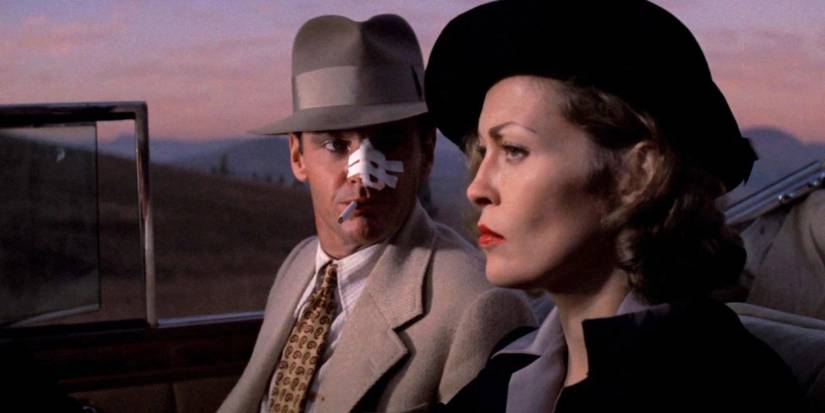
The perfect encapsulation of neo-noir cinema at its brilliant best, Chinatown stands tall among the best noir movies of all time from any era. With a screenplay that is widely considered to be the best ever written, it unveils every essential detail precisely when it’s needed, all while grounding the entire movie in the perspective of its protagonist, Jake Gittes (Jack Nicholson), who investigates the death of an integral city planner and discovers a foul conspiracy of corruption, greed, and power.
Set against the backdrop of the California water wars, Chinatown goes against noir conventions by basking in the sun, a brilliant thematic choice as it shifts the emphasis on shady, back-alley crime to the corrupt workings of government institutions which transpire in broad daylight. It speaks to the power such bodies have, that even when Jake works tirelessly to expose unethical practices and save Evelyn Mulwary (Faye Dunaway), he is helpless in the face of such authority and supremacy. Capped off by its iconic final line, Chinatown presents film noir at its brutal, bleak best, and it has endured as an ageless masterpiece for 52 years.
1 'Blade Runner' (1982)
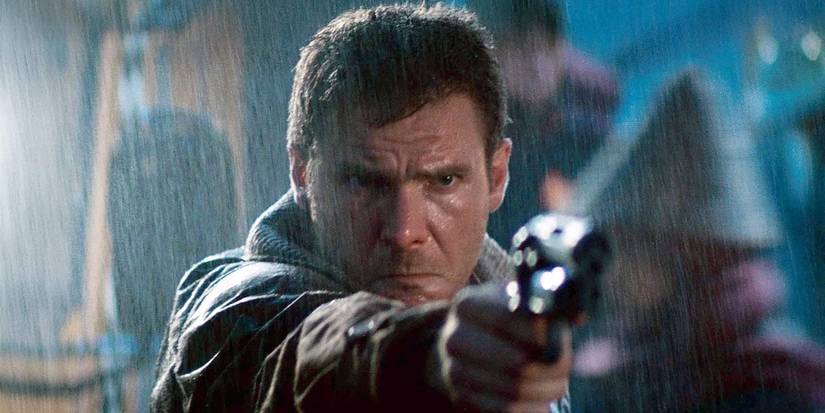
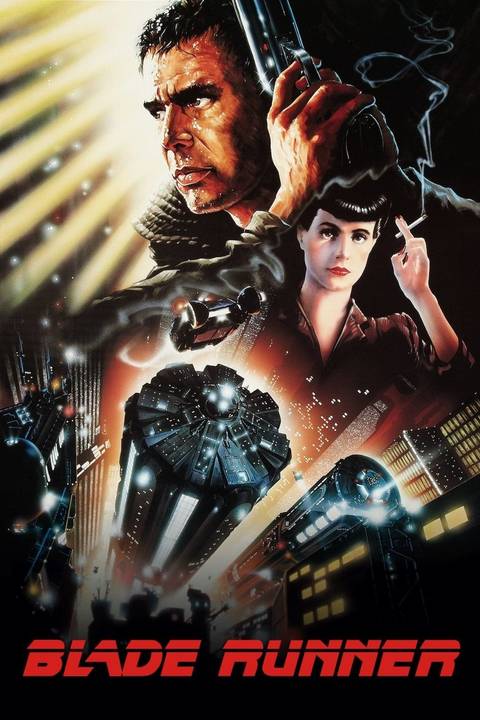
There is no doubt that Blade Runner is one of the greatest sci-fi films ever made, a captivating dystopian masterpiece that challenges ideas of what it means to be human while presenting a stunning cyberpunk world of neon-lit grime. However, the Ridley Scott classic also thrives as the ultimate example of neo-noir cinema’s ability to transcend genres, with the story following Rick Deckard (Harrison Ford) as he is tasked with navigating a futuristic L.A. in search of four off-world androids who have returned to Earth in search of longer life spans.
Deckard is a quintessential noir protagonist, a hard-boiled and world-weary cop who drowns his doubts in whiskey while being torn between his duty and his complex ideology. The film’s use of smog, smoke, and shadow is also trademark noir, especially as its punctures its all-encompassing darkness with harsh lighting and gloomy, unrelenting rain. Also buoyed by Vangelis’ melancholic, synth-infused score and a pressing exploration of one man’s morality against a backdrop of corrupt corporate demands and systemic rot, Blade Runner marks one of the boldest noir pictures of all time as well as a defining triumph of science-fiction cinema.
Blade Runner
- Release Date
- June 25, 1982
- Runtime
- 118 minutes
- Director
- Ridley Scott
- Writers
- David Webb Peoples, Hampton Fancher, Philip K. Dick
KioskNews shows a cleaned-up reading view extracted from the publisher’s page — the original always lives on their site, not ours.