River sharing can’t ignore bilateral ties: India on Indus at COP31 Conference in Antalya
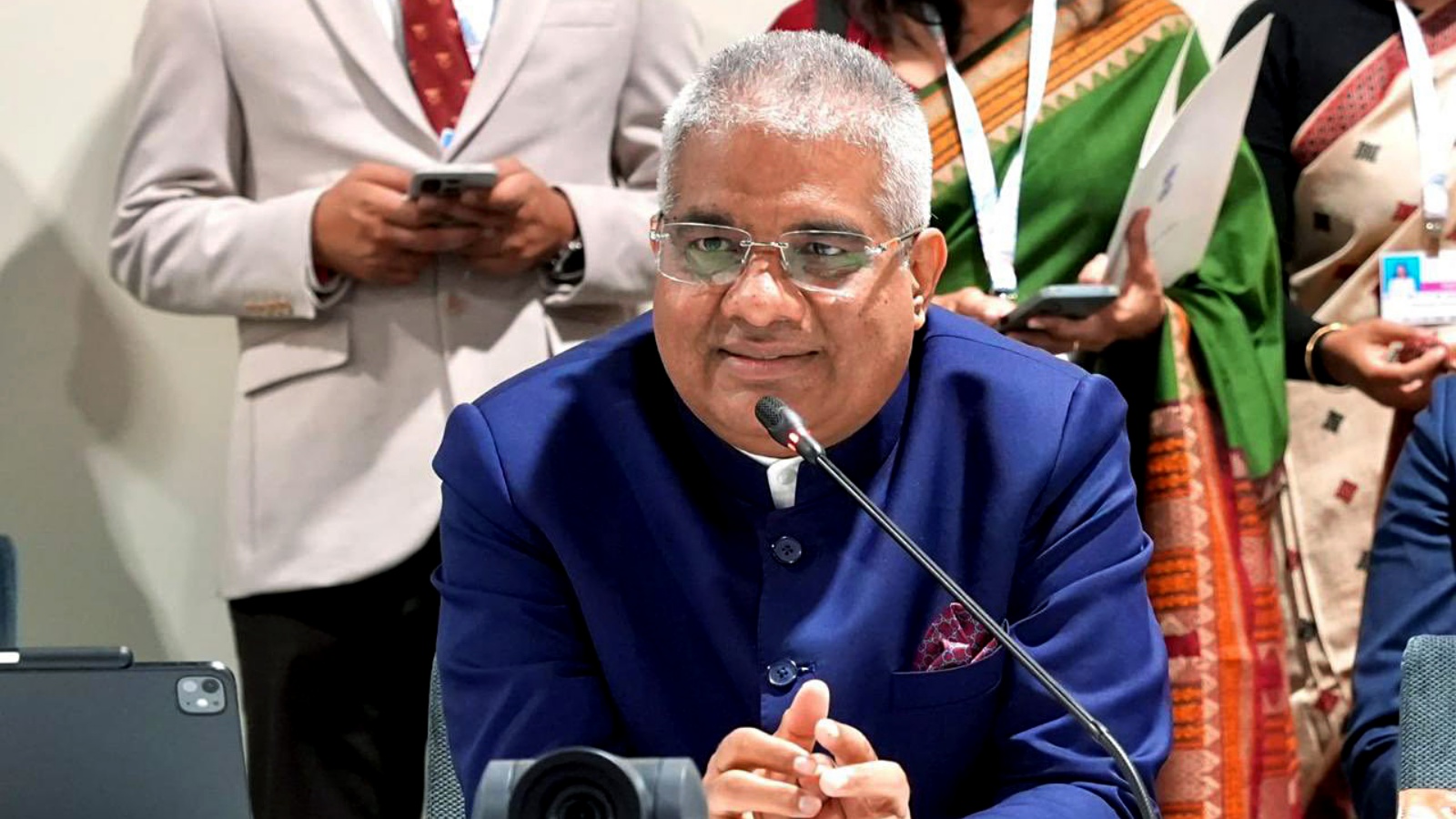
In a clear reference to India’s decision to put in abeyance the Indus Waters Treaty with Pakistan, Environment Minister Bhupender Yadav Wednesday said sharing of waters of transboundary rivers cannot be based on “archaic mechanisms” nor “divorced” from the realities of the overall relationship between two countries.
Delivering India’s national statement at the COP31 climate meeting in the Turkish city of Antalya, Yadav said, “Constructive cooperation and trans-boundary water flows can provide shared progress and prosperity. However, climatic and demographic changes as well as technological advancements are important elements that cannot be ignored.”
“Contemporary cooperation can neither be based on archaic mechanisms nor be divorced from the broader environment in which countries engage with one another,” he said, without making any mention of the Indus Waters Treaty.
His remarks were the first time that India had ever said anything on this issue at a climate conference, and clearly a response to Pakistan’s Prime Minister Shehbaz Sharif who had raised the matter, also without naming the treaty, during his address at COP31.
Sharif said, “Water must never be weaponised. No nation should be allowed to put the lives and livelihoods of people downstream at risk. Water sharing agreements must be honoured in letter and spirit.”
The 1960 Indus Waters Treaty governs the sharing of six transboundary rivers of the Indus river system between India and Pakistan. Last year, following the terrorist attack at Pahalgam in which 26 tourists were gunned down, India decided to put the Treaty “in abeyance”. It said the Treaty would remain in this state until Pakistan abjured cross-border terrorism.
In practical terms, this has meant that India does not consider itself bound by the provisions of the 1960 Treaty any longer, and has moved ahead with the development of several river projects in the Indus basin which, if Treaty provisions were followed, would not have been possible without addressing Pakistan’s objections, if any.
Story continues below this ad
Pakistan, which has a huge dependence on the waters of these rivers, has been protesting even though the flow of waters from India has remained largely unchanged. It has raised the issue at every international forum, complaining of India’s attempts to “weaponise” river waters, and even managed to get a verdict in its favour from the International Court of Arbitration. India had not participated in the proceedings of this Court, having refused to recognise its very constitution.
India has also offered to renegotiate the Treaty, citing changes in water demand because of demographic and developmental pressures, technological advancements in management of river waters, and impacts of climate change. Pakistan has not responded to this offer.
Reiterating the Indian government’s position, and echoing the line taken by Prime Minister Narendra Modi that blood and water cannot flow together, Yadav said that while “constructive cooperation” on transboundary river waters could lead to shared progress and prosperity, such cooperation could not be delinked from the overall relationship of the countries involved.
His remarks at COP31 came just a couple of days ahead of Pakistani minister Musadik Masood Malik’s scheduled visit to New Delhi for the Shanghai Cooperation Organisation’s Civilisational Dialogue Forum.
Story continues below this ad
Malik, who is Pakistan’s Minister for Climate Change and Environmental Coordination, had earlier this year threatened to “cut off the hands” that tried to control “our (Pakistan’s) waters”. Ahead of his visit, Malik has been asked in domestic television interviews whether he planned to raise the issue in New Delhi. He has so far maintained that his trip to New Delhi was meant solely to attend the SCO meeting, and there was no bilateral agenda.
During his speech at COP31, Yadav also spoke about the need to ensure that the failure of the developed countries to meet their obligations under the Paris Agreement must not result in unjustified burdens on developing countries.
He said the developmental needs of the countries in the Global South were of paramount importance and critical for the attainment of better living standards for a large majority of the global population.
More specifically, Yadav said, India’s efforts to become a developed nation by 2047 would yield benefits for the world as a whole, particularly for the developing countries.
Story continues below this ad
“India’s growth is a rising tide and that can also lift other developing countries,” he said.
“Our planet is warmer today because industrialisation and economic growth of some was fuelled by unbridled greenhouse gas emissions over two centuries. To now expect the Global South to bear the burden of addressing the consequences of their past actions in the name of higher ambition is unjustified,” he said.
“Developing countries cannot be asked to choose between climate action and the legitimate right to development, to decent living standards, health and education. Equitable access to the remaining depleted carbon budget is non-negotiable… The developed world must honestly and expeditiously discharge their climate finance obligations,” he said.
The two-week annual climate conference is scheduled to end Friday.
KioskNews shows a cleaned-up reading view extracted from the publisher’s page — the original always lives on their site, not ours.