Apec brings world leaders and probably 2 ‘nuclear briefcases’ to Shenzhen
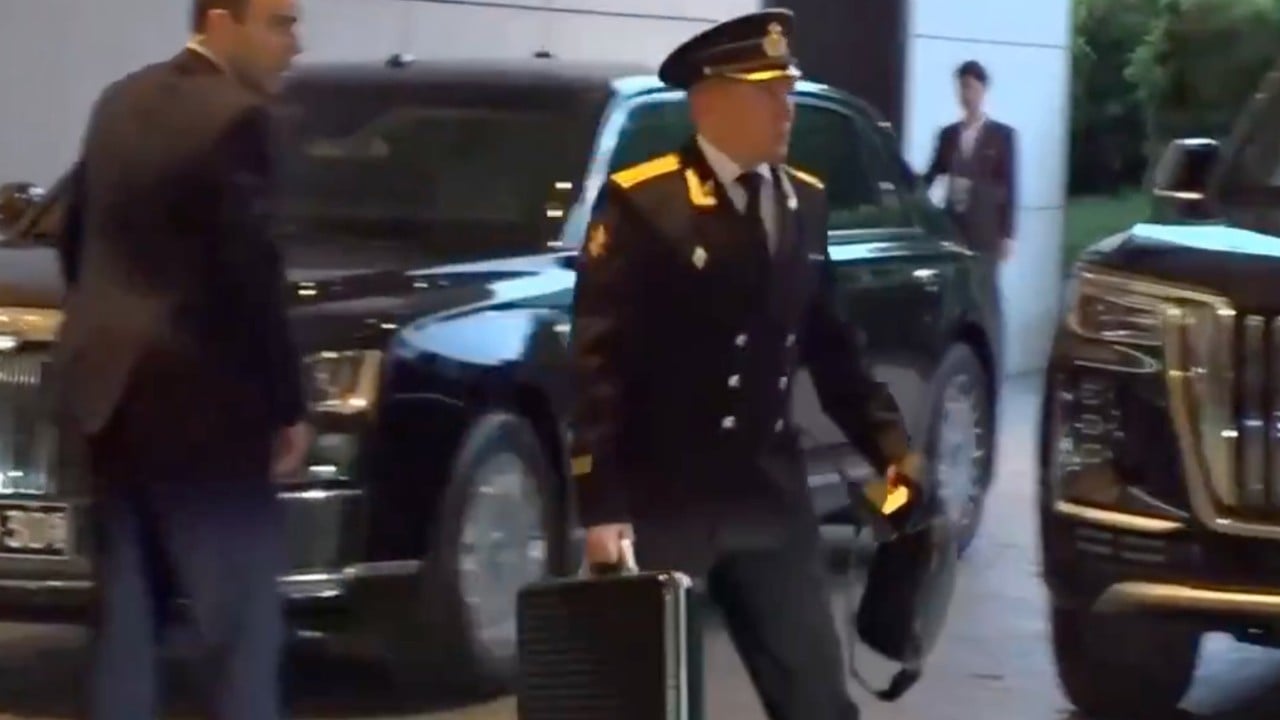
World leaders have descended on the southern Chinese city of Shenzhen for the Apec summit, and two of them likely brought their “nuclear button” with them.
The United States president’s famous briefcase – nicknamed the “nuclear football” – has yet to be sighted in the Chinese city. The so-called emergency satchel is actually a bulky black briefcase containing war plans and it can be used to send nuclear orders to the Pentagon.
But the Russian equivalent, known as the Cheget, made an unexpected appearance on the sidelines of the Asia-Pacific Economic Cooperation meeting on Wednesday morning.
In a clip shared by Russian state media outlet RT, an officer in a Russian naval uniform is seen carrying a black briefcase outside the hotel where President Vladimir Putin and his delegation are staying.
Spotting the presidential aide and the distinctive piece of hardware, the Russian journalist asks: “Is this the nuclear briefcase you have here?”
“The very one,” the officer replies with a smile.
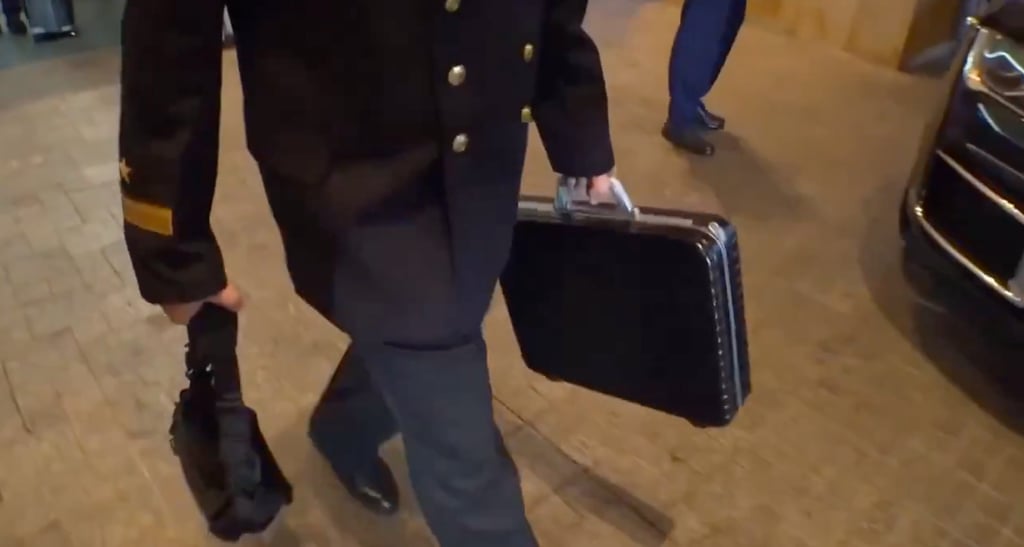
The portable terminal is part of the communications system through which orders to initiate Russia’s vast nuclear arsenal can be transmitted. A standard fixture of Putin’s presidential travel kit, it ensures that the Kremlin’s nuclear command network remains within arm’s reach wherever he is.
While the Russian briefcase routinely accompanies Putin on foreign trips – much like the American “nuclear football” which is always carried by a military aide who quietly follows the US president – the Cheget is not so often caught on camera, and rarer still openly identified in public.
Putin arrived in Shenzhen early on Wednesday morning to attend the Apec summit. A trilateral meeting between Putin, US President Donald Trump and Chinese leader Xi Jinping is expected to take place on Thursday.
The US and Russia, which have two of the world’s largest nuclear arsenals, have had their presidential nuclear briefcases in the global spotlight since the Cold War era. These devices now serve as reminders that the most destructive power in the world is concentrated in the hands of just two men.
Apec host nation China, by contrast, maintains a significantly smaller nuclear arsenal and follows a very different nuclear strategy of “minimum deterrence”.
While Beijing certainly operates its own nuclear command-and-control system and its stockpile has reportedly expanded rapidly in recent years, it remains unclear whether Xi travels with a dedicated portable terminal equivalent to the Cheget or the nuclear football.
KioskNews shows a cleaned-up reading view extracted from the publisher’s page — the original always lives on their site, not ours.