Sex CDs, honeytraps & power: Why Karnataka politics keeps getting caught on camera
Karnataka has a history of political scandals
BENGALURU: A sleaze CD cost a minister his post in 2021. A trail of pen drives sent a former MP to prison for life in 2025. In between, legislators claimed in the House that dozens of their peers had been caught on camera.
For nearly two decades now, Karnataka has seen a string of controversies involving alleged sexual misconduct, intimate recordings and blackmail, often making national headlines.One label has stuck, and the scandals have only grown in visibility and scale. Congress leader K N Rajanna, then cooperation minister, told the assembly in March 2025 that Karnataka was being called a factory of CDs and pen drives. He claimed 48 politicians had been honeytrapped, but named none.
What the numbers say
The latest allegations, involving political sting operations linked to former CM Siddaramaiah, have revived old questions. Why do such controversies keep surfacing here? Do they point to more sexual misconduct than in other states?Karnataka is often mistaken for the state with the most such cases. But a 2024 analysis of affidavits of 755 sitting MPs and 3,938 MLAs found that 151 had declared cases related to crimes against women, including rape.
The analysis, by the Association for Democratic Reforms (ADR) and National Election Watch, shows West Bengal had 25 such legislators, Andhra 21 and Odisha 17. Karnataka was not in the top three.An earlier ADR analysis, on a different dataset, placed Karnataka seventh, with seven such legislators. West Bengal led with 26, followed by Maharashtra and Odisha with 14 each. The figures cover declared crimes against women, not necessarily sex scandals, leaked videos or proven misconduct.
At the same time, it must be reiterated that a pending case is not proof of guilt.
Timeline of Cases
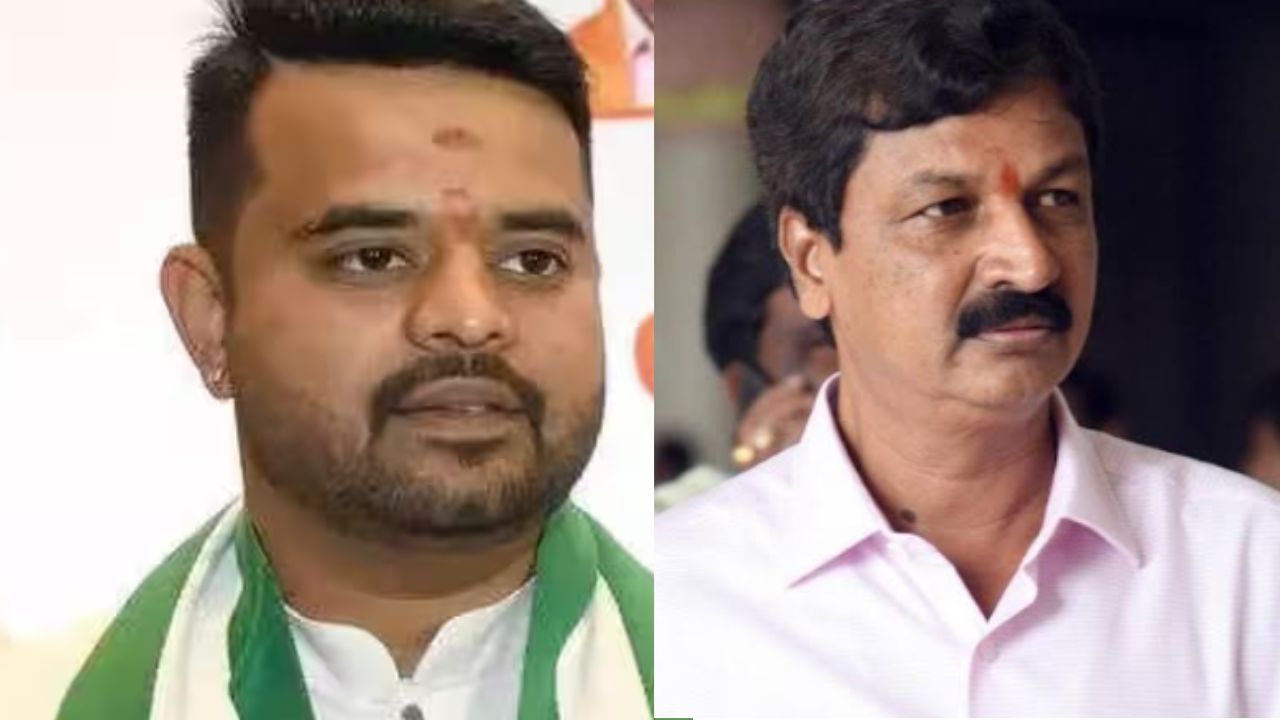
- 2024 | Prajwal Revanna’s pen-drive scandal- A major political storm broke out after sexually explicit videos allegedly involving former Hassan MP Prajwal Revanna surfaced in 2024. Several women filed complaints, leading to a special investigation team probe. In Aug 2025, a special court convicted Prajwal Revanna in one rape case and sentenced him to life imprisonment. The case remains one of Karnataka's most consequential sexual-abuse controversies.
- 2021 | Ramesh Jarkiholi’s CD controversy- In March 2021, then water resources minister Ramesh Jarkiholi resigned after a video allegedly showing him with a woman surfaced. A complaint alleged that he had promised the woman a govt job in exchange for sexual favours. Jarkiholi denied wrongdoing and described the controversy as a conspiracy. The episode triggered political protests and demands for an investigation into the allegations.
- 2019 | Arvind Limbavali’s video- In 2019, a purported video allegedly showing BJP MLA Arvind Limbavali in a compromising situation circulated and triggered a political controversy. Limbavali denied its authenticity and sought an investigation, claiming that he was being targeted. A forensic examination subsequently found the video to be fake.
- 2016 | HY Meti’s resignation- In 2016, then excise minister HY Meti resigned after a purported video involving him and a woman triggered controversy. Allegations emerged that the woman had sought a favour relating to a job transfer. The woman subsequently withdrew her allegations, and the CID investigation ended without charges being established against Meti.
- 2014 | SA Ramdas faces allegations- Former minister SA Ramdas faced allegations that he had sought sexual favours from a woman. Police registered a case following a complaint, and the controversy attracted significant attention. Ramdas denied wrongdoing. The Criminal Investigation Department subsequently cleared him of the allegations.
- 2013 | Raghupathi Bhat’s video row- A purported video allegedly involving BJP MLA Raghupathi Bhat surfaced ahead of the Karnataka Assembly elections. The controversy drew attention because of its timing and the political implications for the legislator. Bhat subsequently withdrew from the electoral contest that year.
- 2012 | Porn in the house- In 2012, Laxman Savadi, CC Patil and J Krishna Palemar, then ministers in the BJP govt, resigned after Savadi and Patil were caught watching explicit material on a mobile phone during assembly proceedings. A House committee recommended censure of Savadi but cleared the other two. A separate criminal complaint faced a procedural hurdle.
- 2010 | Hartal Halappa’s rape case- In 2010, then Karnataka minister Hartal Halappa faced allegations that he had raped his friend's wife. He resigned later. The case attracted considerable attention because of his position in the BJP govt. Halappa denied the allegations and faced legal proceedings. A court acquitted him in 2017, citing insufficient evidence.
- 2007 | Renukacharya’s controversy- BJP legislator Renukacharya faced allegations of sexual harassment from a nurse who claimed that he had pressured her to marry him. The controversy intensified after photographs of the two surfaced publicly. She later withdrew her case, bringing the legal controversy to a close.
Why sex scandals repeat
It's arguable from the numbers that what sets Karnataka apart is visibility, not volume. The stakes are high, given the alleged involvement of prominent netas, ministerial exits, police probes, leaked recordings and how often the material becomes a political instrument.There are a few factors that make scandals a recurring theme in Karnataka politics.The first factor is the power imbalance. Legislators control a network of jobs, transfers and favours, potentially leaving those seeking favours vulnerable to exploitation.The Prajwal case, involving videos of women including domestic workers, party staff and govt personnel, highlighted how fear of political influence can delay complaints. The same access can also expose public figures to entrapment when encounters are recorded."When a minister's office controls postings, contracts and licences, consent is difficult to separate from the need to protect one's livelihood," says a retired IAS officer who has worked closely with senior politicians for over two decades.The second factor is rivalry. Compromising material becomes a weapon in struggles within parties, between factions, and between govt and opposition. Allegations involving recordings have repeatedly intersected with contests over ministerial berths, party leadership and electoral prospects.The latest episode has been linked by opposition leaders to a power struggle within the Congress, amid opposition efforts to exploit divisions in the governing party. Some allege the entrapment attempts were politically motivated; others say they were driven by financial blackmail. These remain allegations, not established findings."Their timing often coincides with cabinet expansions and leadership tussles," says political strategist MB Maramkal.The third is technology. A camera in every pocket turns a private act into a recording, and a recording into currency. The Prajwal case showed how explicit material could overshadow an election campaign, trigger police probes and prompt rival claims over who recorded and circulated the videos."Once a file is out, it cannot be recalled. Whoever holds a recording wields leverage even without publishing it. What a man records for control can be copied, leaked or sold by someone else, so the material that traps a victim can also trap the perpetrator," says Vishwanath Belliappa, a software professional.
The flawed ‘honeytrap defence’
Accused politicians often claim they were "honeytrapped", that is, deliberately lured into a compromising situation by rivals to be blackmailed or disgraced. This honeytrap defence has a corrosive side effect: genuine complaints get dismissed as conspiracy, and real victims become props in a factional fight.Both can be true: a trap can be political, and the conduct it exposes can still be criminal.The law asks what happened, not who gained from the exposure.
"No single cause explains the recurrence. The decisive test is whether complaints are investigated impartially, digital evidence is forensically authenticated, victims and witnesses are protected, and allegations are settled through due process rather than political pressure," says Karnataka HC advocate Hidayathullah Kuvendu."Without that, such cases risk becoming political theatre instead of prosecutions, and without reliable comparative data, the state's notoriety may keep growing faster than the evidence to explain it. Karnataka's problem lies elsewhere: its politics treats scandals as ammunition first and crimes second."
KioskNews shows a cleaned-up reading view extracted from the publisher’s page — the original always lives on their site, not ours.