Ma Wee Tin O’Shortbreid: a journey in search of the real Highlands
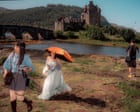
Growing up in Scotland, our family was one of many who kept their photographs in an old shortbread tin. The lid usually showed a castle beside a loch, a stag, a Highland coo and plenty of tartan. It was always sunny.
Ma Wee Tin o’ Shortbreid is Scots for “my little tin of shortbread”. The title started as a warning to myself: don’t make the Highlands look like a tin of shortbread.
Then, at Eilean Donan Castle, about as biscuit-tin lid as it gets, I photographed a Chinese tourist under a wee umbrella, remaking the view for her own photograph.
The warning became the title.
-
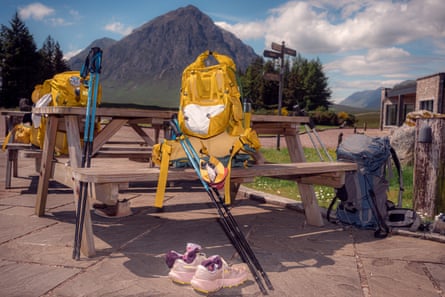
Yellow backpacks and trekking poles rest on benches, with Ben Nevis rising behind
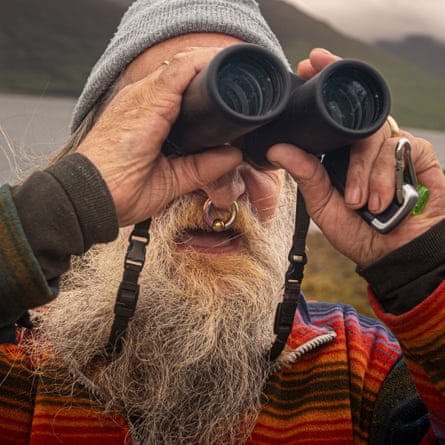
They were shot to extinction in Britain, the last one in Shetland in 1918. Brought back from Norway in the 1970s. Now they are one of the island’s biggest draws. A bird once shot on sight is part of the sales pitch. The Scotland on the lid promises wilderness and wildlife. The real one comes with binoculars and a long wait.
-
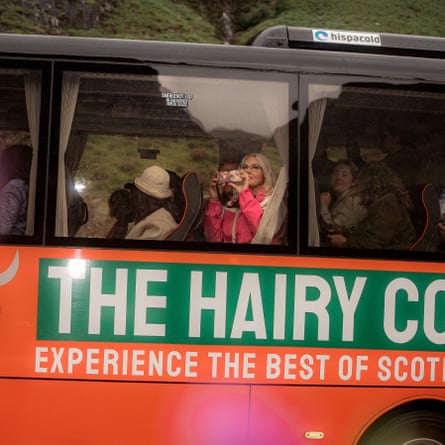
(L-R): Isle of Mull. Out of the camper van, looking for white-tailed eagles and a tourist photographs the Scottish Highlands through a coach window.
One of the buses that leave Edinburgh every morning to do the Highlands in a day. Most of the day is spent on the bus. Glencoe seen through the window of a Heilan coo (Highland cow).
-
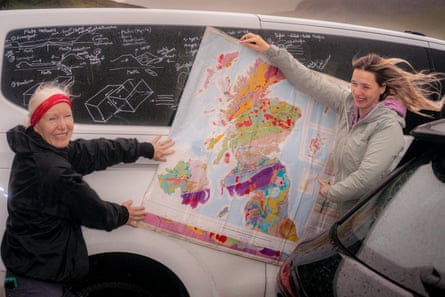
Glencoe, Highlands. Two women with a geological map. There was a supervolcano here about 420m years ago. In 1909 it became the textbook case for how one collapses. The glaciers finished the job. The forces that shaped Scotland. No, not the English.
Some of that emptiness was made. Highland regiments fought the empire’s wars while the glens were cleared for sheep and sporting estates. The view people come for was somebody’s home.
-
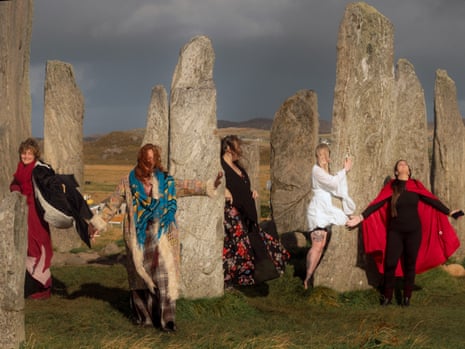
Callanish standing stones, Isle of Lewis. They went up 5,000 years ago, older than Stonehenge.
Visitors arrive looking for a Scotland they’ve seen on screens. They come for wilderness and find a queue, a coach park and a wait for somebody to move out of the frame.
-
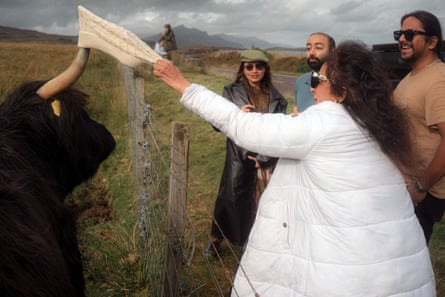
Isle of Skye. Highland cattle, one of the oldest registered breeds in the world, with a herd book going back to 1885. Bred to stand outside all winter without a hat. Even the coos get a souvenir.
At the famous sites, I kept noticing how many visitors were Chinese and Indian, from countries Britain once ruled, traded with or fought. They were photographing the familiar symbols of old Scotland. This time, Scotland was the attraction, and they were the ones behind the camera.
-
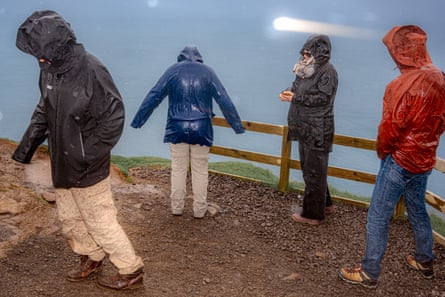
Kilt Rock, Isle of Skye. Named because the cliffs look like a pleated kilt. Nobody believes you’ve been to Scotland without a soaking-wet picture.
Even the weather is for sale. Cool air and rain have become part of the escape. In what felt like London’s hottest summer ever, Londoners drove north to find the cold and wet, though a week of horizontal rain may test the sales pitch.
-
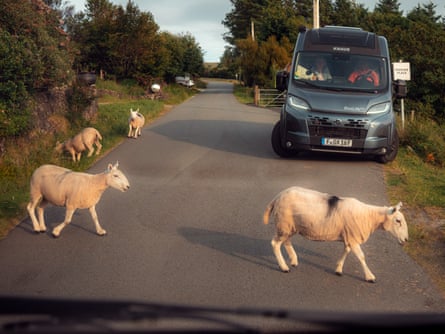
Most Highland roads are one-lane wide with passing places. Out on the open hill, there’s often no fence between the sheep and the road. All the way from Frankfurt to give way to a sheep.
I’m making these photographs on repeated trips in my camper van: 60 days and 5,000 miles so far, a good part of it stuck behind a motorhome. I’ve been to Skye five times and driven the North Coast 500 (NC500) road in both directions. The project grew out of Weather Permitting, my photographs of Scotland’s ski centres.
Reaching the wilderness usually means driving to it, on the same narrow roads as residents, deliveries, coaches and motorhomes. An empty road makes a good advert. Everyone driving down it makes a different picture.
-
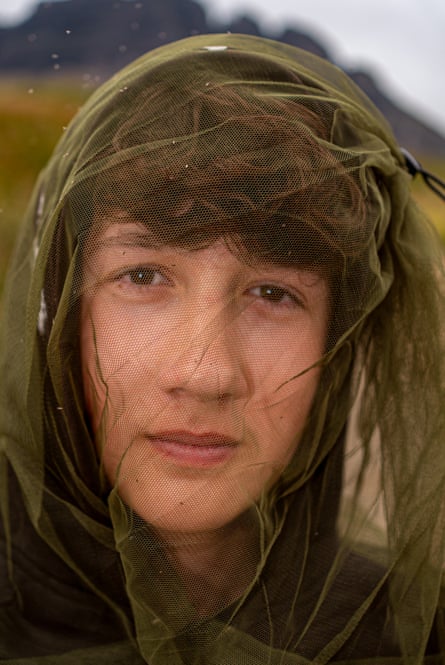
Ben Nevis, near Fort William. Scotland has a daily midge forecast, one to five. People swear by Avon Skin So Soft as a repellent. Only the females bite, while the males feed on flowers. When one finds you, she sends for her pals. Tiny, relentless, and missing from the shortbread tin.
-
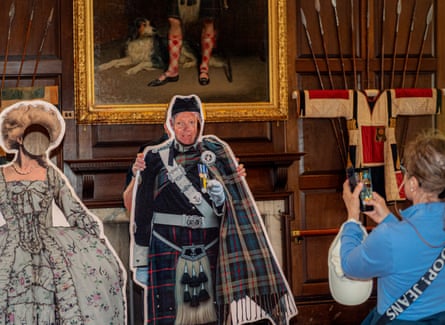
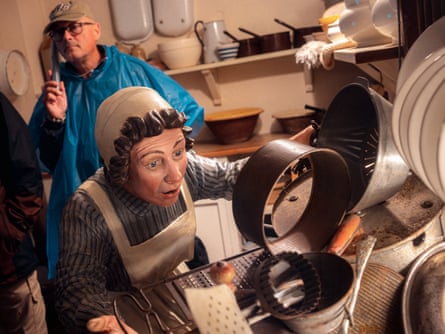
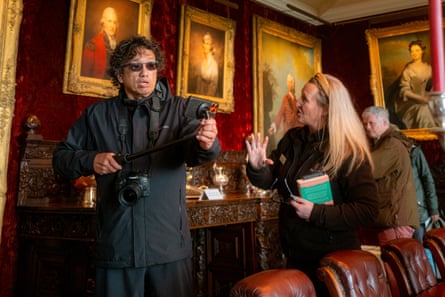
Blair Castle, Blair Atholl, Perthshire. Home of the Atholl Highlanders, the only remaining private army in Europe. One of the first castles to open to the public, in 1936. Anyone can be chief now. Right: Eilean Donan Castle, near Kyle of Lochalsh. The kitchen is set up as it was in the 1930s, halfway through getting a banquet ready. The cook’s been at the same pot since 1932.
-
Dunvegan Castle, Isle of Skye, home of the MacLeod chiefs for 800 years and the oldest continuously inhabited castle in Scotland. There are quite enough portraits in here already. They’ve never had as many followers.
-
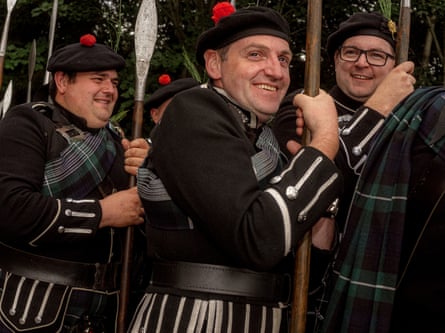
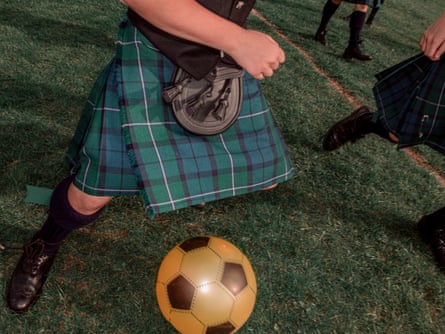
Strathdon, Aberdeenshire, 7.30am. The Lonach Highlanders set off on their six-mile march to the Lonach Highland Gathering, same as every August since the 1830s. Eight-foot pikes, a dram and a shout of ‘Ho, ho Lonach’ at six houses on the way. The pikes get heavier. Right: After Culloden, the Dress Act of 1746 made wearing the kilt a crime, and it stayed that way until 1782. Now they play fitba in them. Jumpers for goalposts. Sporrans for shin pads.
-
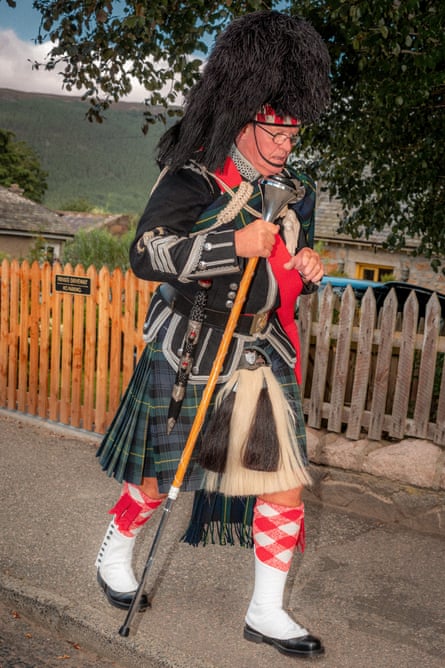
Braemar, Aberdeenshire, the morning of the Braemar Gathering, a few miles up the road from Balmoral. Queen Victoria came in 1848 and royalty has been turning up ever since. About 17,000 people come for the caber, the pipe bands and a look at the king. Nobody in the glen would dream of telling the drum major he’s overdressed.
-
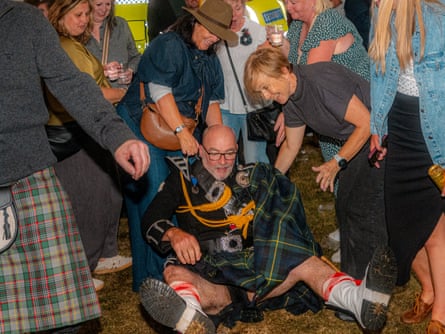
The Lonach Highland Gathering. Highland fling. The proper one is danced on the spot, on the balls of the feet, without ever moving off it. The ladies are about to find out what a true Scotsman wears under his kilt.
-
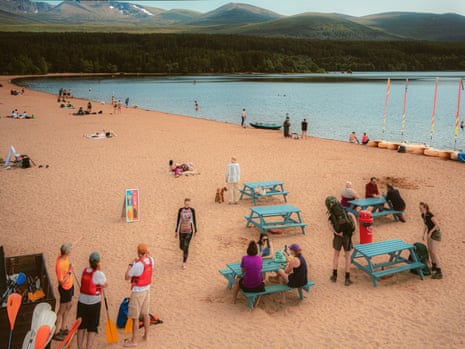
Loch Morlich, near Aviemore. Britain’s highest beach, on the road to the Cairngorm ski slopes. It is 300 metres up and in 2009 it became the first freshwater loch to win a Seaside award. Wetsuits are recommended.
-
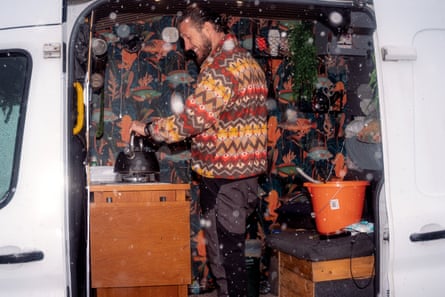
Cairngorm Mountain ski resort, near Aviemore. The kettle goes on in the back of a camper van as the snow comes down. Tropical aquarium inside. Snowstorm outside.
-
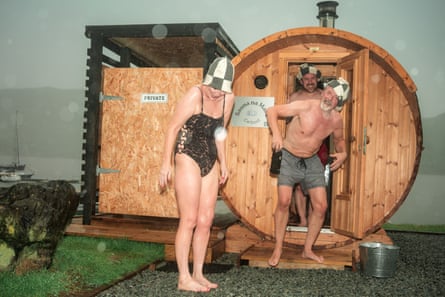
Sauna na Mara, Carbost, Isle of Skye. Carbost is better known for the Talisker distillery up the road but the wood-fired sauna on the shore has become part of the island’s new wellness trail, alongside the cold-water swimmers, the boutique bothies and the queue for the same photo at the Fairy Pools. One way or another, you’ll warm up.
-
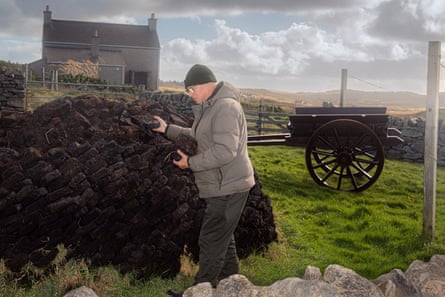
Isle of Lewis. Crofters have had the right to cut peat for their own fire since 1886. Not to sell it. Peat grows about a millimetre a year. A winter’s fire takes thousands of years to make and an afternoon to cut. It heats the house and flavours the whisky.
-
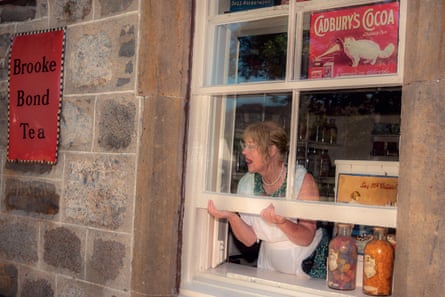
Newtonmore, Highlands. Shut that windae, you’re letting the heat oot.
-
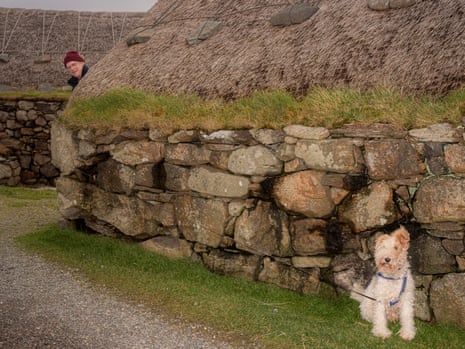
Isle of Lewis. A traditional dwelling called a blackhouse, with its roof tied down with ropes and stones against Atlantic gales. Family lived at one end, cattle at the other. People were still living in them on Lewis until 1974. Now you can book one for the week. The dog hasn’t been offered a room.
Tourism brings work and money. It also needs people who can afford to live close enough to keep the place running. Between No Motorhomes and No More Homes, it’s getting harder for anyone to stay.
-
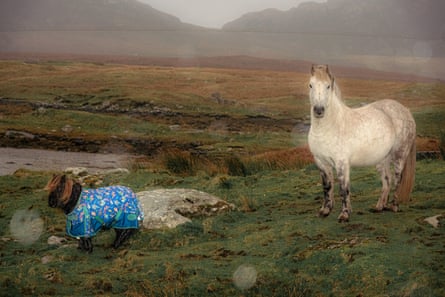
Isle of Benbecula, Outer Hebrides. Eriskay ponies once carried the crofters’ peat and seaweed. By the 1970s, the breed was down to 20 mares and one stallion. The big grey is an Eriskay, bred with a waterproof coat. The wee one is a miniature shetland pony. Had to buy its own.
-
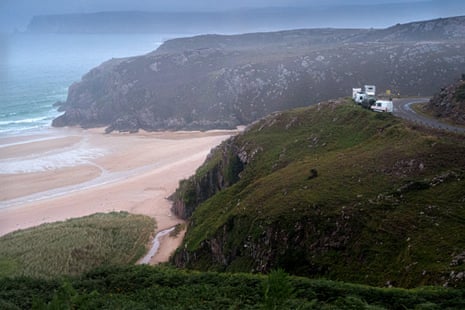
Ceannabeinne beach, near Durness, Sutherland, on the NC500. Nobody on the sand. Everybody on the bend.
The NC500 was launched in 2015 to sell 516 miles of empty road. It worked. Camper van life has its own pitch: freedom, independence, a new view every morning. In practice, it depends on ferry bookings, fresh water, waste points and somewhere you’re allowed to stop. Freedom, it turns out, needs a booking reference.
Travelling this way, I’m part of what I’m photographing, on the same roads, ferries and overnight stops as everyone else. The open road can still end at a full layby or a No Motorhomes sign. Passing places become car parks and viewpoints become campsites.
-
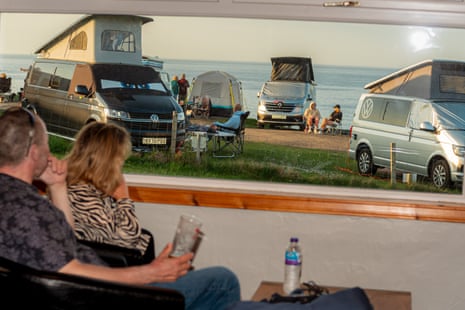
Durness, Sutherland, on the NC500. Everybody parks to face the sea. You used to be able to see it from here.
-
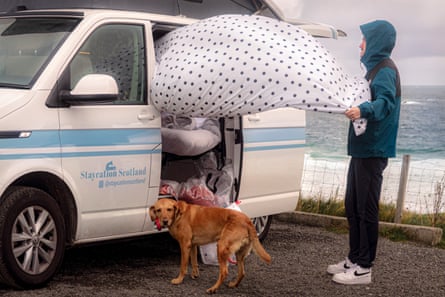
Durness, Sutherland, on the NC500, about as far north-west as the mainland goes. Nothing between here and the Atlantic to slow the wind down. The duvet’s making a break for it.
Over July and August one year, about 14,000 motorhomes and nearly 11,000 tents pitched up within five miles of Durness. A few hundred people live there … The NC500 has been a named tourist route for just over a decade. What will it look like in another 10 or 20 years? Part of making these photographs is recording this moment, before we find out.
-
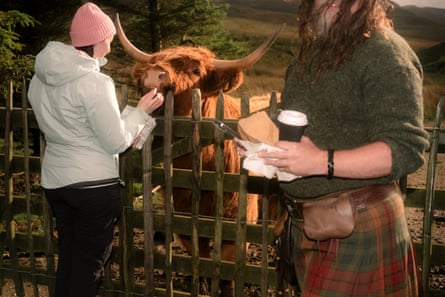
Isle of Skye. Two Highlanders. Only one of them’s been on a shortbread tin.
The pictures are about the gap between Scotland as advertised and the place people find. I set out not to photograph the shortbread tin. I kept finding people trying to climb inside it.
KioskNews shows a cleaned-up reading view extracted from the publisher’s page — the original always lives on their site, not ours.