Gwangju biennale opens after naming controversy
Taiwanese artists and curators on Saturday welcomed the opening of the Gwangju Biennale’s Pavilion Project’s “Taiwan Pavilion,” following a naming controversy that led to China’s withdrawal from the event.
Speaking to CNA, Chen Kuang-yi (陳貺怡), director of the National Taiwan Museum of Fine Arts (NTMoFA), which curated the pavilion said that she was elated after “striving through official channels for the chance to open the exhibition properly.”
“Every day when we woke up, there would be different issues, different answers and different solutions,” she said, adding that she lost count of the number of letters sent back and forth between the NTMoFA and organizers, the Gwangju Biennale Foundation.
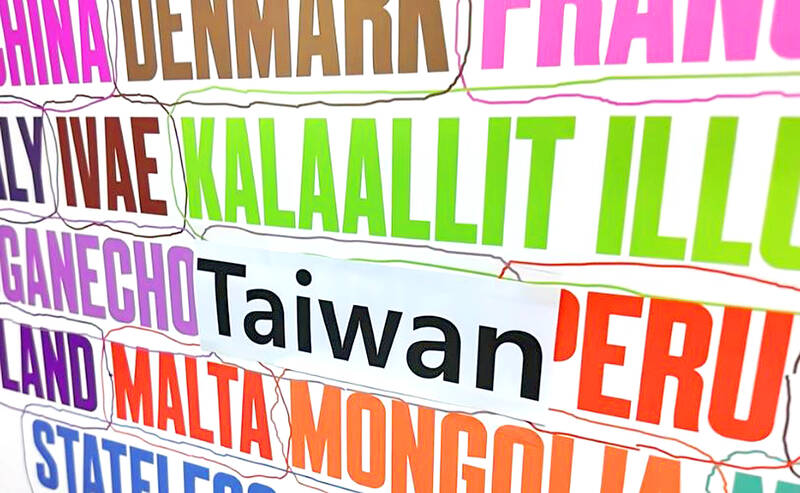
A sticker reading “Taiwan” is pasted over the acronym “NTMoFA” in a poster for the Gwangju Biennale in Gwangju, South Korea, on Saturday.
Photo: Screengrab from CNA’s YouTube channel
The foundation had initially listed the pavilion as “The NTMoFA Pavilion” in promotional materials, but agreed to allow it to use the name “Taiwan Pavilion” on Aug. 26, amid accusations of political censorship from artists and Taiwan’s government.
Exhibiting artist Chen Ting-ting (鄭亭亭) said she believed the foundation’s final decision was driven largely by an outpouring of support for Taiwan from the people of Gwangju and international artists.
Su Hui-yu (蘇匯宇), the first Taiwanese artist to notice that the name “Taiwan Pavilion” was removed from the promotional materials, said that all the artists stood together in solidarity: “If our Pavilion’s name is not given back, we would rather not participate.”
The name restoration demonstrated that art transcends nationality, Su said.
“This is the first time I feel that art possesses such great influence,” she said.
On Thursday last week, China’s curatorial team announced its withdrawal from the Pavilion Project, citing the participation of “the Taiwan region of China” under a name “inconsistent with its status,” Chinese state media said.
In response, the Gwangju Biennale Foundation said that it had applied designation standards in accordance with the administrative procedures, adding that it hoped China’s pavilion would be able to resume its participation.
KioskNews shows a cleaned-up reading view extracted from the publisher’s page — the original always lives on their site, not ours.