PV Sindhu Expects BWF To Review 25-Second Shot Clock After Player Concerns
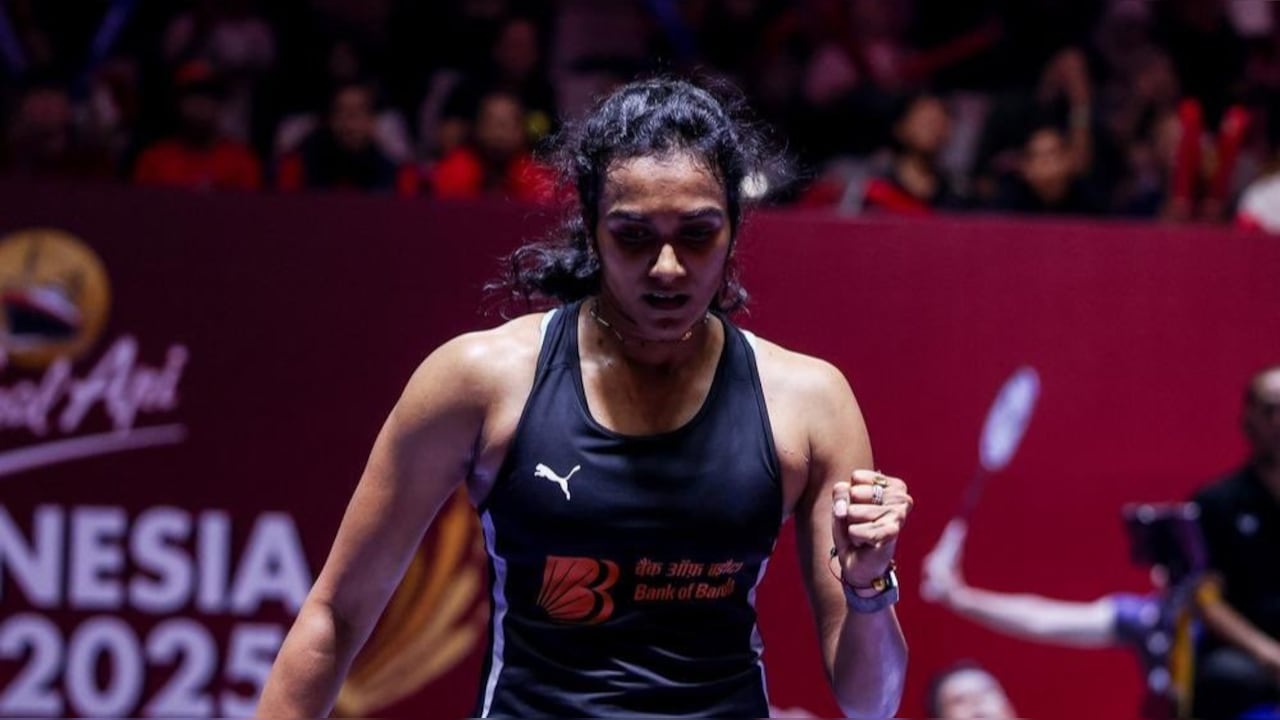
Two-time Olympic medallist P V Sindhu on Wednesday said she expects the Badminton World Federation's (BWF) 25-second shot clock trial to undergo a review after multiple concerns about its fairness were raised with the governing body by players, including herself. The shot clock is being trialled at select BWF World Tour tournaments this year. Under the regulation, players must be ready to serve within 25 seconds of a rally ending. "There have been a lot of ups and downs. For some people, it's still new, and sometimes a few umpires are very strict. There are instances of yellow cards and red cards..." Sindhu said during a virtual interaction.
"We've been getting used to the 25-second clock. It's been almost seven tournaments now, and there's been a lot of improvement. Initially, it was really hard for both the umpires and the players to understand because sometimes the receiver would be ready, but the server wouldn't be, and sometimes it would be the other way around," she explained.
"It took some time to understand how this 25-second clock works. Sometimes there are still five or seven seconds left, but the umpire says, 'Your opponent is ready, so why aren't you?'... but there are still seven seconds left. There's been a lot of discussion on this."
Sindhu, who is also the chairperson of the BWF Athletes' Commission, said she has communicated players' concerns to the world body and expects the system to be reviewed.
"Being the chair of the Athletes' Commission in the BWF, I've notified them and shared my thoughts. Players had come to me and told me what they feel. I've seen a lot of change in terms of how umpires are making sure it is being used the right way. There have been a lot of changes and the umpires have also been understanding," she said.
"When you go through a long rally, everybody needs to understand that we are human beings. For players, it's really hard as well. So there needs to be some understanding.
"At the same time, as athletes, we also understand that we need to be prepared earlier and know what is expected of us. We are getting used to it, and we know there can be warnings if we are not ready."
On the debate around warnings and penalties, Sindhu added:
"There's been a lot of debate as well. A couple of players have asked, 'How is it fair that we are arriving on time but still receiving a warning?' So there are discussions around that, and I've shared my views."
At the French Open, home favourites Thom Gicquel and Delphine Delrue, the reigning world champions, were shown a rare red-card penalty at 19-19 in the deciding game against China's world No. 1 pair, Feng Yan Zhe and Huang Dong Ping.
The penalty resulted in an automatic point being awarded to the Chinese pair, who went on to win the next rally and claim the match 21-19 to advance to the final.
The direct impact of the shot-clock system at such a crucial stage of the match triggered widespread criticism from players and fans over the rigidity of the trial rule.
"I've seen what happened in the French Open semi-finals and I've shared my thoughts. They're reviewing it and will come back with their findings soon. Some players are okay with it, some are getting used to it, while others are still trying to understand it," Sindhu said.
"But I'm sure things will change and eventually everyone will reach a conclusion. At the same time, it's unfortunate for an athlete when, after a long rally, they are tired or perhaps unknowingly take a little extra time, and an umpire ends up showing a yellow or red card.
"I'm sure things will evolve. At the same time, when the proposed 15-point format comes in, it could change things even further. I've conveyed all these concerns to the higher authorities, and they are looking into them," she added.
(Except for the headline, this story has not been edited by NDTV staff and is published from a syndicated feed.)
Featured Video Of The Day
CWG 2026 Weightlifting Gold Medallist, Mirabai Chanu Get Hero's Welcome in Delhi
KioskNews shows a cleaned-up reading view extracted from the publisher’s page — the original always lives on their site, not ours.