Groundbreaking but no Yalta 2.0: what to expect when Xi, Putin and Trump meet
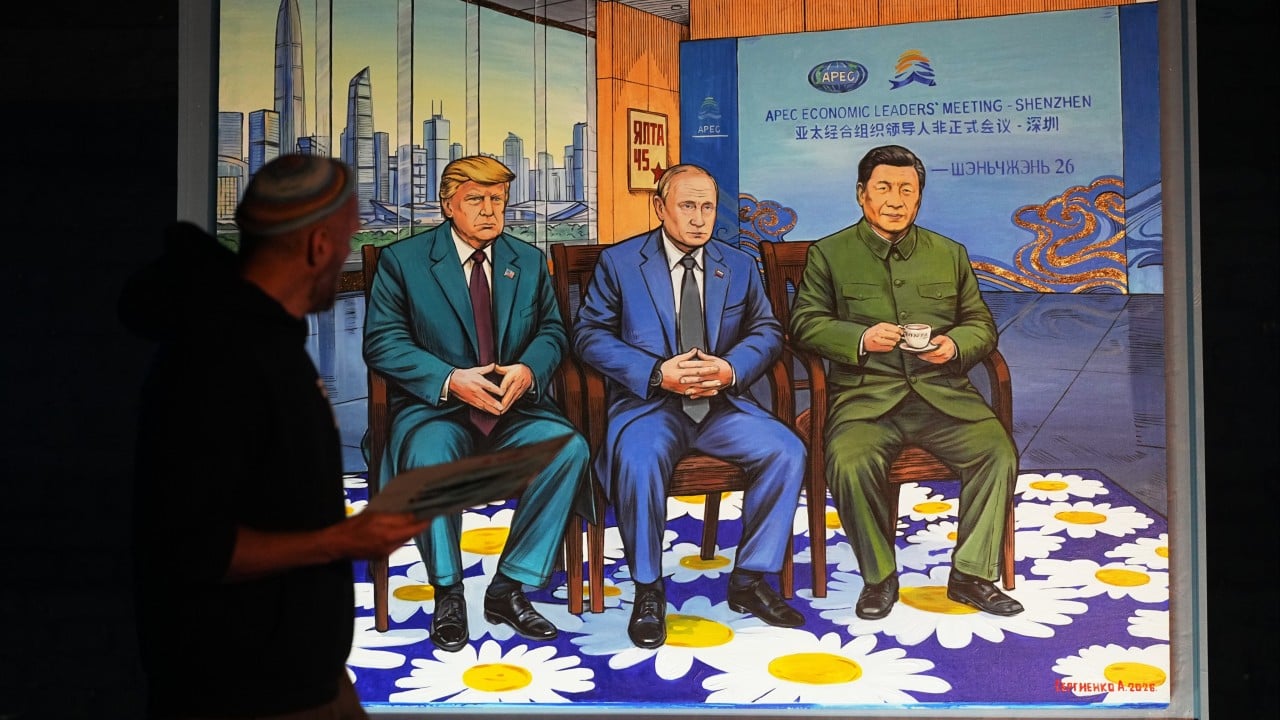
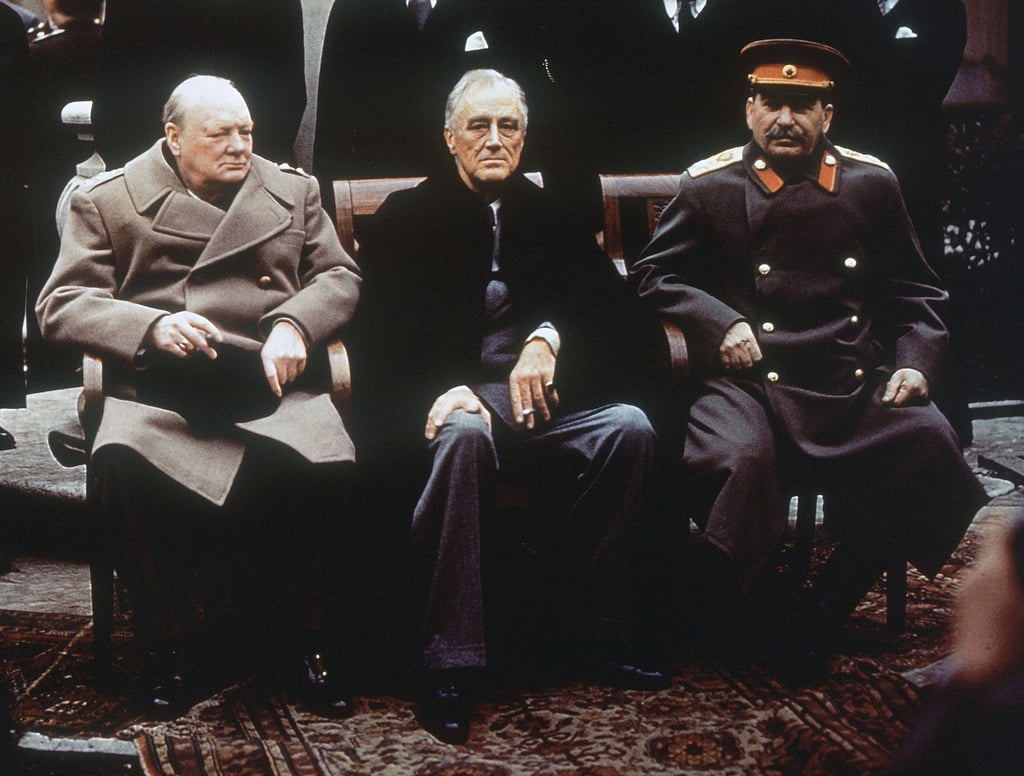
The unprecedented meeting of the Chinese, Russian and US leaders planned for Thursday has prompted comparisons with the 1945 Yalta Conference, where the Allied powers of Britain, the Soviet Union and the US mapped out the post-World War II global order.
But Chinese observers say the comparison misses the mark, with the trilateral talks less of a “Yalta 2.0” that redraws the global order but more of a chance for each leader to press his own agenda.
Beijing confirmed on Monday that presidents Xi Jinping, Vladimir Putin and Donald Trump will meet on Thursday in the southern Chinese city of Shenzhen, on the sidelines of the Apec summit.
Foreign ministry spokeswoman Mao Ning said the three leaders would exchange views on “safeguarding world peace and promoting strategic stability in major-power relations”, describing the meeting as having “groundbreaking significance”.
“Strengthening communication, managing differences and stabilising relations among China, Russia and the US serve the interests of all three countries and align with the expectations of the international community,” she said.
Some observers, including a senior Russian lawmaker, have likened Thursday’s meeting to the Yalta Conference, where Franklin D. Roosevelt, Winston Churchill and Stalin struck a deal that effectively divided post-war Europe into spheres of influence.
The comparison has unsettled governments in Europe and Asia, fearing the three powers could strike a deal without them at the table, including on the Ukraine war and security in the Taiwan Strait.
Cui Hongjian, head of European Union studies at Beijing Foreign Studies University, said Beijing had little reason to see the meeting as a “new Yalta” because it had been promoting a multipolar world.
“In China’s view, the essence of world multipolarity should be the democratisation of international relations. If at this moment [Beijing] pursues a new Yalta, pursues a new division of spheres of influence, that is clearly not the democratisation of international relations,” he said.
Cui said Beijing would “definitely oppose” any attempt to frame the meeting as a new Yalta, given Beijing’s long opposition to creating spheres of influence.
Instead, he said, China wanted to use the talks to lock in the stabilisation of major-power relations. A three-way format could also ease the suspicion that arose when the powers dealt with each other bilaterally.
“In China’s view, whether it’s shaping a multipolar world order or resolving some of the current major issues, an important precondition is that the major powers cannot fall into endless competition,” he said, adding that some stability was needed between major powers.
Zhao Long, director of the Institute for International Strategic and Security Studies at Shanghai Institutes for International Studies, said that likening the coming trilateral meeting to a new Yalta conference overlooked today’s international landscape, which was “fundamentally different” from that of 80 years ago.
“The international community is no longer one in which a few major powers carve up spheres of influence and decide the fate of other countries. That era is long gone,” he said.
“China was once a victim of the Yalta system and its interests were carved up by major powers. It is therefore impossible for China to repeat such an erroneous arrangement that lacked legitimacy.”
02:53
US midterm elections: What the results mean for mainland China, Taiwan and foreign policy
Zhao said he expected that China would firmly reject an exclusive grouping of the three countries, or a “G3”, and would instead try to explore what he called a “responsible three”, or “R3”, model in which major-power coordination served international peace and stability.
The meeting has been a topic of global discussion since Trump and Putin’s back-to-back Beijing trips in May but experts say progress has stalled partly due to the difficulty in setting an agenda.
While Beijing has not outlined what will be discussed, Trump has said he wants to focus on nuclear arms control and the Iran war when he sits down with his two counterparts this week. Beijing has long resisted pressure to join trilateral arms-control talks with Washington and Moscow, pointing out that the other two powers have much larger nuclear arsenals.
Last week the South China Morning Post reported that the trilateral meeting could produce a commitment to control artificial intelligence in nuclear arsenals as part of a broader agenda on global governance.
Wang Yiwei, director of the Institute of International Affairs at Renmin University of China in Beijing, said China was “simply not a party” to denuclearisation talks but added that Beijing could discuss issues such as the military use of artificial intelligence.
He said the three leaders could also discuss global challenges such as the wars in Ukraine and Iran, noting that all three countries were permanent members of the UN Security Council.
“China’s position is likely that as three of the world’s most significant powers … China, the US and Russia should sit down to discuss the future direction of the international order and the preservation of the UN’s authority,” he said.
Wang said the talks appeared to benefit Moscow and Washington more. With Russia weakened by the war in Ukraine, Moscow wanted to “revive a sense of history that speaks of Russia’s legacy as a major power”, he said, referring to the Yalta talks.
Trump open to nuclear talks with Xi and Putin
The war had “created a situation that now necessitates a more aggressive diplomatic and strategic posture” for Moscow, he said.
Trump, meanwhile, was seeking a diplomatic win after heavy losses in the US midterm elections, Wang added.
But Cui said Beijing also stood to gain. “China clearly hopes to make this a very important, successful piece of home-ground diplomacy to further show China’s image as a stable, constructive force,” he said.
If the meeting could in turn help to build a constructive three-way relationship, he added, it would help Beijing pursue its goals that depended on coordination between the major powers.
“From the logic of Chinese diplomacy, the most important thing is to first lay the foundation, then build a platform and then have long-term, sustainable development,” he said.
Zhao said that at a time of mounting geopolitical conflicts and dwindling strategic trust among major powers, the trilateral summit itself sent a “very positive” signal that the trio were working to manage their differences and were pursuing coordination through dialogue.
For China, the greatest value of the meeting lay in giving the international community more stability and certainty as public goods, while creating conditions for an equal and orderly multipolar world, Zhao noted.
But he cautioned that expectations for the outcome should be “cautious and reasonable”.
“There are clear differences between the three sides in their basic positions and policy priorities,” he said.
KioskNews shows a cleaned-up reading view extracted from the publisher’s page — the original always lives on their site, not ours.