New book 'Fairy Lights in God’s Backyard' is messy, beautiful, and full of light - review
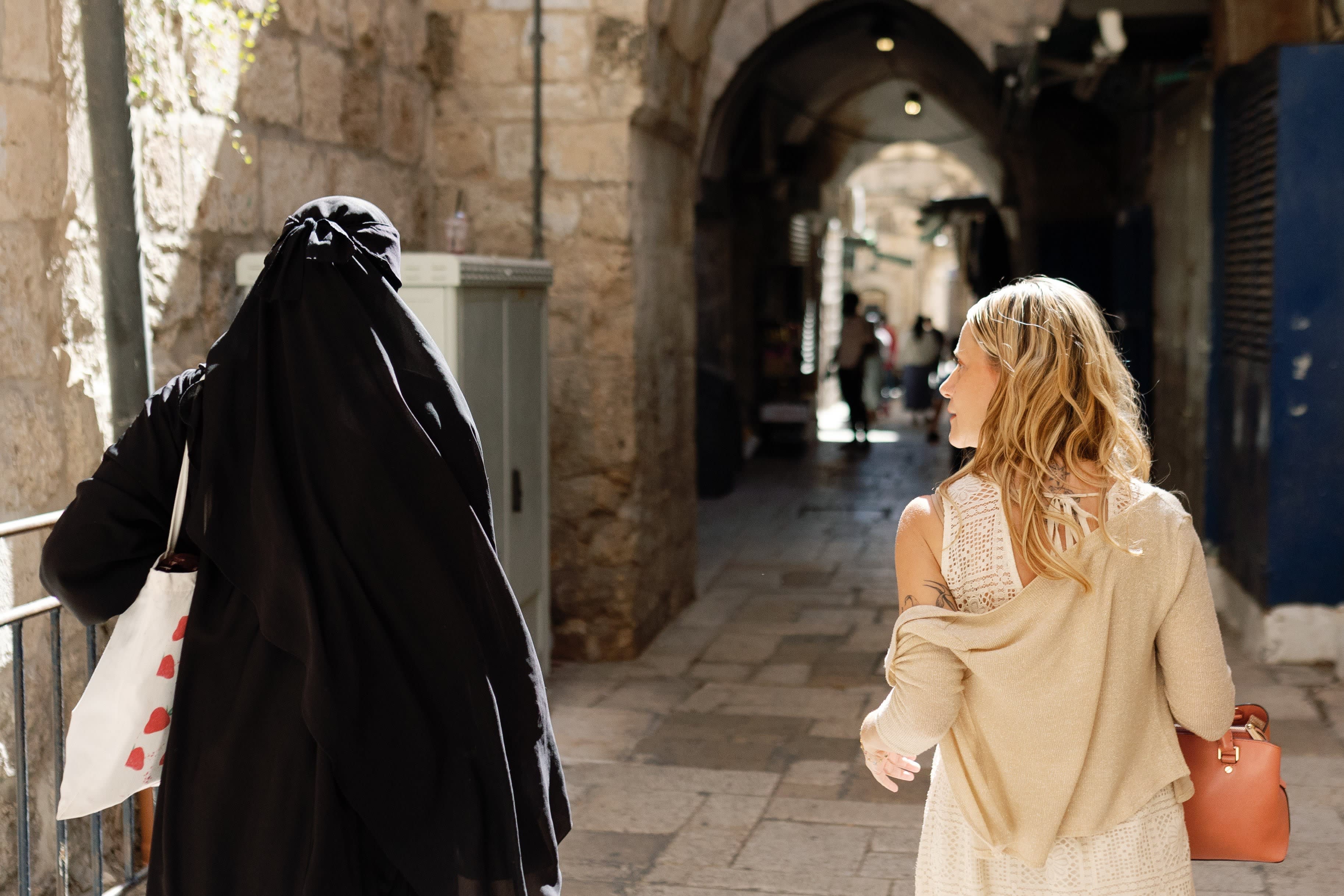
Sarah Tuttle-Singer, author of Fairy Lights in God’s Backyard: A Jerusalem Love Story, finds the stories beyond the headlines. “I’m interested in the ways people connect across differences, and in the moments when someone surprises us by being more complicated, more generous, or more human than we expected,” she says. Jerusalem has taught her that “multiple truths can exist at once, and listening to someone else doesn’t require surrendering your own.”
“Jerusalem is always the main character in my work,” she explains. “And I’m still discovering her.”
The Magazine caught up with Tuttle-Singer, also author of 2018’s Jerusalem, Drawn and Quartered, to discuss her new book.
What is ‘Fairy Lights in God’s Backyard’ about?
It’s about love, loss, friendship, motherhood, faith, trauma, survival, and the peculiar magic of ordinary life in Jerusalem. Whereas my first book was about discovering the Old City and its communities, Fairy Lights is about what happens when a place becomes part of your identity – when the streets aren’t just history or scenery but the backdrop to your most intimate experiences.
What does the title mean?
For me, Jerusalem is God’s backyard. Not because everyone here agrees on God – quite the opposite – but because this is a place where the divine and the ridiculous, the sacred and the profane, the ancient and the ordinary are constantly bumping into each other. And the fairy lights are those little moments of beauty and human connection that illuminate the darkness. They’re the things we notice when we stop looking only at the headlines. They’re the conversations, friendships, acts of kindness, moments of tenderness, and flashes of unexpected joy that remind us why life is worth living.
Motherhood is part of your writing. Can you tell us about your children?
I’m the mother of three children: an 18-year-old daughter, a 16-year-old son, and a four-year-old son with special needs. Raising him has changed the way I experience the world, including Jerusalem. He notices things that other people overlook. He has his own relationship with the city’s sounds, textures, rhythms, and routines. Through him, I’ve learned to experience familiar places differently.
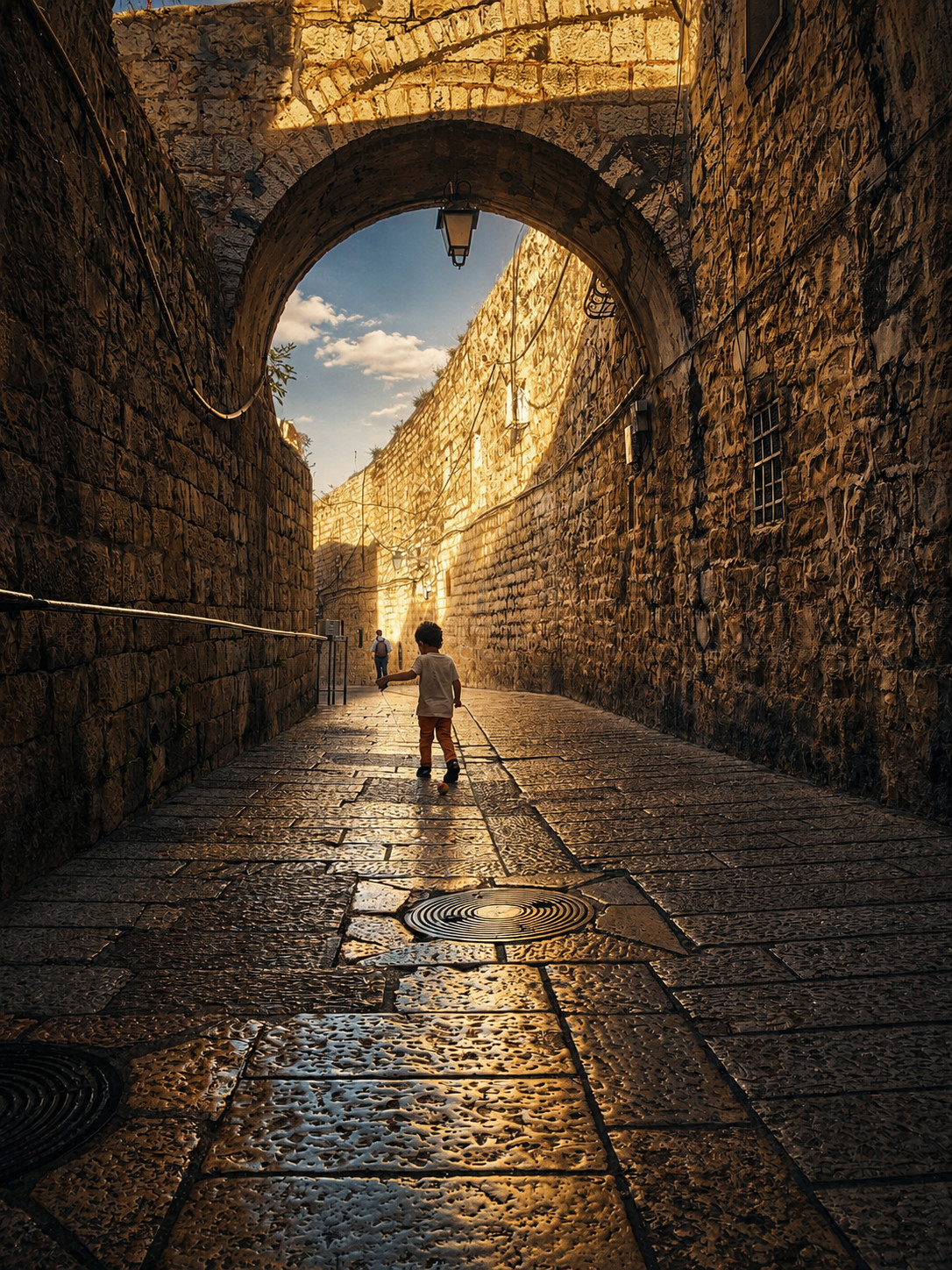
He features especially prominently in Fairy Lights. The book touches on the beauty, exhaustion, absurdity, tenderness, and occasional loneliness of raising a neurodivergent child, particularly as a single mother. And it’s about how the smallest moments – a familiar street corner, a favorite gate, a repeated phrase, a little hand reaching for mine – can become their own kind of sacred geography.
What inspired you to write this book?
The inspiration for the book came in the aftermath of the devastating explosion in June 2026 that destroyed our home in Jerusalem’s Old City and killed our neighbor. The experience left me trying to make sense of the trauma, the grief, and the disorienting experience of losing our home in a place I loved so deeply. It was after the explosion that Rabbi Menachem Creditor suggested I write a book as a way of processing the trauma, but it became something much larger: a love letter to Jerusalem, to the people who inhabit it, and to the fragile, beautiful, sometimes heartbreaking experience of being alive.
The book isn’t simply about the explosion. It’s about friendships formed in unlikely places, conversations that last until dawn, the strange intimacy of living in a city where everyone seems to know everyone, and the ways that ancient history and ordinary domestic life constantly collide. It’s about the little moments that might seem insignificant from the outside but become enormous when you’re living them.
I wanted to write about the darkness without allowing it to swallow the light.
How has the experience of losing your home affected you?
The experience of losing my home has changed the way I think about belonging.
A home isn’t only a building. It’s the people who know your name, the shopkeeper who remembers how you take your coffee, the neighbors who notice when you’re missing, and the streets that hold your memories.
And while I no longer live inside the Old City walls, in some ways I carry the Old City with me wherever I go.
How did you find your way to Jerusalem?
I grew up in Venice Beach, California, in a home filled with books, stories, Yiddish lullabies, civil rights anthems, and conversations about the world. It may seem a far cry from the Pacific Ocean to Jerusalem, but Jerusalem’s limestone hills were actually once an ancient seabed. I love that image, a California girl raised beside the ocean finding home in a city whose stones still remember the sea.
I first came as a teenager, on a Young Judaea summer program in 1997. I fell in love with Jerusalem, and that love affair continues to shape the rest of my life. I made aliyah in 2010 with my then-husband and our two young children. After our marriage ended, I stayed in Israel and eventually made my home in Jerusalem. I fell head over heels in love with this place through conversations with people from all backgrounds and walks of life.
Why the Old City?
I’ve always been fascinated by Jerusalem, particularly the Old City, where thousands of years of history exist in extraordinary proximity, and where people from radically different backgrounds live their daily lives against a backdrop that the rest of the world considers sacred. I wanted to understand it beyond the headlines, political arguments, and familiar narratives and to see what it would feel like to live in the hottest piece of spiritual real estate in the world.
So in 2016, I spent a year living in the four quarters of the Old City – Jewish, Muslim, Christian, and Armenian – spending approximately three months in each.
I wanted to understand Jerusalem from the inside, through the people who call it home. I met shopkeepers, religious leaders, neighbors, musicians, merchants, families, and people who challenged everything I thought I knew about the city.
That experience became my first book. And while the experiment officially ended, my relationship with the Old City never will. ■
Sarah Tuttle-Singer is a storyteller, journalist, author, and media personality. She also loves taking people for walks around the Old City.
https://www.amazon.com/dp/B0H8TQ3FBJ?lv=shuf&channelId=500&plpRedirect=mhFallback
KioskNews shows a cleaned-up reading view extracted from the publisher’s page — the original always lives on their site, not ours.