9 Classic 80s Children’s Books That Have Aged Like Milk
The 1980s were a great time for young readers. The decade saw dozens of books arrive that remain childhood classics today, while many beloved authors like Diana Wynne Jones, Roald Dahl, and Judy Blume were at the height of their careers. However, nostalgia tends to preserve the exciting discoveries and comforting favorites. However, it wasn’t all great, as several 1980s kids books prove.
While plenty of 1980s children’s books have aged like fine wine, there are dozens that time has not been kind to. Many of these books were considered perfectly acceptable when they first hit shelves from 1980-1989, but that’s definitely not the case for modern readers. They reflect a different time with a different set of social norms and expectations, and revisiting them makes it easy to see why the changes in standards for young readers in the years since were completely necessary.
9 The Agony Of Alice By Phyllis Reynolds Naylor (1985)
A Core Message About Looking Beyond Appearances Relies Heavily On Judging Women’s Looks

Growing up without her mother, the titular Alice in Phyllis Reynolds Naylor’s The Agony of Alice wants a teacher who she can look up to as a guide to help her navigate the confusion of adolescence. She imagines that the beautiful Miss Cole would be the perfect, only to find herself assigned to Mrs. Plotkin’s classroom instead. Ultimately, Alice learns that beauty isn’t everything. As expected, the less glamorous Mrs. Plotkin turns out to be the role model she needs. The ending is definitely a compassionate and positive one, but the journey to get there is defined by sorting women according to their attractiveness, making their bodies and faces central.
The lesson for young readers at the heart of The Agony of Alice is a familiar one: a woman judged unattractive gets the opportunity to prove that her personality compensates. Alice’s perspective is deliberately immature, and it changes by the end of the novel. Still, the repeated emphasis on appearance remains exhausting. Even the central message feels problematic in its own way, since Alice is borderline-shocked that Mrs. Plotkin was the role model she needed all along. What’s intended as “appearances don’t matter” comes across as “even ugly people have their uses,” and it makes for uncomfortable reading so many decades after its 1985 release.
8 The Whipping Boy By Sid Fleischman (1986)
Its Cheerful Redemption Story Doesn’t Take Child Abuse Seriously

The injustice in The Whipping Boy is intentional. The way it's handled isn't. Jemmy, a former rat-catcher, receives the beatings earned by a prince whose royal status protects him from punishment. When the spoiled royal runs away and takes Jemmy along, their encounters with kidnappers expose how poorly privilege has prepared the prince for ordinary life. Author Sid Fleischman clearly places readers on Jemmy’s side, using the boys’ unequal circumstances to ridicule inherited superiority. The book features a lot of corporal punishment, and while it doesn’t endorse it, it’s treated as far less of a traumatic experience than it actually would be.
It’s uncomfortable just how much The Whipping Boy turns sustained mistreatment into a friendship story. Jemmy’s courage and loyalty help educate the very person who has benefited from his suffering, while the prince’s growing empathy supplies the emotional payoff. The resolution leaves the abusive adults responsible for the arrangement unpunished. The way they treat Jemmy is never really addressed as what it is: child abuse. Yes, the prince having a change of heart is a happy ending as expected from a kid’s book, but the fact that it requires Jemmy experiencing years of torment to happen just doesn’t sit right.
You can purchase The Whipping Boy by Sid Fleischman here.
7 The Berenstain Bears And The Truth By Stan And Jan Berenstain (1983)
What’s Intended As A Warning On Broken Trust Makes An Ordinary Childhood Lie Sound Permanently Damaging

The Berenstain Bears remain a beloved children’s book series, but they’re not all as lighthearted as the twee covers featuring the titular Bears and their friends make things seem. Nowhere is this more true than in 1983’s The Berenstain Bears and the Truth, in which a broken lamp becomes an incredibly heavy-handed, and potentially psychologically damaging, childhood lesson. After playing soccer indoors, the cubs invent an elaborate story about a bird smashing the lamp at the center of the tale. Their increasingly tangled explanation eventually exposes the lie, allowing their parents to explain why honesty matters. This wouldn’t be an issue were it not for the fact that authors Stan and Jan Berenstain frame trust as something that can’t be fixed once broken.
This may well be true for adult betrayals, but when applied to frightened children covering up an accident, it becomes an unnecessarily inflexible moral absolute. It’s important to teach kids about honesty, but suggesting one lie about a broken piece of furniture could tarnish a child’s relationship with their parents in ways an apology can’t repair is ridiculous. What’s more, it’s just as important for children to learn that trust can be rebuilt, and how to do it. The simple moral tale at the heart of The Berenstain Bears and the Truth was well-intentioned, but the end result feels less like a lesson on the importance of telling the truth and more like a lecture on why to fear getting caught.
You can purchase The Berenstain Bears and the Truth by Stan and Jan Berenstain here.
6 Rolling Harvey Down The Hill By Jack Prelutsky (1980)
A Revenge Tale That Turns Body-Shaming Into Entertainment

Childhood friendships can be unruly, competitive, and occasionally unpleasant, which gives Jack Prelutsky plenty to work with in his 1980 children’s comedy book Rolling Harvey Down the Hill. This connected collection of poems follows a neighborhood group whose activities include quarrels, boasting, and confrontations with the obnoxious Harvey. Its appeal and success came from depicting behavior that tidier, more sanitized children’s stories leave out. However, the humor also includes many insults aimed at body size. There’s a difference between depicting childhood cruelty and inviting readers to enjoy it, and it’s a line Rolling Harvey Down the Hill finds itself on the wrong side of more than once.
The revenge scenario of the book makes that discomfort harder to dismiss. Harvey’s unpleasant behavior establishes him as someone the others want to defeat, but turning his humiliation into the reward encourages the young readers of Rolling Harvey Down the Hill to treat retaliation as a satisfying and acceptable solution. Once the other kids decide his actions make him a target, his body becomes the subject of cruel ridicule alongside his actions. There’s also none of the compassion or understanding typically associated with modern tales of bullying and its causes. While it definitely entertained kids at the time, the jokes in Rolling Harvey Down the Hill reveal how physical mockery was once seen as ordinary childhood fun.
5 Izzy, Willy-Nilly By Cynthia Voigt (1986)
This Depiction Of Disability Is Bereft Of Hope

Fifteen-year-old Izzy loses a leg after accepting a ride from a drunken date, forcing her to reassess friendships, family relationships, and her expectations for herself. One of the darker children’s books of the 1980s, Cynthia Voigt’s Izzy, Willy-Nilly takes her emotional upheaval seriously, including the inadequacy of people who cannot cope with her changed circumstances. That willingness to confront the realities of living with a disability gave the novel a lot of substance, and it was, in its own way, groundbreaking for the time. However, the presentation of Izzy as passive, dependent, and an object of pity definitely hasn’t aged well.
There’s no denying that Izzy has every reason to grieve and struggle. Expecting instant confidence in the face of her change in circumstances would also be problematic. Still, how insistently Izzy, Willy-Nilly defines disability by diminished possibilities and the loss of an ideal life makes for uncomfortable reading. The derogatory language definitely doesn’t help either, even if it does reflect the prejudices Izzy finds herself facing. Although the story questions superficial standards of beauty and popularity, it ultimately does little to reject that status quo outright. Young readers seeking an uplifting tale about a disabled protagonist finding joy in life despite their circumstances should definitely be advised to look elsewhere, as Izzy, Willy-Nilly manages to make the loss of a limb feel like a world-ending scenario.
You can purchase Izzy, Willy-Nilly by Cynthia Voigt here.
4 Nothing's Fair In Fifth Grade By Barthe DeClements (1981)
An Anti-Bullying Message Becomes Entangled With The Idea That Losing Weight Earns Acceptance

Elsie arrives in fifth grade already facing a hostile audience in Barthe DeClements’ Nothing’s Fair in Fifth Grade. Her classmates fixate on her size, her mother imposes a restrictive diet, and her hunger contributes to her stealing lunch money for food. Narrator Jenny initially joins her classmates in making Elsie a social pariah, but eventually recognizes that the new girl has feelings like every human being and so develops a friendship with her. It seems like a standard parable about empathy on the surface. Unfortunately, however, Jenny’s growing acceptance of Elsie feels intrinsically tied to weight loss, creating a troubling association between becoming smaller and becoming welcome.
The adults’ involvement makes the body shaming that defines Elsie’s life especially bleak. Rather than offering a dependable refuge from playground judgment, authority figures participate in monitoring Elsie’s eating and treating her weight and figure as a communal concern. Even when Nothing’s Fair in Fifth Grade exposes just how cruel the other kids are to Elsie, it does so in a way that makes the treatment based on her size specifically separate from the abuse. Elsie deserves compassion, but Nothing’s Fair in Fifth Grade shamefully uses her size as a measure of her worthiness of it.
You can purchase Nothing’s Fair in Fifth Grade by Barthe DeClements here.
3 Don't Call Me Fatso By Barbara Phillips (1980)
The Children’s Book That Blames Bullied Kids For The Body Shaming They Endure

With a title like Don’t Call Me Fatso, author Barbara Phillips’ short illustrated book feels like it’s going to be a familiar tale about the importance of challenging name-calling. This isn’t the case. Instead, it’s a story that concentrates on changing the child receiving the insults. Schoolchild Rita experiences constant humiliation over her weight, including being weighed in front of classmates, and faces teasing during school activities. The book points to dieting and exercise as the solution. The moral message by the end is as clear as it is retrospectively abhorrent: if you want people to like you, be skinny.
It’s a message that no children’s book should hold, but Don’t Call Me Fatso was seen as perfectly reasonable when it first shelves in 1980. The fault isn’t with Rita, it’s with the children bullying her. However, her transformation is depicted as the only viable solution. Advice about food and movement becomes tangled with the promise of social acceptance, suggesting that physical improvement is the only way to end body shaming. The relationship between self-image, eating, and mental health is incredibly complex, and the perspective offered on it by Don’t Call Me Fatso doesn’t just feel problematic, but outright toxic.
2 George's Marvelous Medicine By Roald Dahl (1981)
A Book That’s Literally About Poisoning A Pensioner With Household Products

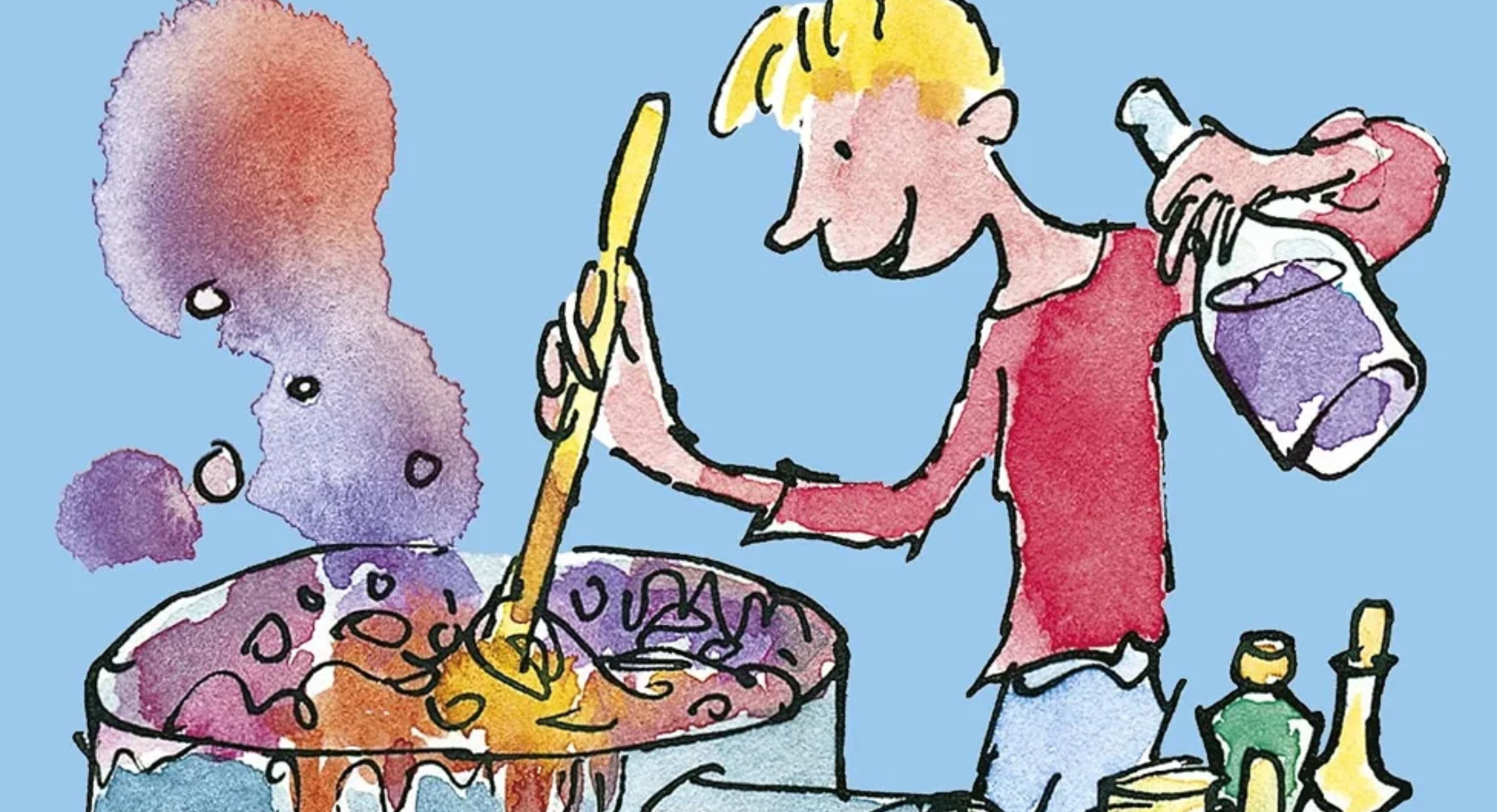
Despite the fact he’s one of the most beloved authors of all time, many of Roald Dahl’s books haven’t aged well. Titles from Matilda to The BFG have all received tweaks over the years to keep the beloved tales in line with changing sensibilities. However, one of Dahl’s novels, George’s Marvellous Medicine, has a premise so problematic that no amount of sensitivity editing can fix it. Left with his unpleasant grandmother, George replaces her medicine with a concoction assembled from household and farm products, triggering increasingly impossible transformations. Were a child to imitate this in real life, they’d end up killing a pensioner.
The book doesn’t shy away from this either, since George’s Grandma effectively dies by the end of the story by shrinking so much she can’t be found. She may be cruel and frightening, but her eventual disappearance being treated as a convenient turn of events by George’s family, which includes her own daughter, is more jarring than anything she does or says. The story essentially carries the message that elderly relatives become disposable once they’re too much of a nuisance to spend time around. George's Marvellous Medicine is an incredibly well written story, and it’s easy to see why so many children love it, but it’s also one that’s incredibly harrowing when thought about for too long. It’s also hard to imagine any publisher giving it the green light were it to be pitched today.
You can purchase George’s Marvelous Medicine by Roald Dahl here.
1 The Indian In The Cupboard By Lynne Reid Banks (1980)
An Indigenous Hero Is Characterized By Stereotyped Speech And A White Child’s Control

The fantasy premise at the center of The Indian in the Cupboard is undeniably brilliant. A boy who discovers that his cupboard can bring plastic figures to life is a story that feels like it writes itself. Sadly, author Lynne Reid Banks’ choice of toy to build the narrative around has ensured that it wouldn’t age well. Making a Native American man the figure placed under that boy’s control introduces problems the adventure never fully escapes. The boy, Omri, must learn that Little Bear is a person rather than a possession, but his new miniature companion is defined by stunted speech and threatening behavior that plays into almost every negative Indigenous stereotype.
Yes, Little Bear has courage, knowledge, and demands of his own. However, the story still fails to grant him agency. A white English child controls access to his world and necessities, while his Indigenous identity is harnessed to add flavor to Omri’s extraordinary experience rather than being treated with dignity or respect. Little Bear is deliberately portrayed as exotic and linguistically simplistic, and The Indian in the Cupboard does little to address this even as Omri grows to learn that the toys he brings to life count as people too. What’s more, the objections to The Indian in the Cupboard aren’t just the product of changing readership tastes. The criticisms were being voiced within a few years of the book hitting shelves, making this 1980s children’s book one that started aging badly as soon as it arrived.
You can purchase The Indian in the Cupboard by Lynne Reid Banks here.
KioskNews shows a cleaned-up reading view extracted from the publisher’s page — the original always lives on their site, not ours.