Hat Yai a test for Anutin
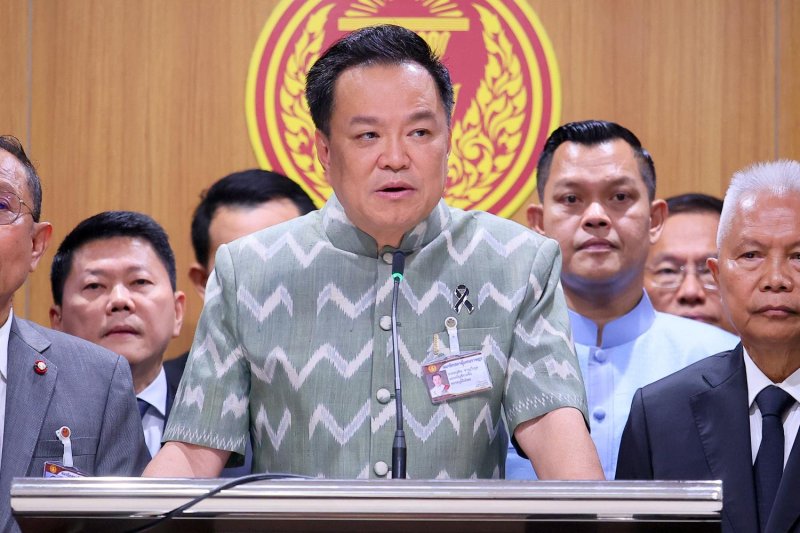
The political balance in Hat Yai, the commercial heart of southern Thailand, could be tested by more than the threat of flooding.
As heavy rain renews fears of a repeat of last year’s devastating inundation, the government’s ability to protect the city could have significant implications for Bhumjaithai Party leader Anutin Charnvirakul and his party’s electoral prospects in Songkhla.
For Mr Anutin, the stakes are particularly high. He was serving as interim prime minister when the disaster struck last year and faced intense public criticism over the authorities’ handling of the crisis.
Although Hat Yai’s municipal administration also came under scrutiny, the episode highlighted the political risks of being in government when residents and businesses believe warnings, preparations and emergency responses have fallen short.
Bhumjaithai subsequently won four of Songkhla’s nine House seats. While the result established the party as a significant political force in the province, it fell short of expectations that it could capture more constituencies. The flood crisis was seen as one factor that undermined its ambitions.
This year’s heavy rain therefore presents a fresh test of the party’s credibility in an area where economic security, disaster preparedness and the effectiveness of local administration can weigh heavily on voters’ decisions.
Hat Yai is more than a population centre. It is a major commercial and tourism hub, drawing shoppers, traders and visitors from across southern Thailand and neighbouring Malaysia. Severe flooding can disrupt transport, damage homes and businesses, undermine tourism and impose substantial recovery costs on households already under economic pressure, a political source said.
For residents and business operators, the immediate priority is protection, not party politics. But when flooding becomes catastrophic, public attention inevitably turns to whether authorities acted early enough, communicated clearly and deployed resources effectively.
The coming days could therefore prove politically consequential for Mr Anutin and Bhumjaithai. A coordinated response, with timely warnings, effective drainage, clear evacuation arrangements and rapid assistance for affected communities, could demonstrate that lessons have been learned from last year’s disaster.
Conversely, another major flood accompanied by confusion, delayed assistance or visible gaps in preparedness could revive criticism of the government. The political damage would be particularly serious if residents believed authorities had failed to address vulnerabilities exposed by last year’s inundation, the source said.
The distinction between unavoidable natural hazards and preventable administrative failures will be central to how the public judges the response.
The situation could also provide an opening for the Democrat Party, a long-established political force in the South that has traditionally enjoyed a strong regional base.
In recent years, the Democrats have struggled to defend or regain their southern strongholds amid stiff competition from the Klatham Party and Bhumjaithai, both of which have made substantial inroads in the region.
Although Bhumjaithai has expanded its presence in Songkhla, the Democrats retain political networks, name recognition and longstanding ties with voters in the region. If dissatisfaction with the government grows, those advantages could help the party position itself as an alternative, the source said.
However, a political opening does not automatically translate into electoral gains. The Democrats would need to convince voters that they could offer credible solutions to Hat Yai’s recurring flood problems rather than simply capitalise on public frustration.
Their prospects would also depend on constituency-level dynamics, candidate strength, campaign organisation and the broader political environment when the next election takes place.
For Bhumjaithai, defending its existing seats may be as important as pursuing further gains. A serious loss of confidence in Hat Yai could undermine the party’s broader ambitions in Songkhla and complicate efforts to consolidate its support base in the South.
Mr Anutin has sought to reassure local residents that authorities are prepared to manage flooding in Hat Yai, particularly in the downtown area vulnerable to runoff from surrounding mountains.
Mr Anutin, who also serves as interior minister and is responsible for mobilising national emergency relief, said yesterday that state agencies were monitoring the situation and had measures in place to manage rising water levels. However, he acknowledged that flooding could not be ruled out entirely.
Heavy overnight rain caused water levels to rise in several parts of Hat Yai district. Municipal authorities monitored flood cameras at more than 40 locations.
Ultimately, the political consequences will depend on more than the volume of rainfall. Voters are likely to consider whether authorities can turn emergency measures into a credible long-term strategy for reducing flood risks. That means improving drainage infrastructure, maintaining pumping systems, managing waterways, strengthening early-warning systems and coordinating responsibilities between central government agencies and local administrations.
Accountability will also matter, the source said. Flood management involves multiple agencies, meaning political leaders cannot necessarily control every operational detail. Nevertheless, voters tend to judge those in power by the overall outcome, particularly when a disaster recurs.
For Mr Anutin, the challenge is to show that last year’s criticism has led to tangible improvements rather than temporary assurances. For Bhumjaithai, the priority is to demonstrate its ability to respond under pressure and retain the confidence of communities whose livelihoods depend on Hat Yai’s economic resilience.
The Democrats, meanwhile, will be watching for signs that the governing party’s support is vulnerable, the source said.
If Hat Yai escapes major flooding, Bhumjaithai may have an opportunity to reinforce its preparedness credentials. If disaster strikes again and the response disappoints, the party could face renewed electoral pressure, potentially giving the Democrats an opportunity to regain lost ground.
In a city where flooding can reshape both businesses and political fortunes, the effectiveness of disaster management may prove as important as campaign promises.
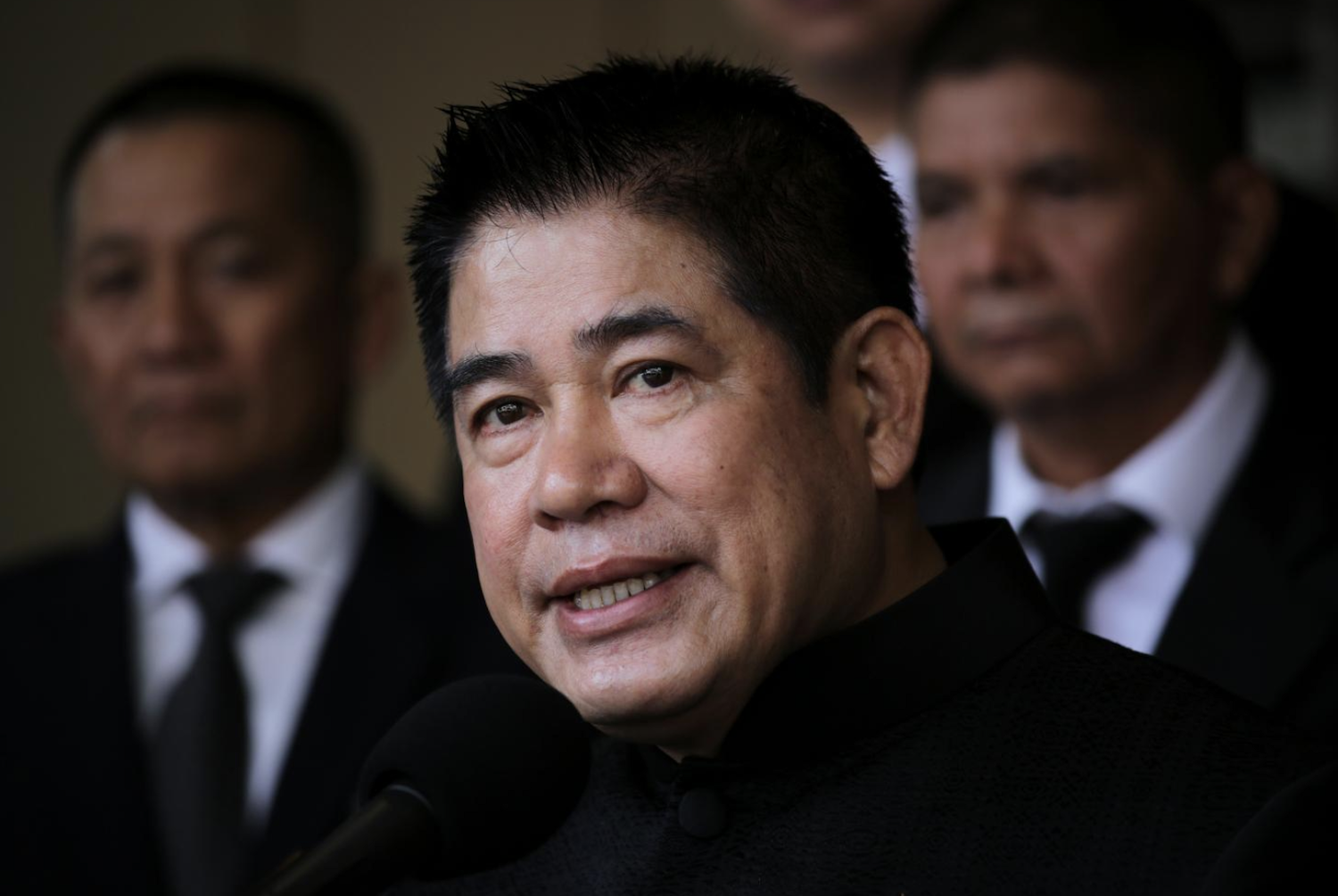
Thamanat: Dined with PM
Playing the waiting game
The no-confidence debate has been delayed after the government and opposition failed to agree on the time allocated for the proceedings.
The government offered the opposition three days for the debate, followed by a vote on the fourth day, from Oct 27-30. The opposition rejected the proposal, seeking five days to grill Prime Minister and Interior Minister Anutin Charnvirakul and 17 other ministers, all from the governing Bhumjaithai Party, plus an additional day for the vote.
With the government’s November schedule already tight, the censure debate is now being pushed into December.
Ministers in November must attend Asean and Apec meetings, host a visit by China’s premier and participate in meetings related to the Organisation for Economic Co-operation and Development (OECD).
Mr Anutin informed House Speaker Sophon Zarum, who has the final say on the dates, that the cabinet would be available from Dec 6. The debate must be completed before parliament closes its current session on Dec 22. Whips from the three opposition parties are now proposing Dec 7 to 11.
The delay has direct implications for the Klatham Party, which has reportedly been waiting to join the Bhumjaithai-led coalition. With 58 MPs, the party has signalled its readiness to support the ministers in the no-confidence vote. But with the censure motion yet to be finalised, Klatham’s entry into the government remains on hold.
Mr Anutin has made clear that the government will wait until the debate and vote are over before considering its next steps, including a cabinet reshuffle or bringing Klatham into the coalition.
He said the government would consider both the need for cooperation and the capabilities of those seeking to join it.
“Anything is possible in politics, but any decision to bring another party into the coalition must put the interests of the country and the people first, rather than being aimed at subduing any particular side.
“There is no such thing as having no opportunity in politics,” he said.
His remarks suggest that Klatham’s prospects have not been ruled out. The main obstacle is timing, as the party must wait for the parliamentary process to run its course before any decision can be made.
Speculation that Klatham could join the coalition began when it backed the 2027 budget bill, despite the opposition whip’s position that opposition MPs should reject the bill or abstain.
The speculation gathered momentum following recent meetings between Mr Anutin, who also leads Bhumjaithai, and Klatham figures as the opposition filed the censure motion.
Mr Anutin was first pictured dining with Thamanat Prompow, Klatham’s leader and a party-list MP. Later, a photograph emerged of Mr Anutin attending a birthday gathering for Suphanan Panyathip, a Klatham MP for Chiang Mai.
The meetings and photographs have fuelled speculation about a possible deal, although they do not confirm that an agreement has been reached. The no-confidence debate is widely seen as an important test of the government’s unity and stability.
Several political analysts believe Klatham is also being used as leverage against coalition partner Pheu Thai, sending a message that it should think twice before withholding support for Bhumjaithai ministers during the censure debate.
Although none of Pheu Thai’s ministers is targeted in the planned debate, the party’s stance in the vote could affect its relationship with Bhumjaithai.
While the delay may frustrate Klatham, it has not necessarily weakened the party’s bargaining position. Its bloc of MPs remains intact, and the government needs their support to shore up its position in the House and cushion the impact of the vote.
Political observers say the outcome of the vote will also shape the terms under which Klatham eventually joins the coalition. Much will depend on the pressure the opposition puts on the 18 ministers facing scrutiny.
A source in Klatham admitted that the delay had eased pressure on the party to reach a quick deal over cabinet positions.
Rather than having to accept a rushed offer if a cabinet reshuffle took place immediately, the party now has more time to weigh its options and negotiate more carefully for portfolios, including key ministries considered top-tier. The government will need Klatham’s bloc of votes to maintain stability after the censure debate, the source said.
“Although the opportunity might come later than expected, the delay could work in our party’s favour and allow us to get better terms,” the source said.
KioskNews shows a cleaned-up reading view extracted from the publisher’s page — the original always lives on their site, not ours.