Naruto: All 10 Tailed Beasts & Jinchuriki In The Franchise
Warning: The following contains spoilers for Boruto: Naruto Next Generations and Boruto: Two Blue Vortex!!
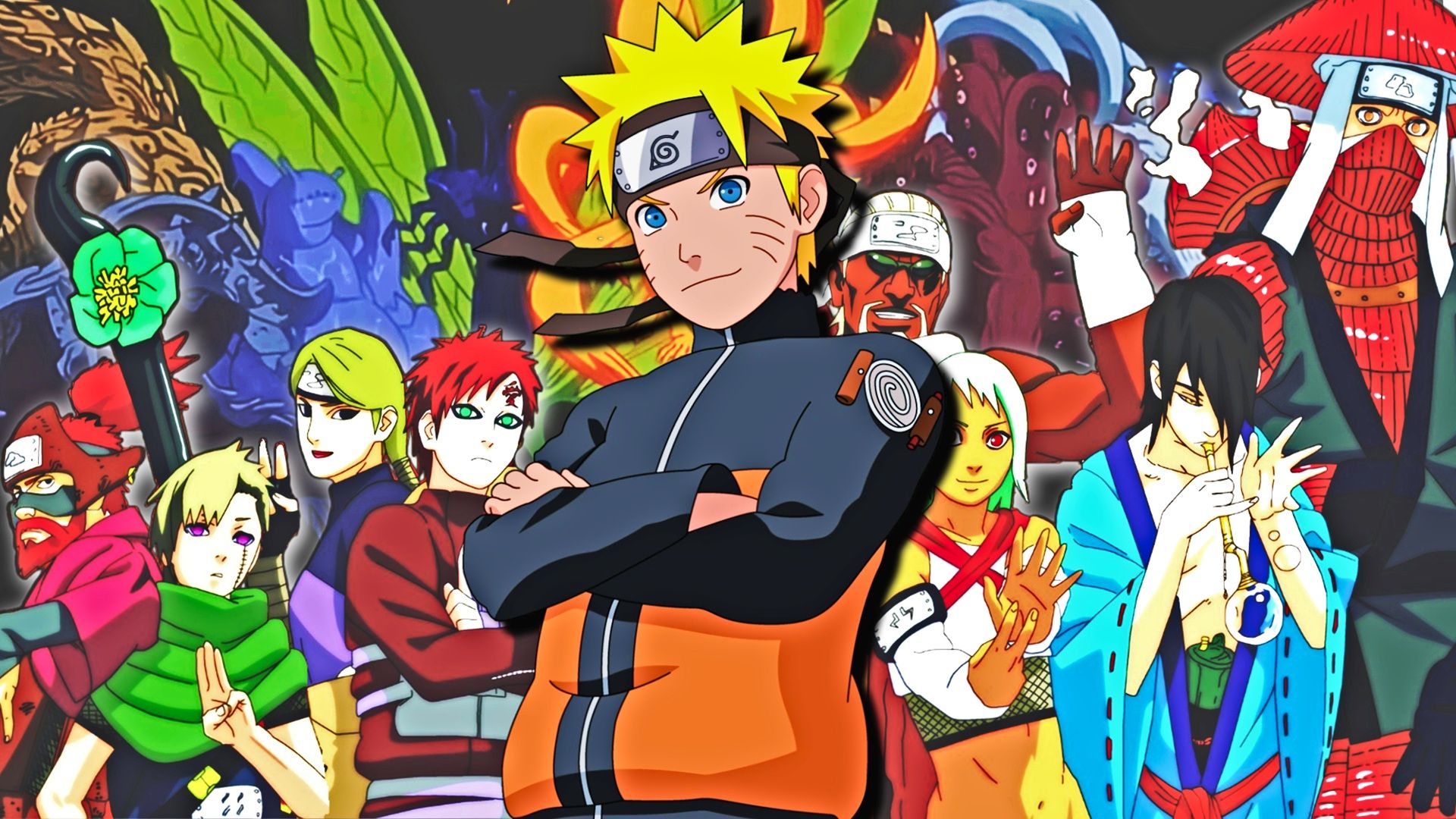
If there's one topic that cannot be avoided when discussing Naruto, it's the Tailed Beasts, which play a fundamental role throughout Naruto Uzumaki's journey. Fans were introduced to the "Nine-Tailed Fox" that resided within Naruto, a presence that led to him being ostracized by his village. However, as the shinobi world expanded and its secrets were revealed, not only did the bond between Naruto and Kurama grow, but other Tailed beasts and their respective hosts were also introduced. That's why it's essential for viewers to understand who these beasts are and what they represent in the story.
Drawing inspiration from Japanese folklore and one of the most groundbreaking concepts in Naruto, the Tailed Beasts were initially feared as weapons possessing terrifying powers but were later revealed to be tied to the origin of chakra itself. What's particularly interesting, however, is that the original series didn't reveal everything there was to know about them. Long after the Fourth Great Ninja War in Naruto, its manga sequel, Boruto: Two Blue Vortex, has managed to reinvent the role of the Tailed Beasts and their jinchuriki, contributing to an ever-expanding lore that is well worth exploring in depth.
What Are Naruto's Tailed Beasts? Their Purpose and the Jinchuriki System Explained

The accumulation of vital energy over a long period gave rise to the Chakra Fruit of Earth’s God Tree, and although it wasn't meant for her, Kaguya Otsutsuki ate it, becoming the first wielder of chakra on Earth and gaining near-divine powers. Kaguya couldn't stand that her chakra was dispersed among her children, Hagoromo and Hamura. She considered the chakra to be hers alone, and in an attempt to reclaim it, she merged with the Divine Tree, which resulted in the creation of the Ten-Tails.
After Kaguya was sealed away, and before the Sage of Six Paths passed away, he divided the Ten-Tails into nine separate beasts, distributing its chakra among them to keep the Ten-Tails sealed. The nine Bijuu, or Tailed Beast creatures, either roamed the land as wild demons or were used as weapons of war by the various ninja villages, maintaining the balance of power between nations. To harness the immense power held within each of the Bijuu, the beasts would often be contained within a human host known as a Jinchuriki.
Although Naruto and the Nine-Tails are obviously the most prominent, Bijuu and Jinchuriki, Kishimoto eventually introduces the full set, who become increasingly important later in the story. As Naruto's Tailed Beast lore became more complex, the anime released a devilishly catchy "Bijuu Counting Song" to help fans remember the basics, which is well worth checking out for comedy value alone.
Shukaku - The Sandy One-Tailed Tanuki Beast
Most Recent Jinchuriki: Gaara, The Fifth Kazekage of the Sand Village

Shukaku is most closely affiliated with the Hidden Sand village, and his first known Jinchuriki was the priest Bunpuku. The clergyman was followed by another host not important enough to be named before Shukaku was placed inside an unborn Gaara, still in his mother's womb.
Shukaku's physical design is based on a tanuki, a Japanese raccoon dog. He's also an immensely proud Bijuu, constantly trying to compensate for being single-tailed, and considers Kurama his fiercest rival. Inspired by Naruto and Kurama, Gaara began treating Shukaku as an equal, not a weapon.
Matatabi - The Fiery Two-Tailed Cat Beast
Most Recent Jinchuriki: Yugito Nii of The Cloud Village

Matatabi is a prime example of how ninja exploited Tailed Beasts in past ages. Captured by Konoha's First Hokage, Hashirama Senju, Matatabi was sold to the Hidden Cloud to foster peace and balance between the five major villages. Like many of the tailed beasts, Matatabi bears the appearance of two mythological Japanese folk monsters, the Bakeneko and the Kasha.
Matatabi's junchuriki, Yugito Nii, would go on to become a Jonin in her village, learning control over her Bijuu. This process was potentially made more manageable because Matatabi is one of the less aggressive tailed beasts. As implied by its design, Matatabi uses fire-based techniques, arguably making the creature a better fit for Konoha than the Hidden Cloud.
Isobu - The Three-Tailed Armored Sea Beast
Most Recent Jinchuriki: Yagura Karatachi, The Fourth Mizukage of the Mist Village

Like Matatabi, Isobu was sold by Hashirama to the Hidden Mist village. When war inevitably broke out, Isobu was forcibly sealed within Rin Nohara, the third member of Kakashi Hatake’s team, alongside Obito, with the intention of unleashing it against an unsuspecting Hidden Leaf Village. Aware of the plot, Rin sacrificed herself so she wouldn't hurt the people she loved.
When a Jinchuriki dies, their beast restores over time, and the revived Isobu is eventually placed into Yagura Karatachi, the Hidden Mist's Fourth Mizukage. Isobu is loose in the wild when introduced in Naruto, meaning Yagura must've died, and Isobu was restored a second time. Isobu primarily uses water techniques, explaining the beast's long-standing affiliation with the Hidden Mist.
Son Goku - The Four-Tailed Monkey King Beast
Most Recent Jinchuriki: Roshi of the Rock Village

Son Goku was sold to the Hidden Rock village and came to be sealed within Roshi. Compared to many Bijuu/Jinchuriki pairings, Roshi and Son Goku shared a respectful relationship, but the shinobi came to regret never learning his beast's true name. Son Goku was inspired by the Monkey King character from the legendary Chinese story Journey to the West.
It's impossible to ignore Naruto's Dragon Ball connection as well, as Masashi Kishimoto has admitted that Dragon Ball was indeed a huge influence upon Naruto.
Son Goku is incredibly agile and the most skilled taijutsu user of the tailed beasts, with his signature techniques being lava-based. By the end of Naruto, a piece of each tailed beast's chakra resides within Naruto, allowing him to combine the Rasengan with Son Goku's lava. The attack nearly defeated a wounded Madara while cutting down the colossal Divine Tree.
Kokuo - The Majestic Five-Tailed Beast
Most Recent Jinchuriki: Han of the Hidden Rock Village

Kokuo joined Son Goku in the Hidden Rock and was eventually passed to a powerful Jinchuriki known as Han. Kokuo is one of the less prominent Bijuu in Naruto, but is seen using steam-based ninjutsu, to increase the boiling point of its chakra and increase its physical strength. However, it would much rather live a peaceful life in the forest.
Most of Naruto's beasts are based on mythical legends, but author Masashi Kishimoto revealed that Kokuo is a horse and dolphin hybrid. Boruto: Naruto Next Generations reveals that Kokuo, Matatabi, and Chomei distanced themselves from humanity after Naruto freed them. This is not surprising, considering the decades of cruel treatment the creatures were forced to endure at the hands of all the ninja villages.
Saiken - The Slimy Six-Tailed Slug Beast
Most Recent Jinchuriki: Missing-Nin of the Hidden Mist, Utakata

Along with Isobu, Saiken belonged to the Hidden Mist village, the idea being that each village's beasts would total roughly nine tails (apart from the Sand). Saiken was sealed within Utakata, who began as a Hidden Mist villager but later abandoned his home during their dark "Bloody Mist" phase.
Like most Jinchuriki, Utakata was killed by the Akatsuki for their Bijuu. The bubble-wielding ninja starred in one of the best Naruto filler arcs, which fleshed out his story. Saiken possesses water-based abilities, a slug-like appearance, and can attack with sticky and corrosive substances.
Chomei - The Seven-Tailed Flying Beetle Beast
Most Recent Jinchuriki: Fu of the Waterfall Village

Chomei is similar to a Japanese rhinoceros beetle and, compared to its Bijuu kin, is remarkably placid and laid-back, which is likely why Chomei doesn't resemble typical demons in anime. The Seven-Tails was formerly sealed within Fu, a female ninja from the Hidden Waterfall, after being sold to the village by Hashirama.
Chomei can also shoot tailed beast bombs, but their ability to fly makes that attack even more terrifying. Also, noteworthy: Naruto's flashbacks show each of the tailed beasts as babies with Hagoromo Otsutsuki. While most of these young creatures are cuter, smaller versions of their present-day selves, Chomei actually took a larval state, reflecting its insect-like design as an adult.
Gyuki - The Eight-Tailed Octo-Ox Beast
Most Recent Jinchuriki: Killer B of the Cloud Village

Gyuki was sold to the Hidden Cloud village along with Matatabi, but the nation struggled to find a Jinchuriki who could control it. One of these was Blue B, the nephew of the Third Raikage, but after Gyuki went on a rampage, the Raikage was forced to seal him away, killing his nephew. Gyuki was ultimately sealed within Killer B.
B befriended his Bijuu, and their relationship perfectly synchronized, allowing the ninja to draw out the Eight-Tails' power at will. Even after Gyuki was forcibly extracted from Killer B during the Fourth Great Shinobi War, he was later re-sealed into B. Gyuki is an ox-like yokai with sheep horns and tentacle tails, and is regarded as the second strongest Bijuu.
Kurama - The Ravenous Nine-Tailed Beast
Most Recent Jinchuriki: Naruto Uzumaki

The only Bijuu not captured by the First Hokage, Kurama roamed in the wild until he was found by Madara and forced to fight Hashirama. Kurama was defeated and sealed inside the Hokage's wife, Mito Uzumaki, before being transferred to Kushina. From there, Obito forced him to be released, wreaking havoc on Konoha before being sealed into Naruto and Minato.
Kurama resembles a kitsune, a mythical Japanese nine-tailed fox, and is regarded as the most powerful of the Bijuu.
Initially, Kurama only offered his aid when Naruto's life was in danger. In time, Naruto harnessed Kurama's power, but only by becoming friends did they unleash the full potential of their Jinchuriki and Bijuu partnership. The bond forever changed, and he would go on to become a close ally to Naruto and, surprisingly, other members of the Uzumaki family.
KioskNews shows a cleaned-up reading view extracted from the publisher’s page — the original always lives on their site, not ours.