Jesse Baird and Luke Davies’ murders rocked Sydney’s LGBTQI+ heart. Three years on, sentencing will cast a shadow over Mardi Gras

Jesse Baird couldn’t wait for his friend’s Mardi Gras party in 2024.
Michael Brown had been planning to host the celebration and knew people were likely going to float in and out as they hopped between Pride events that weekend in Sydney.
“I thought he was going to some other party but he’s like, ‘No, I’m definitely coming to your house. I can’t wait for your Mardi Gras party,’” the makeup artist from Sydney tells Guardian Australia.
“His excitement was making me excited because he was almost like a little kid.”
Though Baird had come out later in life than some of his gay friends, at this point the 26-year-old was “so accepting of himself, really happy with himself and loving life”, Brown says.
But he would never get to go to the party.
On 19 February 2024, he and his new boyfriend, 29-year-old Luke Davies, were murdered in Baird’s Paddington home.
Their bodies would not be found for eight days, and it wasn’t until Wednesday, two-and-a-half years later, that the police officer who murdered them was found guilty.
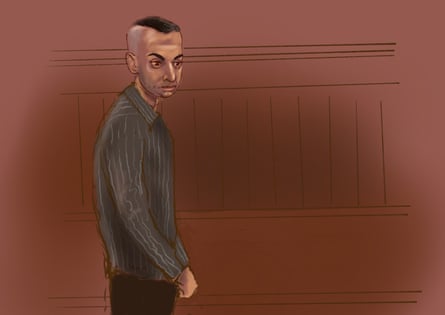
In the aftermath, friends and family members of Baird and Davies have shared memories of their loved ones.
Brown recalls meeting Baird for the first time in mid-2023.
“Straight away, it was just that smile,” he says. “When certain people smile, it lights up their eyes as well – like the whole face – and that’s what reminds me of Jesse.”
Their friendship sprang from a conversation about the AFL legend Buddy Franklin, who was a close friend of Brown’s and a player Baird admired.
Within months, they were lunching, partying and having deep conversations.
Davies’ brother John Davies told Channel Nine: “[Luke] was the most beautiful soul there is; not one person ever had a bad thing to say about him. Every person he’d come across, he would have such an impact on their life.”
In a Substack tribute, another friend of Baird’s, Jesse D’Vauz, describes getting to know him. D’Vauz had found himself alone in a big new city after moving to Sydney, and was on the dancefloor with Baird after their mutual friends had peeled away.
“Titanium came on and Jesse yelled, ‘This is my song! Let’s dance!’” he writes.
“He took my hand and pulled it up into the air. He wasn’t trying to impress me, or perform, or turn the night into something it wasn’t. He just wanted us both to enjoy it.
“Looking back, that’s what his kindness always looked like. Not a grand gesture, just wanting the person next to him to be having as good a time as he was.”
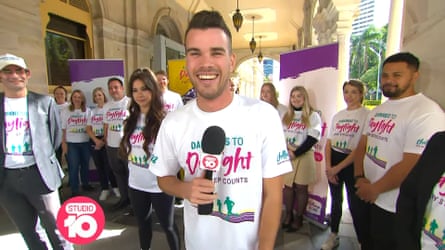
As the 10-week trial got under way, these stories rippled out from Baird and Davies’ close circles, resonating through Australia’s LGBTQI+ communities and affecting people they had never met.
Melbourne-based postgraduate student Jon Ricketson, who attended the double murder trial every day as part of his research, says the couple’s lives have left a mark on him.
“It is this confluence of factors: these were young, gay men living in this very particular part of Sydney with everything ahead of them,” he says.
“Every queer person I know has some kind of distant connection, or interest, or strong emotional reaction, and felt its impact in a real, visceral way.”
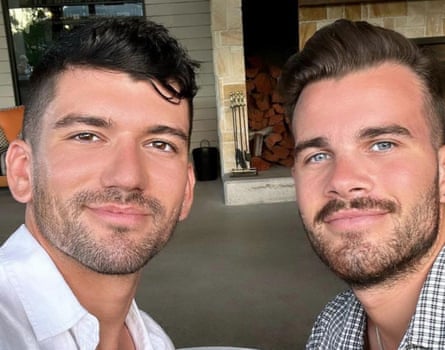
Brown was preparing to go to Gaytimes festival in Victoria when he heard news of the men’s disappearance.
“It happened at this particular moment in the summer when queer festivities were gearing up – moments of incredible connectedness and fun and joy – and it was such a bolt through the middle of those celebrations,” he says.
“Those Instagram images of Luke and Jesse at the Pink concert were indelible.
“Then the final confirmation came the following week, that was when the shock and horror gave way to something like public grief.”
On the Friday before the Mardi Gras parade, hundreds of mourners gathered, laid flowers and signed condolence books at a public vigil held for the two men.
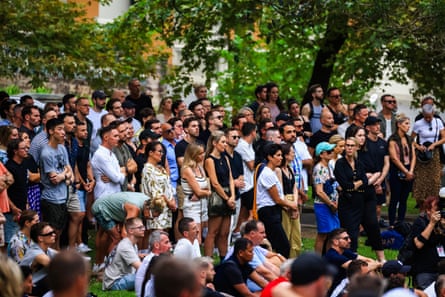
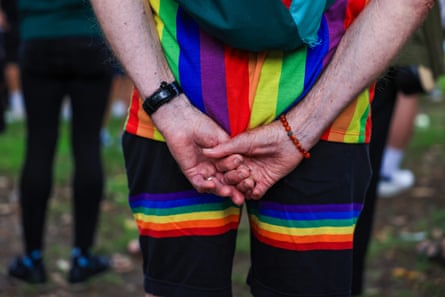
“It wasn’t just friends, so many people in the crowd said, ‘We didn’t know them at all,’” Brown remembers.
“There were a lot of silences, you could hear little whispers and little chants and people saying they’ve come from ages away just to be there, to feel like they were part of something – saying goodbye, saying, ‘We love you and you’re never going to be forgotten.’”
When it was revealed Beau Lamarre-Condon, a serving police officer who had casually dated Baird, had been charged with their murders, historic tensions between the LGBTQ+ community and police were brought to the fore.
Police were initially asked not to march in that year’s Mardi Gras parade before a compromise was reached, allowing officers to participate out of uniform.
“The case crosses into so many parts of queer life,” Ricketson says.
“The queer community across the world but in New South Wales [especially] has had a complicated, fraught and violent history with the police … I’m sure many queer people would relate to that feeling of discomfort when you’re in the presence of police.”
For Brown, the police presence at the parade was far from front of mind.
He had spent days reading the news, “ugly crying” in his home and churning through all the things he wished he had done differently.
Brown was going to cancel his party. He didn’t feel like having people over.
But his friends said: “No, no, no. Jesse thought it was happening, we’re doing it, we’re doing a tribute.”
The night of the party, they put up a photo of Baird, lit candles around it and, as a community, vowed to celebrate and remember the two men.
“We just wanted to make sure he was in the room with us because he really wanted to come,” Brown says.
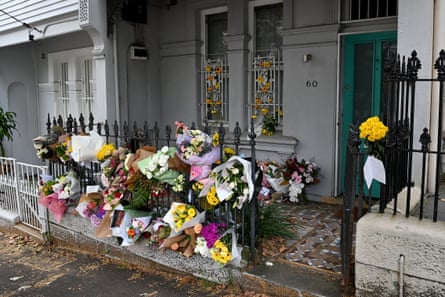
When he heard the men’s murderer had been found guilty on Wednesday, Brown felt relief wash over him, knowing there would be justice for the families.
Lamarre-Condon’s sentencing will be on 11 March 2027, once again tainting the time when Baird and Davies’ friends would normally be celebrating Pride.
When that day comes, Brown will only be thinking of the last time he saw the couple.
The night before they died, Baird and Davies had just returned from a weekend away in the Hunter Valley and were meeting their friends at the Beresford, which is a gathering place for the LGBTQ+ community.
“They just looked so happy walking in together – it was beautiful,” he says. “I’ve got both their faces in my mind.”
KioskNews shows a cleaned-up reading view extracted from the publisher’s page — the original always lives on their site, not ours.