‘Cancer is tripling and will keep increasing’: first African to lead global action against disease ready for battle
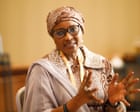
When Dr Zainab Shinkafi-Bagudu last saw Gloria in Abuja, the young breast cancer patient was so ill that she was in hospital. The cancer had spread to her bones and lungs, and she was struggling with complications from the disease.
Then, at a global conference on cancer thousands of miles away in Hong Kong last month, Bagudu saw her again. Gloria was walking with a stick because of the cancer in her hips, but she was attending sessions, speaking about her experience and advocating for other patients.
“I saw her hopping on the corridor here. I was shocked,” Bagudu recalled.
Bagudu was recounting this story on the sidelines of the World Cancer Congress in Hong Kong, attended by more than 2,000 people from 124 countries.
A Nigerian paediatrician and advocate for cancer patients, Bagudu is president-elect of the Union for International Cancer Control (UICC) – the first African to lead the organisation. She takes up the role as cancer cases and deaths are projected to rise sharply, with the greatest increases expected in poorer countries.
“The fact that it [the election of a black person] took so long is a reflection of the inadequacy of cancer care along the entire spectrum in Africa and other low- and middle-income countries,” Bagudu says.
Her election comes as countries across the global south face a growing cancer burden while also struggling with shortages of diagnostic equipment, medicines, radiotherapy services, trained specialists and financing.
According to the most recent figures from the World Health Organization’s International Agency for Research on Cancer (IARC), 20.6 million people were diagnosed with cancer and 9.8 million died from the disease in 2024.
The IARC forecasts an annual rise in cases of 67% to more than 34m by 2050, while deaths could reach 17.5 million, an increase of 79%. Most of the additional deaths are expected to occur in low-income countries.
According to Bagudu, the forecasts reinforce the need to reorientate global cancer policy towards countries where health systems are already under pressure.
“Cancer is tripling and is going to keep on increasing, and the people affected by it most are those from the global south,” she says.
Her ambition is to use the UICC, which represents more than 1,100 member organisations across more than 170 countries, as a bridge between countries with limited cancer services and the research, technology and treatments being developed elsewhere.
“I have this opportunity to be able to bring forth a lot of the problems that the low- and middle-income countries are facing to the global north,” she says.
But Bagudu says access to cancer care cannot be solved simply by building more specialist hospitals. “We keep building cancer centres and we keep seeing that it’s not enough,” she says.
Cancer centres need to be supported by screening, early diagnosis, radiotherapy, medicines, trained health workers and systems that prevent families from being pushed into financial hardship by treatment, she says.
“I’m trying to reduce financial toxicity for the woman in the village,” she says.
That gap is already visible in basic cancer services. UICC chief executive Cary Adams told delegates that less than half of the world’s population has access to diagnostic services, while many patients in low- and middle-income countries pay for care out of pocket.
Only 14% of the estimated 73 million people who need palliative care each year have access to it, according to figures presented at the congress.
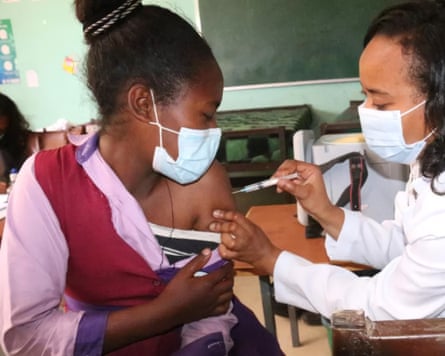
Bagudu’s own work in Nigeria has focused on some of these gaps. A paediatrician and founder of the Medicaid Cancer Foundation, she helped establish Kebbi state’s first cancer-control plan and registry during her time as first lady of the Nigerian state from 2015 to 2023.
after newsletter promotion
Her foundation has also worked on cancer awareness and access to treatment for vulnerable patients. She has campaigned for cervical cancer prevention, including the introduction of the single-dose HPV vaccine into Nigeria’s routine immunisation programme in 2023.
In 2024, she became senior adviser to Nigeria’s coordinating minister of health and social welfare with a brief that included women’s health and cancer advocacy. Bagudu now wants to take some of those lessons to the international level, including pushing for new approaches to cancer financing.
She says cancer has never received the kind of global treatment financing mechanism that HIV, tuberculosis and malaria have benefited from. “Cancer has never directly been a beneficiary of global funding for treatment,” she says.
She will support efforts to develop a global cancer financing platform modelled partly on the Global Fund to Fight Aids, Tuberculosis and Malaria, to mobilise resources from governments, donors and other sources to strengthen cancer prevention, diagnosis and treatment.
The proposal comes as African governments face competing demands on health budgets, and international development financing is under pressure with significant cuts to foreign aid.
Bagudu also wants greater attention paid to cancers that can be prevented or reduced through interventions already available. She plans to focus particularly on childhood cancers and liver cancer linked to hepatitis.
That prevention must go alongside investment in diagnosis and treatment, particularly as cancer risk is shaped by factors including tobacco use, infections, alcohol, diet and obesity, she adds.
She wants Africa to have a greater role in cancer research, rather than remaining primarily a recipient of discoveries and training from richer countries.
“Research is a little bit more difficult because you have to have the human capacity, you have to have the interest and then you have to have the right environment,” she says.
She points to emerging research centres in Nigeria, Rwanda and Kenya, as well as training programmes that bring African health workers to countries including China to develop skills in radiation therapy, cancer technology and other specialist areas.
The UICC has set targets including reducing cancer mortality by 25% by 2035, reducing exposure to major cancer risk factors by 30% and ensuring that 60% of cancers are diagnosed at an early stage.
Bagudu says the ultimate test of her presidency will be whether the global commitments made in conference rooms reach people far beyond them.
KioskNews shows a cleaned-up reading view extracted from the publisher’s page — the original always lives on their site, not ours.