State-run EESL’s induction cooktop plan targets micro businesses; Andhra Pradesh, West Bengal, Bihar show interest
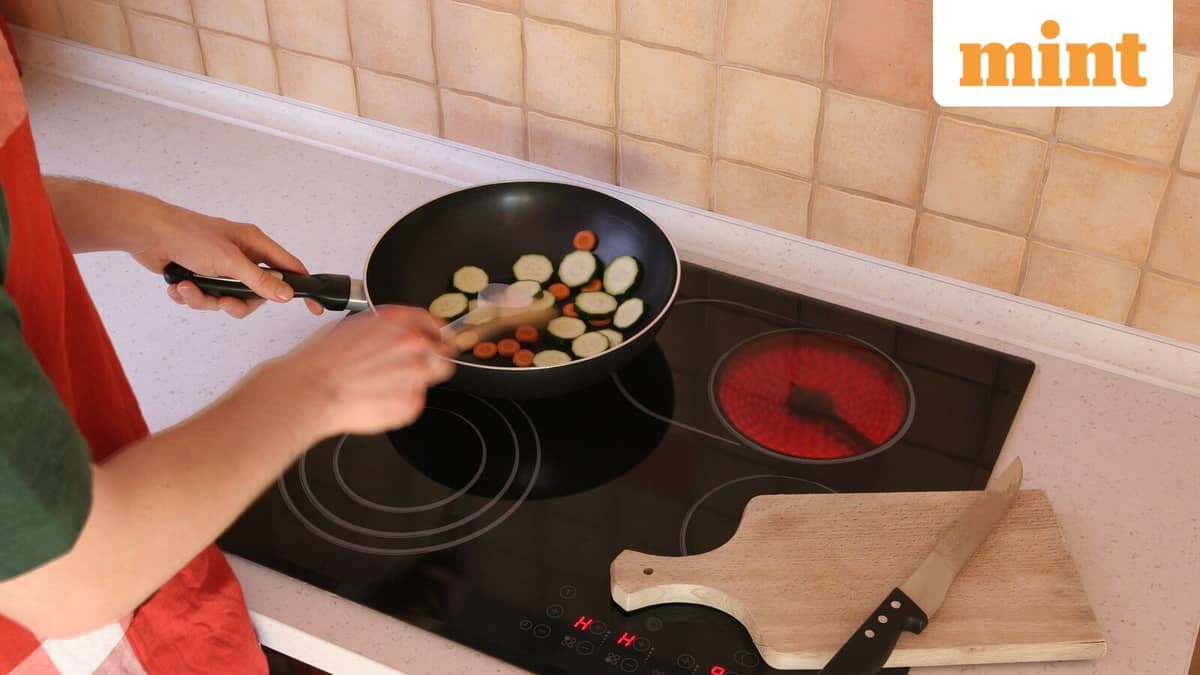
State-run EESL plans to roll out subsidized induction cookstoves for street food vendors and micro-food enterprises, targeting 60,000 businesses by the end of 2026.
New Delhi: Energy Efficiency Services Ltd plans to support the adoption of induction cookstoves among street food vendors and other micro-food enterprises, betting that lower upfront costs will accelerate the shift toward electric cooking in small businesses.
The state-run energy efficiency company aims to distribute about 60,000 appliances by the end of 2026 under its soon-to-be-launched Sambhav Initiative (Supporting Micro Businesses through High-efficiency Appliances and Value Creation) and is preparing to launch a procurement tender next month, according to three people familiar with the matter. The company also has a target of supporting one million enterprises by 2032.
Andhra Pradesh, West Bengal and Bihar are among the first states to express interest in the programme, which will be implemented with Shell Foundation and Finovista. Vendors are likely to receive support of about ₹800 per unit.
“EESL has reached out to all states for this programme, and so far Andhra Pradesh, West Bengal and Bihar are among the first states to show interest. More states are expected to come on board soon,” said one of the three people mentioned above.
The initiative comes as India seeks to reduce reliance on liquefied petroleum gas amid supply concerns and volatile fuel markets. EESL, a joint venture of NTPC, Power Grid, PFC and REC, says the programme could eventually support one million micro-food enterprises by 2032 through access to electric cooking equipment, financing and training.
Key Takeaways
- EESL plans subsidized induction stoves for street vendors and food businesses.
- Andhra Pradesh, Bihar and West Bengal have shown early interest.
- The programme targets distribution of 60,000 electric cooking appliances this year.
- EESL aims to support one million enterprises by 2032 nationwide.
- Vendors seek subsidies to avoid bearing the costs of the cleaner transition.
The overall budget outlay is not known. However, at the rate of ₹800 subsidy per unit for 60,000 units, the total initial fiscal support under the programme would be ₹4.8 crore.
Another official said that under the programme, vendors would be provided a subsidy of ₹800 per unit. The retail prices of these appliances are from ₹1,400 to ₹3,500.
The initiative is aimed at fast-tracking the adoption of electric cooking by street vendors and other micro food enterprises, allowing them to reduce costs, improve productivity and move to cleaner cooking, EESL said.
Queries mailed to the spokespersons of the governments of Andhra Pradesh, West Bengal and Bihar, and to the spokespersons of the cooking appliance manufacturers Prestige and Borosil remained unanswered till press time.
Long-term target
Responding to Mint’s queries, EESL chief executive officer (CEO) Akhilesh Dixit said, “Through this collaborative initiative, EESL, Shell Foundation and Finovista aim to develop a scalable and sustainable market for productive-use electric cooking, contributing to India’s clean energy transition, inclusive economic growth and livelihood enhancement.”
The development is significant for India, the second-largest global importer of liquefied petroleum gas (LPG), and its 340 million LPG consumers, given that induction-based cookstoves offer a cost advantage of about a third over traditional cooking methods.
In the case of LPG there is heat or energy loss, which is much less in the case of induction cookstove.
As per industry estimates, an induction cooktop uses around 1.2-1.5 units of electricity to do the same amount of cooking as a gas cylinder in a day. At an average rate of ₹7-8 per unit, the daily cooking cost would be around ₹12, compared to ₹30-31 per day for an LPG cylinder (currently priced at ₹942 in Delhi) if it lasts for a month. The greater benefits in induction would be the lower heat or energy loss leading to long term savings and better supply chain security.
Ravi Saxena, founder and CEO of Wonderchef, a cooking-appliance manufacturer, noted that micro-entrepreneurs are among the hardest hit by fuel volatility and heat stress, so targeted subsidy models that lower upfront barriers make strong economic and social sense. He said that the geopolitical disruptions in West Asia and the resulting tightness in LPG supply chains have marked a major inflection point.
“Over the past several months, we have seen a multi-fold surge in demand for induction cooktops across both metro cities and Tier II and III towns. What began as an immediate reaction to fuel anxiety has rapidly evolved into a structural shift toward the hybrid kitchen: where households and small food businesses rely on electricity as their primary cooking fuel and keep LPG as a backup,” Saxena said.
Saxena said the company is open to participating, provided the tender supports durable products and viable economics.
Speaking to Mint, Aarushi Prasad, national coordinator of Hawkers Joint Action Committee, a national-level body representing the interests of street hawkers, noted that while the initiative would help in terms of climate change and the health of the vendors, it also needs to be seen that the financial burden of this transition does not come on the vendors.
“In the name of sustainability, the financial burden cannot fall on the vendors,” Prasad said.
About the Authors
Rituraj Baruah
Rituraj Baruah is a special correspondent covering energy, housing, urban affairs, heavy industries and small businesses at Mint. He has reported on diverse sectors over the last eight years including, commodities and stocks market, insolvency and real estate; with previous stints at Cogencis Information Services, Indo-Asian News Service (IANS) and Inc42.
Manas Pimpalkhare
Manas is a New Delhi-based journalist with Mint, where he covers the intersection of economic policy, industry, and emerging sectors shaping India’s growth. He writes on government regulation, manufacturing, and the clean energy transition, with particular depth in areas such as electric mobility, battery ecosystems, and rare-earth supply chains. He has written on India’s efforts to build domestic capacity in electric vehicles and energy storage, as well as the broader push to reduce import dependence and strengthen supply chain resilience. His reports are not limited to capturing the headline; they also aim to explain complex policy simply.<br><br>Manas has studied law in Pune, the city where he grew up, followed by a business journalism diploma from the Asian College of Journalism in Chennai. In his almost two years of being a correspondent for Mint, Manas has reported as major wars unfolded, a general election brought surprises for both the ruling party and the Opposition, and three Union Budget announcements where India has charted its economic course for the days to come.<br><br>On vacation, Manas plays bass guitar with his friends in Space & Co, their jam-rock band. He also likes cats, and occasions of late-night snacking.
KioskNews shows a cleaned-up reading view extracted from the publisher’s page — the original always lives on their site, not ours.