Museveni backs Lamu refinery but holds off investment pending Tanga clarification
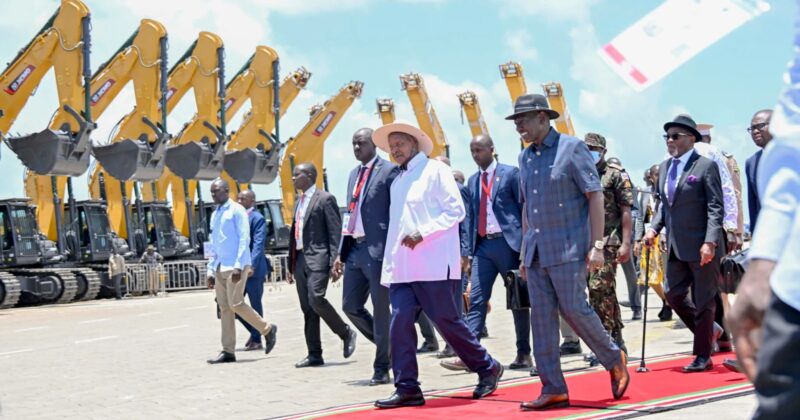
NAIROBI, Kenya, Sep 30 — Ugandan President Yoweri Museveni has backed Kenya’s planned Lamu oil refinery but said Uganda will not invest in the project until he establishes what happened to an earlier plan to develop a regional refinery at Tanzania’s Tanga port.
Museveni said he would raise the issue with Tanzanian President Samia Suluhu Hassan and President William Ruto as East Africa pursues multiple refinery projects aimed at processing crude within the region.
“I want to discuss with President Samia and Ruto and find out what happened to that refinery of Tanga, what was the problem so that we harmonize,” Museveni said.
“So this one [Lamu] I support but will not invest yet.”
Kenya has begun developing the proposed Lamu refinery with Nigerian billionaire Aliko Dangote backing the project, which is expected to cost about Sh2.2 trillion ($16 billion) and have a planned processing capacity of 700,000 barrels of crude oil per day.
Museveni said Uganda had previously discussed the development of a refinery in Tanga with Tanzania but that the plan had not materialised as envisaged.
He maintained that the existence of multiple refineries in the region would not necessarily undermine their viability, given growing demand for petroleum products across East Africa.
“Even if we have a small refinery in Hoima, another one in Tanga, no problem, another one here, good, because we need more than two or three refineries,” he said.
Uganda is separately pursuing a refinery at Hoima to process crude from its Lake Albert oilfields, while its crude exports are expected to be transported through the East African Crude Oil Pipeline (EACOP) to Tanzania’s Chongoleani terminal near Tanga.
The Ugandan and Tanzanian governments are also pursuing a Tanga Regional Energy Hub incorporating refining, storage, logistics, trading and distribution infrastructure.
Museveni said Uganda’s decision to develop domestic refining capacity was deliberate, arguing that the country should not export crude without adding value locally.
“We discovered our oil more than 20 years ago but it has never come out of the ground, why? Because I refused to export petroleum without a refinery,” he said.
He added that Uganda had also adopted a broader policy of restricting the export of unprocessed minerals.
“If you don’t want to process, you don’t export. I am glad that now everyone is waking up,” Museveni said.
The Ugandan leader said his position on refining had been shaped by his view that East African countries should develop processing capacity rather than remain exporters of raw resources.
He recalled visiting Iran after being advised that refineries were not profitable and said the country’s refining infrastructure reinforced his decision to pursue a refinery for Uganda.
The emerging projects at Lamu, Tanga and Hoima are positioning Kenya, Tanzania and Uganda around multiple petroleum processing and logistics hubs, with potential implications for the supply of refined products to landlocked markets including Uganda, Rwanda, Burundi, South Sudan and eastern Democratic Republic of Congo.
KioskNews shows a cleaned-up reading view extracted from the publisher’s page — the original always lives on their site, not ours.