Commentary: UMNO’s dark September - twin storms threaten party’s 'blue wave'
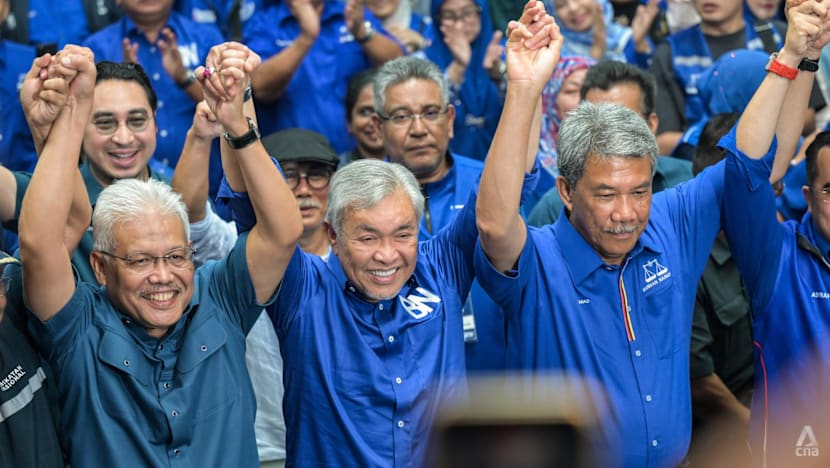
Despite UMNO’s resurgence, recent events have shown that the party has a long way to go before it can complete a political comeback, writes CNA’s Leslie Lopez.
New: You can now listen to articles.

This audio is generated by an AI tool.

08 Oct 2026 05:59AM
KUALA LUMPUR: Within a single September week, the seeming rise in political fortunes of the United Malays National Organisation (UMNO) was whipsawed by two separate developments. One handed the party what would become a double-edged sword and another has plunged its newly-won state government into open constitutional warfare.
But let’s step back a bit, because understanding the context of this whipsaw UMNO is now faced with is important.
Just weeks earlier, UMNO and the Barisan Nasional (BN) coalition that it leads appeared to be riding the wave of a genuine revival. It retained control of the Johor state government in July in a landslide electoral victory, before recapturing in August the Negeri Sembilan state government that was previously controlled by Prime Minister Anwar Ibrahim’s Pakatan Harapan (PH) coalition.
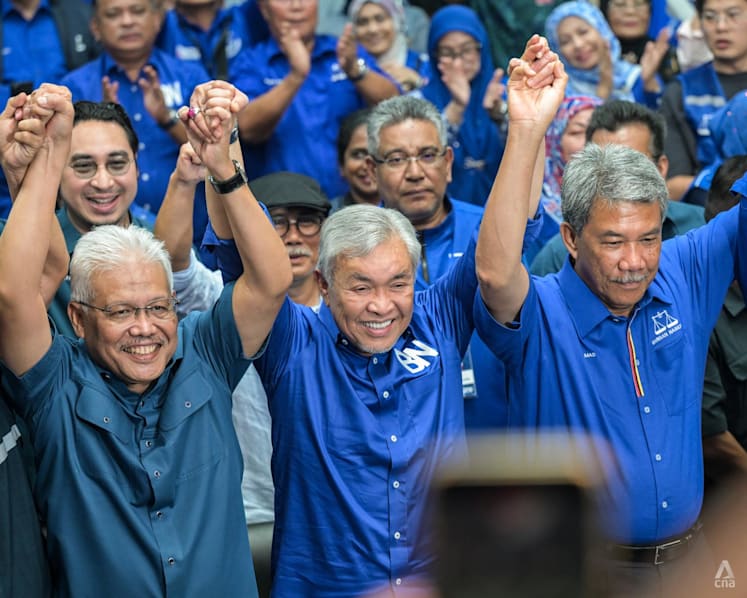
UMNO was entering the fourth quarter of the political year with confidence. It was capped at the party's three-day congress that began on Sep 9 with its leaders claiming that the so-called “Blue Wave”, the colour shorthand for both UMNO and BN, was ready to sweep the country with the backing of the country's politically dominant Malays.
Its president, Ahmad Zahid Hamidi, who is also one of the two deputy prime ministers in Mr Anwar's Unity Government, even called for an early general election, which is only due sometime in early 2028.
The revival story struck an even more dramatic note when delegates from the right-wing Parti Islam Se-Malaysia (PAS) turned up at the assembly and were warmly greeted by UMNO leaders, signalling that the door to a new Malay-unity pact had swung open again.
Then the events of September struck.
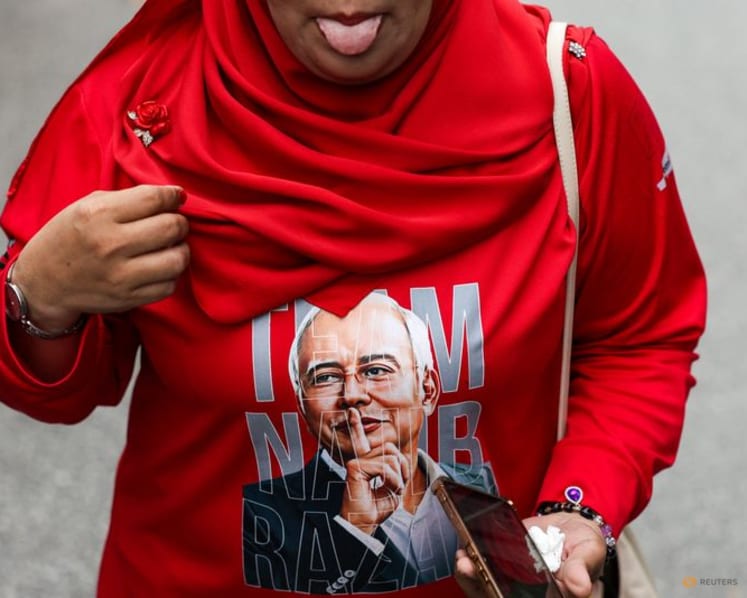
First came the decision on Sep 18 by the Pardons Board, headed by Malaysia’s king, to grant jailed former prime minister Najib Razak conditional house arrest. This is contingent on the full settlement of a RM50 million fine (US$12.2 million) for which the party immediately launched a grassroots fundraising drive.
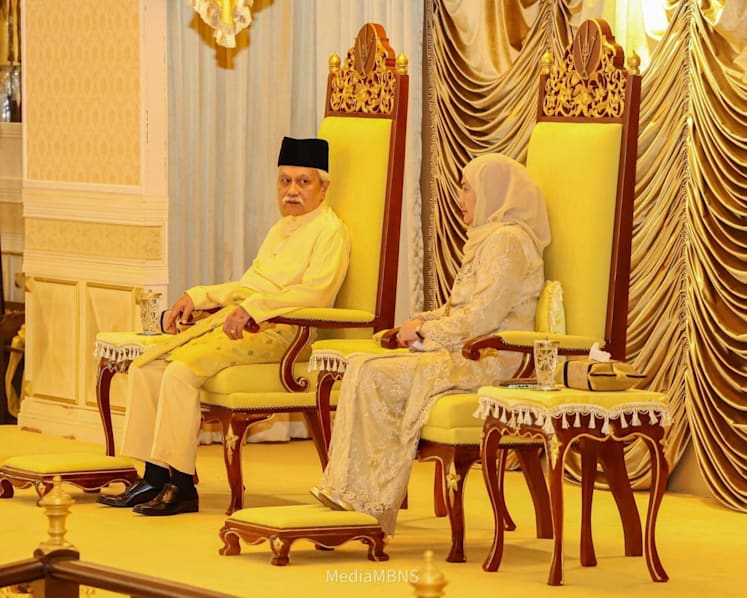
Two days later, Tuanku Muhriz Tuanku Munawir, the state ruler and head of the Negeri Sembilan royal household, sacked 10 state executive councillors of a brand-new state government headed by UMNO and BN. Among the 10 who were sacked, seven were from UMNO.
The sackings, gazetted in a matter of days on Sep 24, were on grounds that they breached their oath of loyalty after the party’s state chapter participated in a campaign to remove the state ruler.
The twin developments for UMNO may appear unrelated.
But they in fact reinforce each other awkwardly for the party that led the government for more than 60 years before being ejected from power in the 2018 general election.
UMNO has long positioned itself as the custodian and defender of the monarchy, a stance it has often leveraged to secure votes in Malay-majority seats. However, the pardon granted to Najib and the party’s actions in Negeri Sembilan - where it benefits from one royal prerogative while resisting another - raise questions about the consistency of its position when political interests are at stake.
HOW NAJIB CONDITIONAL PARDON COULD HURT
UMNO’s recent resurgence has been built on momentum delivered by its deep-rooted party machinery - made up of branch networks, divisional chiefs, the women’s and the youth wings - that no other political entity can match.
Yet its credibility and brand have been hit by graft scandals over the years. It is against this backdrop, that Najib's conditional pardon surfaced on Sep 18.
UMNO has long fought for Najib’s freedom, and the party has a storied history of standing behind troubled leaders. This time round, the party is discovering that his bid for house arrest has reopened the 1MDB wound UMNO has spent years trying to bury.
UMNO’s fundraising drive to settle Najib's RM50 million fine has attracted both support and scorn. Apart from raising over RM9.25 million since it was launched, local media have reported that the drive was met with one-sen protest donations - a gesture of contempt that underscored how the house-arrest decision has dragged the 1MDB issue back to the top of the next cycle.
This could cost UMNO its fence-sitters that drifted to the other Malay-based parties, such as Parti Keadilan Rakyat (PKR) and Parti Pribumi Bersatu Malaysia (Bersatu). With each leniency shown to Najib, the corruption scandal that kicked the party out of power in 2018 keeps returning to the centre of national discourse.
UMNO’S NEGERI SEMBILAN STORM
The Negeri Sembilan storm is not only more complicated, but it also presents a more immediate danger to UMNO’s still wobbly political standing.
Malaysia’s constitutional monarchy is unique, where the king is elected for a five-year term by the Conference of Rulers from among nine hereditary royal houses.
All follow ordinary hereditary rules, with the exception of Negeri Sembilan, which operates under a centuries-old West Sumatra matrilineal legal tradition that was brought by Minangkabau migrants known as adat perpatih.
Under this tradition, the ruler of the state’s royal household, referred to as the Yang di-Pertuan Besar (not Sultans like the other states) is elected by consensus of four territorial chiefs, known as undangs.
The crisis began in April when the four undangs proclaimed the removal of Tuanku Muhriz, citing what they called as interference in customary affairs and installed a distant cousin Tunku Nadzaruddin Tuanku Ja’afar as the acting ruler.
Tuanku Muhriz rebuffed the move, because the proclamation did not receive the endorsement of the sitting chief minister, or Menteri Besar, at the time as required by the state’s constitution.
Quickly the palace crisis became a political hot potato.
UMNO’s 14 assemblymen withdrew their support from the unity Negeri Sembilan administration led by Mr Anwar's PH coalition to trigger a snap state poll. UMNO successfully campaigned on a platform that the party understood the unique state customs and could easily resolve the palace imbroglio if elected to lead the state government.
During the August 1 state polls, the UMNO-led BN formed a pact with a Malay-based coalition known as Perikatan Nasional and won a two-thirds majority in the 36-seat state assembly. UMNO’s Ismail Lasim was sworn in before Tuanku Muhriz as the new Menteri Besar.
HOW THE SITUATION TURNED UGLY
Then things turned messy.
Within days of taking power, Mr Ismail was reportedly spirited to a secret meeting with senior UMNO leaders where he signed away the ruler that he had just sworn allegiance to. That document, however, stayed hidden for over a month and only surfaced in September.
When Mr Ismail was first confronted, he claimed that he had signed the proclamation under duress, before flipflopping to endorse the proclamation. Three UMNO top leaders have also refuted claims that they attended the meeting.
Tuanku Muhriz fired back and revoked the appointments of all 10 exco members in the state administration for breaching their oath of allegiance.
In recent days, Mr Anwar has hit out at the Negeri Sembilan UMNO chapter for their recalcitrance toward the royal household. UMNO president Zahid has also asked Mr Ismail to seek an audience with the ruler and undangs to resolve the situation.
Meanwhile, the Malaysian police have opened an investigation into the conduct of the 10 exco members, raising the prospect that criminal charges could follow over the face off with the royal household in Negeri Sembilan.
The net effect here is that a state election that was meant to restore order has produced a state with two rival power centres and with UMNO carrying the can of pitting itself against the royal household.
Whether UMNO can bounce back from these missteps is unclear.
It no longer owns the majority of the Malay vote. Najib’s clemency for house arrest has raised the corruption stain and the royal standoff in Negeri Sembilan is chipping away at its credentials as the defender of the monarchy.
One thing the events in September have shown is that UMNO has a long way to go before it can complete a political comeback.
KioskNews shows a cleaned-up reading view extracted from the publisher’s page — the original always lives on their site, not ours.