Justice BV Nagarathna flags gaps in juvenile justice law implementation
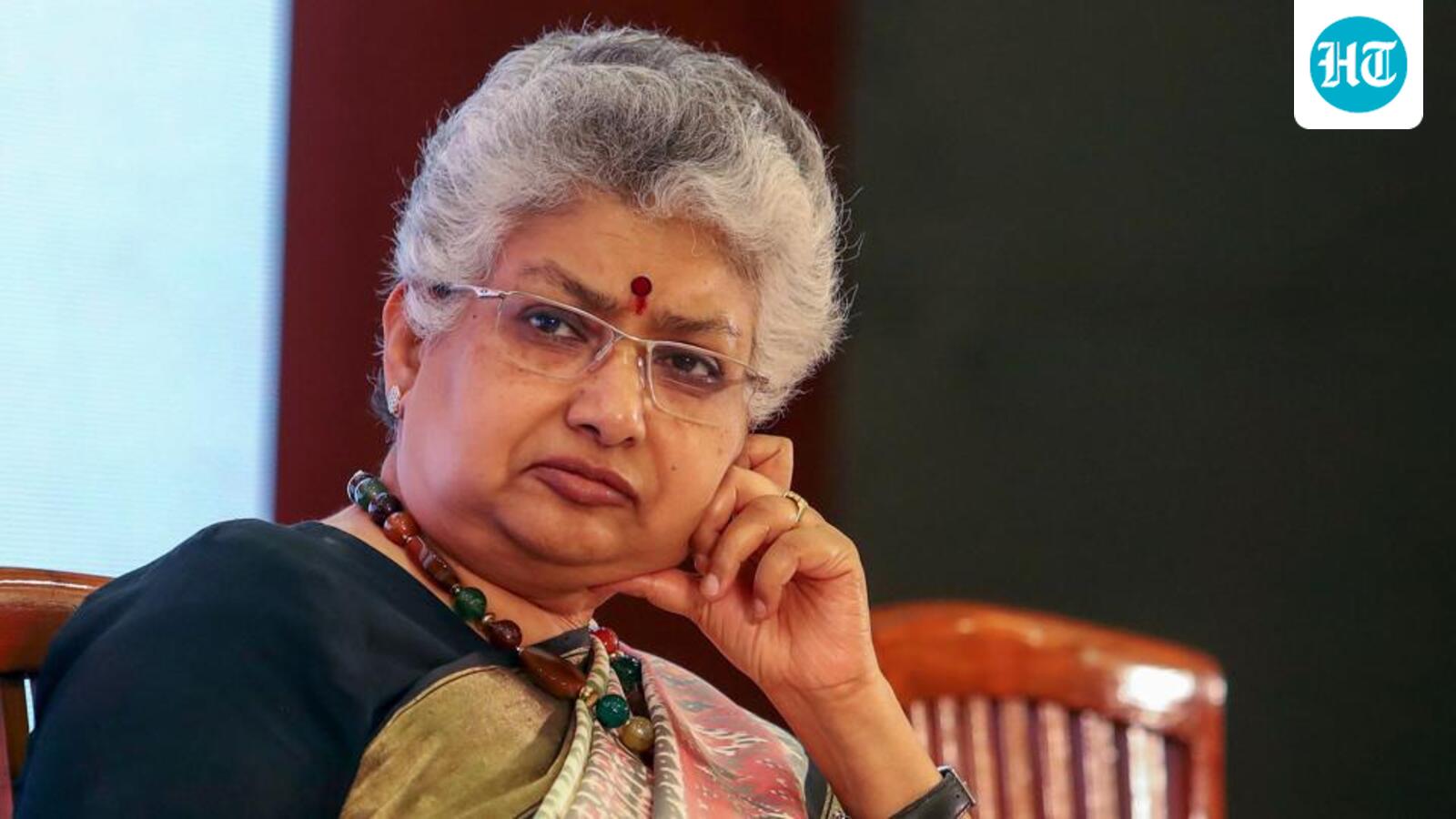
Supreme Court judge justice BV Nagarathna on Saturday said the question of treating a child in conflict with law as an adult was one of the “most delicate fault lines” in India’s criminal justice system.
“It is a question where anxiety about crime confronts constitutional commitment to childhood, where public outrage meets legislative restraint, and where the impulse of punishment competes with the philosophy of reform,” justice Nagarathna said.
The Supreme Court judge, however, refrained from calling for any change in legislation, saying instead that the law was “largely clear on paper”. The real challenge lay in its implementation, she said.
Justice Nagarathna was speaking at the Supreme Court’s ‘National Consultation on Ten Years of the Juvenile Justice Act, 2015.’
The two-day event is being held in New Delhi to review implementation challenges and identify priorities for strengthening child protection and juvenile justice. The event is organised by the apex court’s Juvenile Justice Committee in association with UNICEF.
The 2015 Act grew out of the rights-based approach of the 2000 Act and a public debate over serious crimes committed by teenagers.
It classified offences as “petty, serious and heinous, so the offence now shapes the response.” It kept rehabilitation, reintegration, family-based care and the child’s best interests at its centre, Justice Nagarathna said.
The judge also questioned whether Juvenile Justice Boards (JJBs) carried out the preliminary assessment of a child’s mental and physical capacity, mandated under Section 15 of the Act, with “consistency, expertise and sensitivity.” She asked whether every state followed the same approach.
Justice Nagarathna also cited the India Justice Report from November 2025, which showed that, as of October 2023, 55% of cases before JJBs across 18 states and two Union Territories were pending. More than 55,000 children were awaiting decisions, while 111 of the 470 responding boards were functioning without their full complement of a principal magistrate and two social worker members.
She asked what happens to a child while a case drags on. Does the child receive education, counselling, legal help and medical care? Does the child live in a suitable place? “A disposed case is not necessarily a rehabilitated child,” she said.
A Juvenile Justice Board, she said, “is not intended to be a miniature criminal court.” She questioned whether boards had their full strength and Child Welfare Committees had adequate support. She also asked whether legal aid meant something in practice or existed only on paper, whether Social Investigation Reports arrived on time, whether each care plan was suited to the child, and whether children with disabilities could access the system on equal terms. She further asked whether foster care and adoption moved with urgency when a child could not return to their family.
She urged officials and stakeholders to see a juvenile “not as a file, a placement or a statistic.” “When a child breaks the law, the law must not break the child,” Justice Nagarathna said.
KioskNews shows a cleaned-up reading view extracted from the publisher’s page — the original always lives on their site, not ours.