'Not an anti-China coalition’: US on Quad’s position amid regional tensions
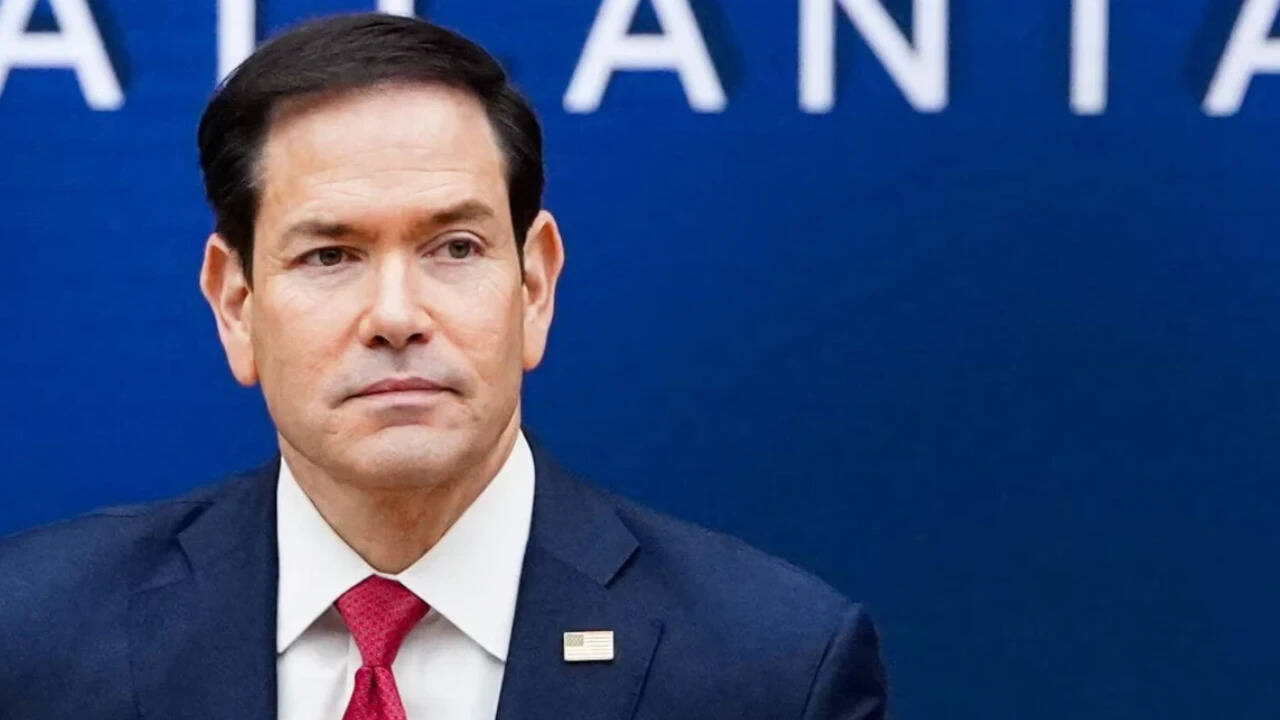
Rubio described the Quad as a cooperative arrangement between four countries that share common interests
US secretary of state Marco Rubio has said the Quad is not an alliance directed against any country, while noting that the grouping's concerns over certain actions and behaviours repeatedly point to one nation.
Though he did not name the country, his remarks come amid growing concerns over China's activities in the Indo-Pacific.“The Quad is not anti-anybody. It’s not a format that exists to be against any country,” Rubio told reporters in Atlanta. He said the grouping's concerns were directed at specific behaviours and activities rather than any particular country.“Now, those activities or behaviours are coming repeatedly from one country.
That’s going to be obvious to everybody,” he said, while reiterating that the Quad was not an “anti-China or anti-anybody coalition”.Rubio described the Quad as a cooperative arrangement between four countries that share common interests and oppose certain actions. He did not identify the country he was referring to. The joint statement issued after the meeting also refrained from naming any nation.
He further said a meeting of Quad leaders would take place in Manila in November, adding that an announcement on the dates was expected soon.
He did not provide further details.
Quad foreign ministers pledge closer cooperation
Foreign ministers from India, the US, Australia and Japan met in Atlanta, Georgia, on Saturday, reaffirming their commitment to cooperation across supply chains, maritime security and emerging technologies.In their joint statement, the four countries announced more than $85 million in technical and financial assistance to expand access to what they described as trusted artificial intelligence across the Indo-Pacific.
The initiative will include a Quad AI Accelerator.The ministers also expressed “grave concerns” over economic coercion, including arbitrary export restrictions and excess production capacity driven by non-market practices. They underlined the importance of resilient supply chains and cooperation in critical technologies.On maritime security, the statement stressed that navigation rights in the Strait of Hormuz, the Red Sea and the Bab el-Mandeb Strait must be protected under international law. The ministers also opposed the imposition of tolls on international shipping, citing provisions of the UN Convention on the Law of the Sea.
KioskNews shows a cleaned-up reading view extracted from the publisher’s page — the original always lives on their site, not ours.