Smart Cities Spent Crores On Tech. Did Garbage Collection Actually Improve?
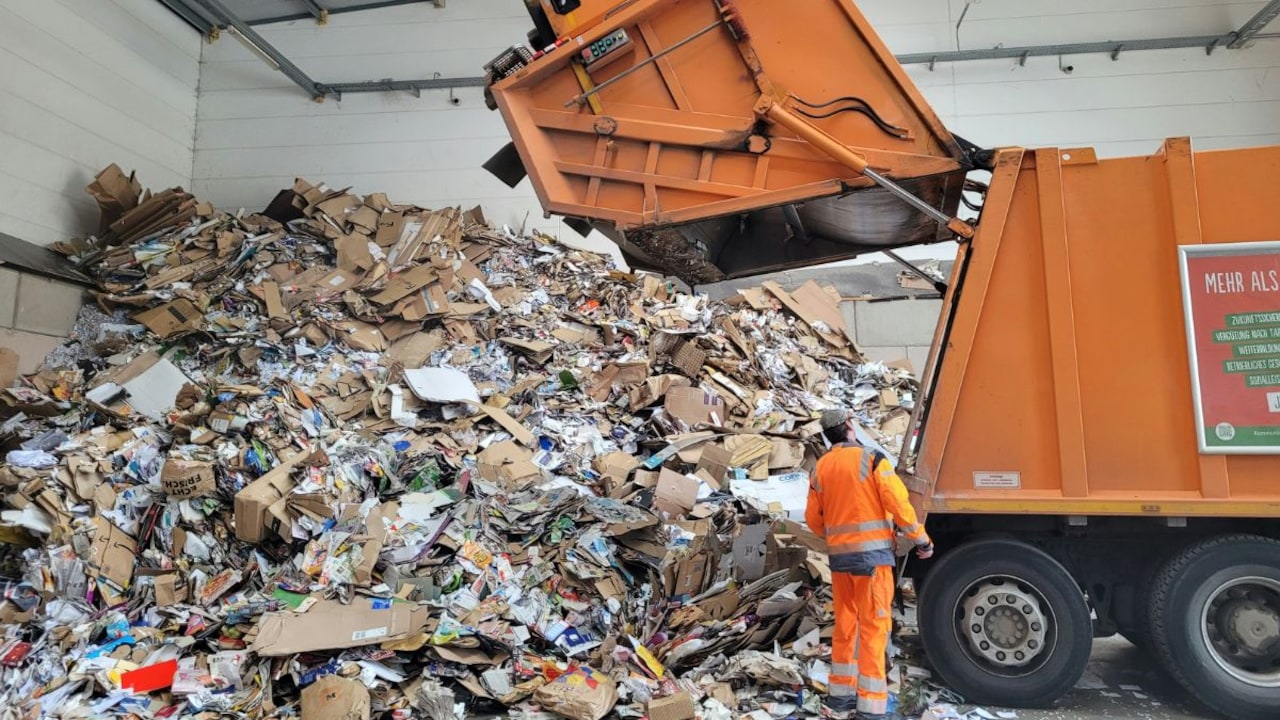
For years, the idea of a "smart city" in India was closely associated with command centres, cameras, sensors and dashboards. But there is a much simpler test of whether all that technology is working.
Look down at the street.
Is the garbage being picked up on time? Are waste vehicles actually covering their routes? Is waste being segregated? And after the garbage leaves a home, is it really being processed or simply moved from one place to another?
Also Read | Layoffs Are Rising In Tech, But These Skills Are Helping People Unlock Better Pay
India has spent thousands of crores trying to make its cities smarter. The Smart Cities Mission has seen around Rs 1.64 lakh crore invested across roughly 8,067 projects. As of May 2025, around 94 per cent of the projects had been completed.
Waste management has been one part of that technology push.
More than 66 cities under the Smart Cities Mission are using technology for solid-waste management. Around 9,194 waste-collection vehicles have been RFID-enabled for automatic vehicle location, helping municipal authorities track vehicles and manage routes.
In other words, the municipal corporation does not necessarily have to depend only on a supervisor asking whether a garbage truck reached a particular neighbourhood. Technology can provide a digital trail.
So, Has Garbage Collection Actually Improved?
The answer, according to the latest government data, is broadly yes, at least in terms of collection coverage.
The Economic Survey 2025-26 says door-to-door collection of municipal solid waste has expanded to 98 per cent of urban wards. It also says around 80 per cent of urban municipal waste is now reported to be processed, compared with just 16 per cent in 2014-15.
That is a huge jump. The number of waste-collection vehicles has also grown to more than 2.5 lakh nationwide. Many large cities are using GPS-enabled vehicles and Integrated Command and Control Centres to monitor collection routes and improve operations.
So, if the question is whether technology has helped cities organise waste collection better, there is evidence that it has.
But there is another question. Does better collection automatically mean cleaner cities?
Not always.

The Problem Has Moved Beyond Picking Up Garbage
India's waste-management challenge is no longer simply about sending a truck to collect household waste.
The Economic Survey itself points to gaps in segregation quality, processing effectiveness and enforcement. It notes that while door-to-door collection has expanded rapidly, segregation at source, waste processing and dumpsite remediation continue to lag in many places.
A city can know where its garbage truck is every minute of the day and still have litter lying on a road.
It can monitor collection routes and still struggle with garbage around markets, bus stops, construction zones, public parks and other high-footfall areas.
That is where the limits of technology become visible. A dashboard can tell a municipal team where the vehicle is. It cannot, by itself, make sure that every piece of litter on a busy street has been picked up.
What Worked: Making Invisible Operations Visible
One of the biggest contributions of smart-city technology has been visibility.
RFID and GPS systems can help authorities track vehicles. Command centres can bring information from different municipal operations onto a single platform. This can make it easier to identify missed routes, monitor operations and respond to complaints.
That shift is important because municipal waste collection is a massive daily operation. It involves thousands of workers, vehicles, routes and collection points.
Technology can bring some structure to that complexity.
Nitin Kaushal, Founder & CEO, SFK Group of Companies, told NDTV that the next stage of this transformation should focus on what happens after the monitoring system identifies a problem.
According to Kaushal, monitoring systems can show whether vehicles are covering their routes, but cities also need practical equipment that can help cleaning teams deal with litter on the ground.
What Didn't Work Completely: The Last-Mile Cleaning Gap
This is perhaps where the smart-city story becomes more complicated.
Large waste vehicles are designed to collect waste efficiently from households and collection points. But cities also generate another kind of waste.
- A plastic bottle thrown on the side of a road.
- Leaves gathered near a pavement.
- Paper and wrappers around a market.
- Litter around public spaces.
Waste accumulated in areas where sending a large collection vehicle may not be practical. These are small problems individually. Together, they determine how clean a city actually looks. This is why specialised cleaning equipment could become increasingly important.
Kaushal points to the need for machines that can complement existing waste-collection systems rather than replace them.
His company's association with Spruce Up Industries, Pune, for its "Jatayu" litter-picking machines is an example of this approach. The company says more than 100 such machines have been deployed across cities including Gurugram, Jaipur and Mumbai.
The Next Smart-City Test Is On The Street
India has already built much of the digital infrastructure needed to monitor urban services.
All 100 Smart Cities have operational Integrated Command and Control Centres, while technology is being used across areas including waste management, water supply, transport and public safety.
The next challenge is less glamorous.
- It is maintenance.
- It is enforcement.
- It is segregation.
- It is processing.
And it is picking up the litter that does not fit neatly into a household collection route. The numbers show that India's waste-management system has expanded dramatically over the past decade. But the same government data also makes clear that collection coverage is only one part of the problem.
That means the definition of a "smart" city may need to change. It is not enough for a city to know where its garbage trucks are.
The real test is whether residents can see the difference on the street. As Kaushal puts it, the opportunity now is to combine the digital systems already built by cities with practical tools that improve cleaning where it actually happens.
KioskNews shows a cleaned-up reading view extracted from the publisher’s page — the original always lives on their site, not ours.