Do Egyptians Still Share the Same Cultural Moments?
There was a time when it was correct to assume that Egyptians had watched the same shows and movies the night before.
A popular Ramadan series aired on television, and by the next day, its latest episode had become a topic of conversation at work, school, and family gatherings. An advertisement could introduce a song that would be repeated for months.
This did not mean that everyone in Egypt watched the same programmes or shared the same interests. But entertainment was once consumed through fewer television channels and media platforms, making certain moments more likely to reach large audiences.
Today, that experience looks very different.
One person may spend the evening watching a series on WATCH IT, another person may be following a Korean drama on Netflix, while another scrolls through TikTok, watches YouTube creators, or follows an online community their friends have never heard of.
So, in an age when two people can spend hours online without seeing any of the same content, do Egyptians still consume the same cultural content?
From the living room to the personalised feed
According to Egypt’s National Telecommunications Regulatory Authority, 41 million individuals used online streaming platforms and applications, including Netflix, Shahid, and WATCH IT, during a single day in Ramadan 2024. The authority recorded 14 million viewing hours per day, while usage of streaming services was 41 percent higher than during Ramadan 2023.
Television no longer determines what people watch or when they watch it. Streaming platforms, social media, and personalised algorithms have given audiences far more control over their entertainment, and their time..
They have also made it easier for people to follow increasingly specific interests. A sports fan might spend their evening watching football analysis on YouTube, while someone else follows Egyptian rap, gaming, or true crime.
The result is a media landscape where attention is spread across far more platforms and communities than before.
But some moments still break through
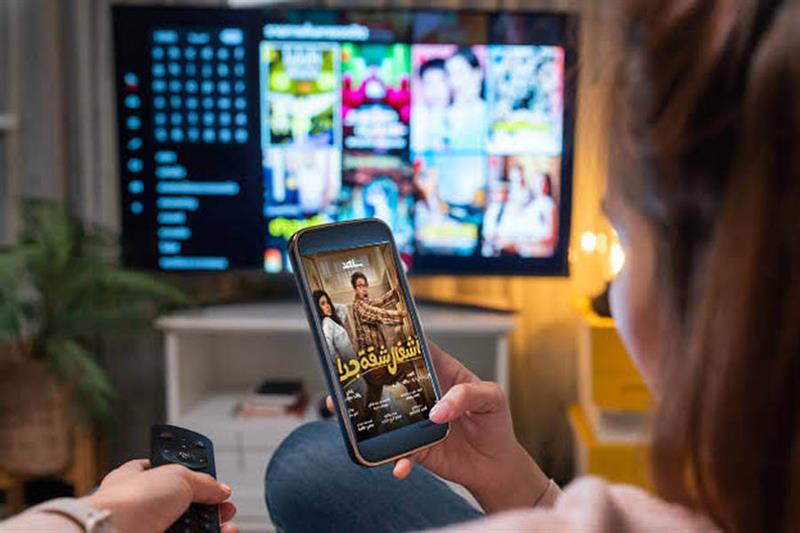
Ramadan remains one of the clearest examples.
According to a March 2026 report by Ipsos, a global leader in market research, 86 percent of surveyed audiences in Egypt watched Ramadan series that month. More than half used both television and streaming platforms, while nearly a quarter relied exclusively on streaming.
The way people watch may have changed, but certain series can still dominate the conversation. Viewers may watch episodes at different times and on different platforms, then encounter the same scenes, reactions, and discussions through social media, memes, and group chats.
The shared experience no longer necessarily happens in the same living room or at the same time. But the conversation can take place across several platforms.
What still brings us together
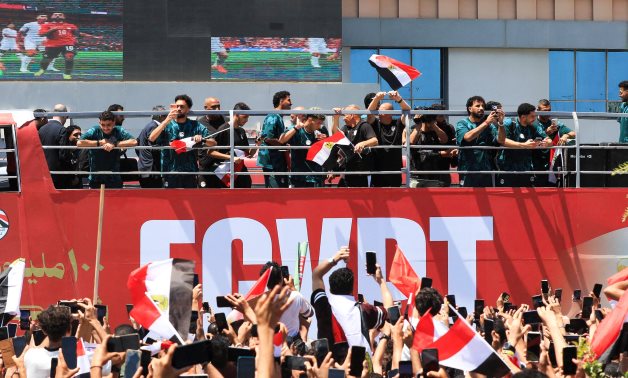
Egypt’s World Cup run in June and July 2026 offered an even clearer example.
For weeks, the national team’s matches gave millions of Egyptians an event to follow and cheer on together. Egypt recorded its first World Cup victory before making history by reaching the knockout stage for the first time.
By the time the Pharaohs reached the round of 16, the tournament had become more than a sporting event. Cafés were filled with fans, while social media feeds, group chats, and everyday conversations revolved around the same matches.
What made the experience particularly striking was the sense of collective attention. In a media environment where people usually move between a multitude of feeds, platforms, and interests, the World Cup briefly gave millions of Egyptians the same event to celebrate, worry about, and talk about simultaneously
It was a reminder that the ability to create a shared cultural moment has not disappeared.
The shared moment has changed
Perhaps the difference is not that Egyptians no longer experience the same cultural moments, but that those moments now emerge differently.
In the past, fewer channels helped concentrate public attention on certain programmes and events. Today, shared moments have to break through a much more crowded media environment.
They can come from a football match, a Ramadan series, a song, a viral video, or even a meme. Some may last for weeks, while others disappear within days.
What has changed is everything that happens in between. Egyptians now have more individualised entertainment choices and can spend much of their time consuming completely different content from the people around them.
But occasionally, something manages to merge those separate worlds.
The recent World Cup offered a glimpse of what that still feels like: millions of people following the same story, reacting to the same moments, and feeling, at least temporarily, that they were part of the same conversation.
Maybe we do not share culture in quite the same way we once did. But when a moment is big enough to bring us back into the same room, whether that room is a café, a living room, or a social media feed, the shared experience is still there.
The opinions and ideas expressed in this article are the author’s and do not necessarily reflect the views of Egyptian Streets’ editorial team.
To submit an opinion article, please email [email protected].
KioskNews shows a cleaned-up reading view extracted from the publisher’s page — the original always lives on their site, not ours.