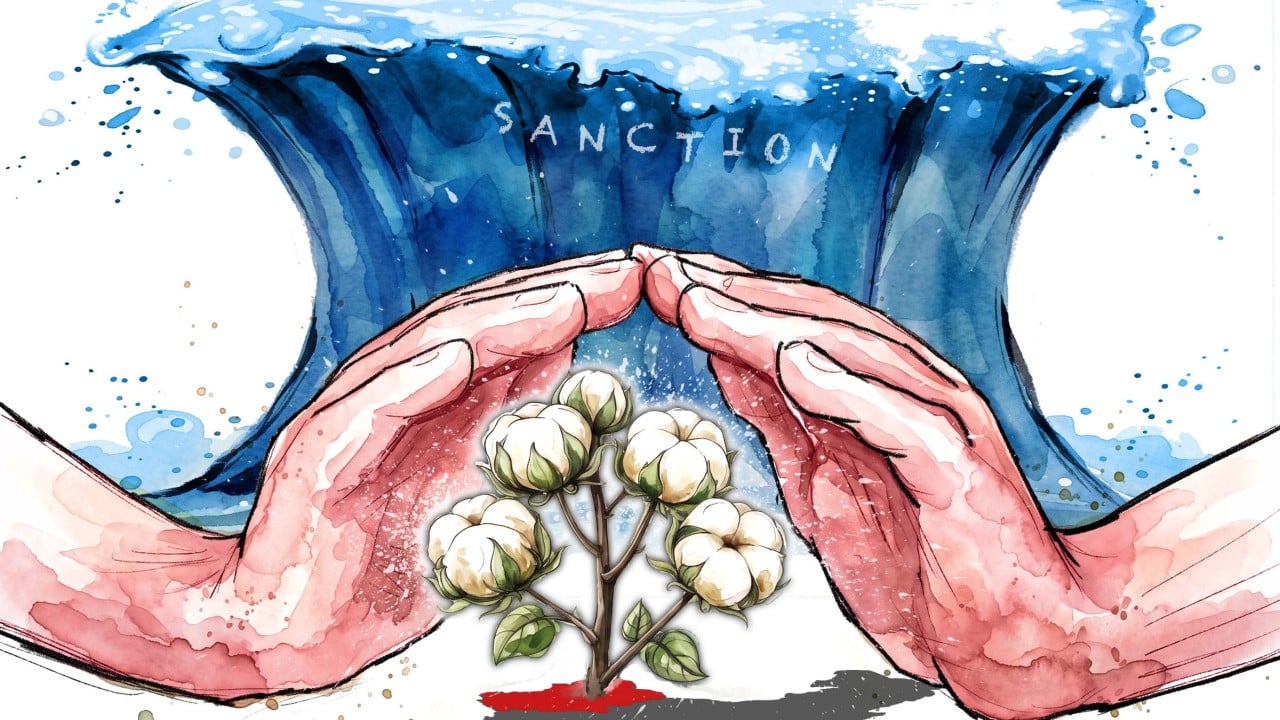
US sanctions forced Xinjiang cotton to adapt, but survival comes at a cost
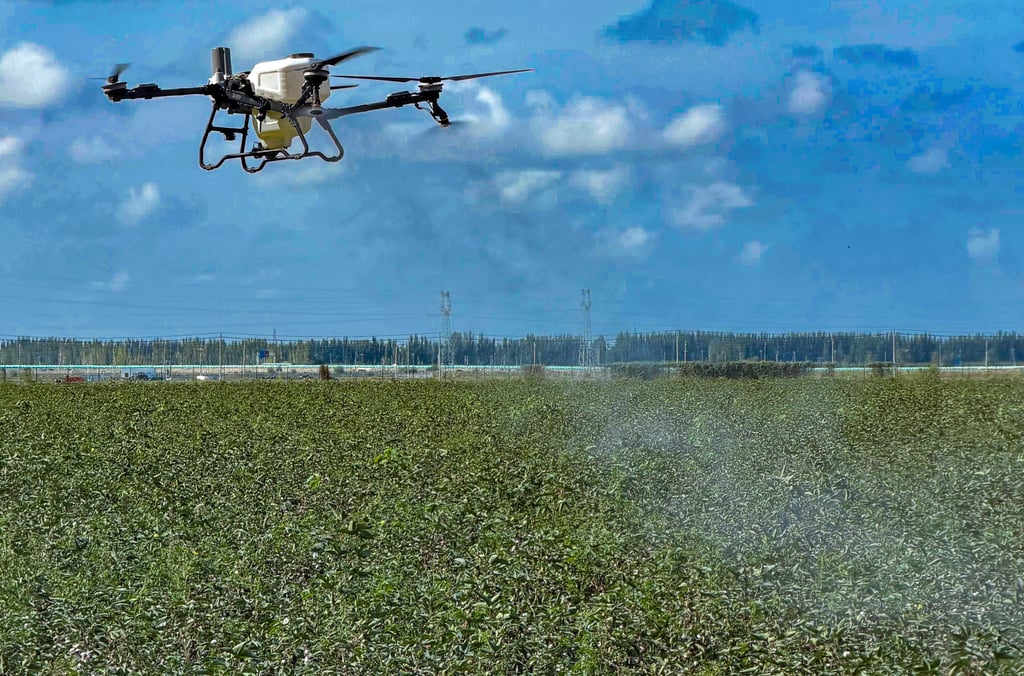
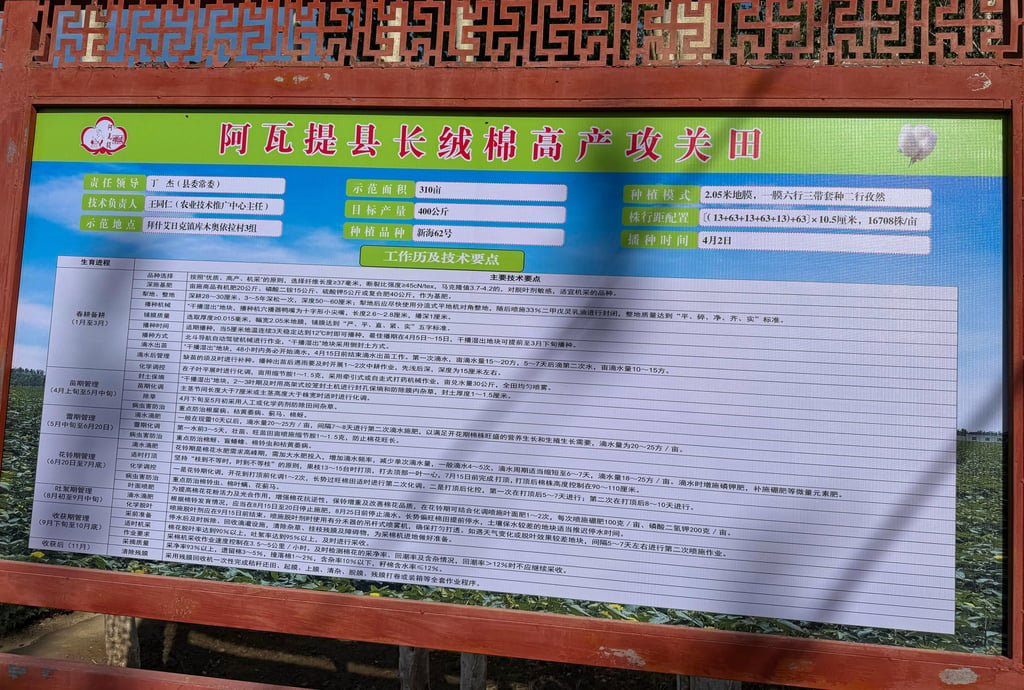
Following land consolidation, seeders guided by satellite navigation can plant the entire village in two days, drones spray fields in five hours, and domestic harvesters have pushed mechanisation to nearly 100 per cent, boosting yields to 400kg per mu, according to the village leader’s collective.
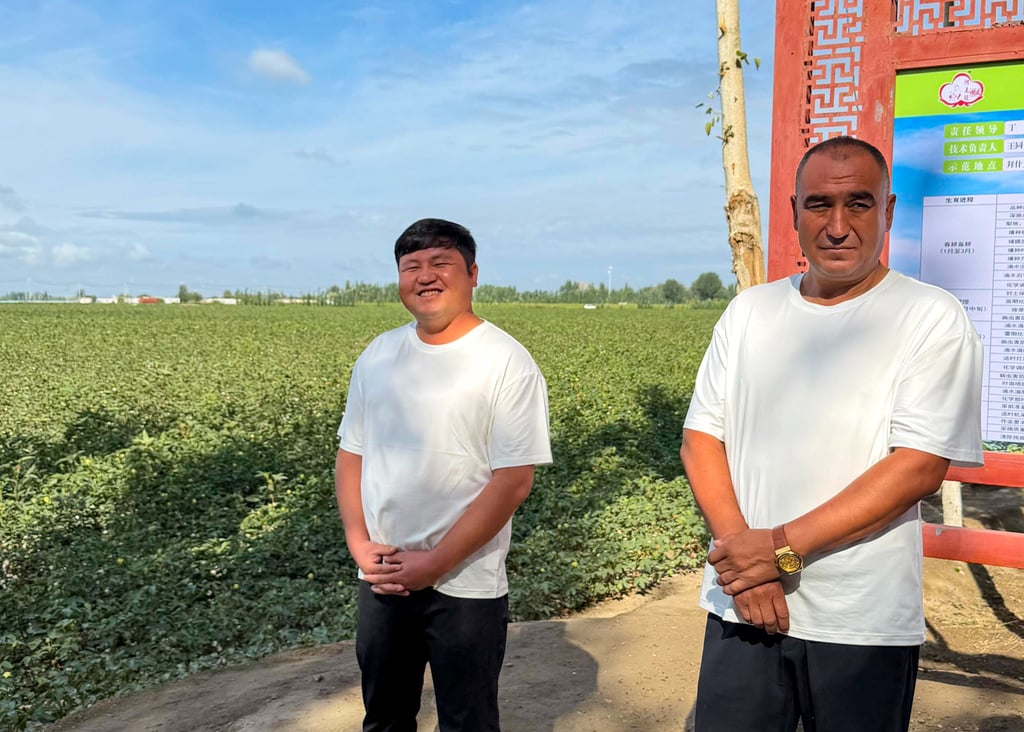
For Yusup and his wife, less than five months of work as cooperative technicians yields over 30,000 yuan (US$4,200). Combined with livestock farming, their annual household income now exceeds 90,000 yuan – a 125 per cent increase from before mechanisation.
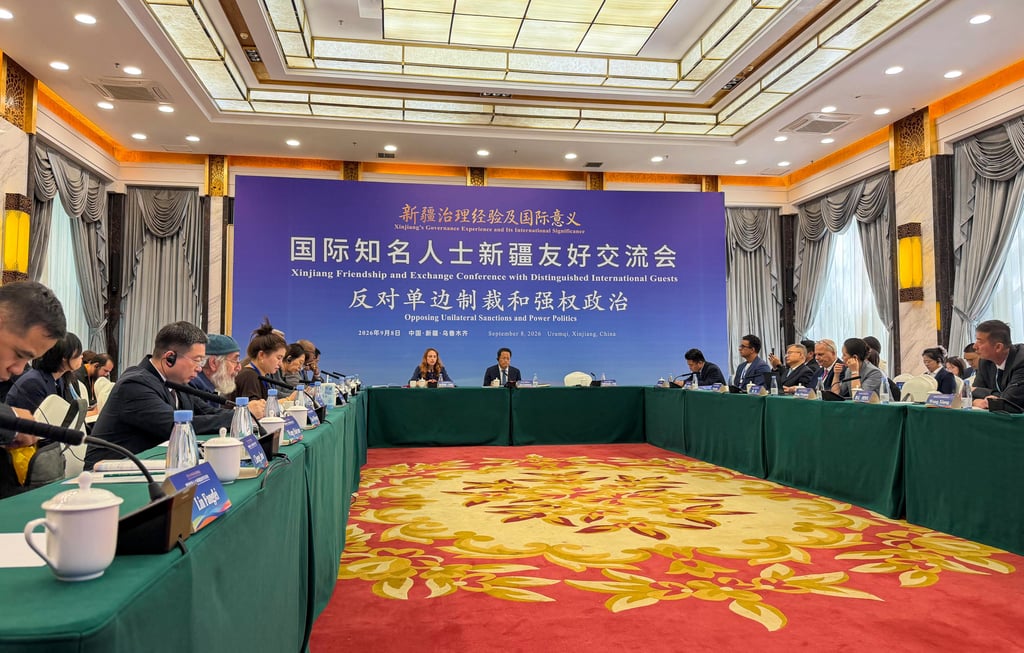
The cooperative members shared their stories with a delegation of journalists from domestic and foreign media – including the South China Morning Post – during a government-organised media tour in early September.
The tour was part of Beijing’s broader campaign to showcase Xinjiang’s development and to push back against Western allegations of forced labour.
Since the US began placing textile manufacturers on entity lists under the Uygur Forced Labour Prevention Act (UFLPA), Xinjiang’s industrial players have forged a sophisticated survival model, backed by state price supports, rapid mechanisation, technological upgrades, aggressive market diversification and domestic brand substitution.
Yet, on-the-ground sociologists and global trade specialists warn that this resilience comes at a steep hidden cost, including squeezed profit margins, a chilling effect that has triggered a “domestic decoupling” and an unintended spillover into European markets.
Failed legal remedies
Signed into law in 2021, Washington’s UFLPA establishes a “rebuttable presumption” that all goods produced in whole or in part in Xinjiang involve forced labour – a charge Beijing consistently denies – and specifically bars listed companies from exporting to the US unless they can provide “clear and convincing evidence” to the contrary.
Additions to the list in August brought the total number of blacklisted companies to 187 across sectors including gold, pharmaceuticals, aluminium, clothing and food.
From early on, targeted companies tried to fight the restrictions.
A senior manager of a major yarn spinning giant, who preferred to remain anonymous, said that in May 2020, a local subsidiary in Aksu was added to the US Commerce Department’s entity list for alleged human rights abuses, followed by a broader import ban under the UFLPA in June 2022.
“They even included several subsidiaries that had been liquidated five or six years earlier,” he said.
In 2020, the textile maker invited Western clients and third-party social compliance auditors to conduct on-site inspections, where they were shown fully automated lines.
When the press delegation visited the company’s sprawling manufacturing complex in September, both Han and ethnic minority workers were seen moving side by side through the deafening roar of spinning machinery.
Cotton harvested from 5.3 hectares of local fields is fed into automated lines, where raw white fibres are dyed and spun into spools of black, grey and vibrant melange yarns.
According to the manager, foreign clients had acknowledged to him that the automated facilities operated without coercive practices but said their hands were tied by political pressure back home.
“They said: ‘I believe there is no forced labour in your factory, but this is not something we can decide,’” the manager said.
Other efforts proved similarly futile.
Hong Kong-based textile giant Esquel Group – which operated spinning mills in Xinjiang – commissioned independent third-party audits that returned scores above 85 out of 100, finding no evidence of forced labour.
When targeted by US sanctions, Esquel filed a lawsuit against the US Commerce Department in federal court in 2021.
The legal challenge stalled, and by late 2024, the US government added Esquel’s parent group and subsidiaries directly to the UFLPA entity list. Major clients including Nike, Tommy Hilfiger and Patagonia cancelled orders, forcing Esquel to shut factories in Mauritius and Malaysia and shed more than 10,000 global jobs.
Sheng Lu, a professor of fashion and apparel studies at the University of Delaware, noted that hi-tech field mechanisation had done little to ease US customs enforcement because the burden of proof under the rebuttable presumption was extraordinarily high.
“In practice, US fashion brands and retailers regard sourcing cotton from Xinjiang as extremely risky,” Lu said.
“Given plenty of alternative sourcing destinations in countries like Bangladesh and nearshoring opportunities in Mexico and Central America, incentives to challenge the ‘rebuttable presumption’ are extremely low among US fashion companies.”
Pivot and diversification
Faced with an unyielding US legal barrier, textile producers abandoned litigation and launched sweeping operational pivots.
“In 2020, when the sanctions hit, our core leadership established a strict policy: no lay-offs, no pay cuts and no production shutdowns,” the manager of the Aksu spinning giant said.
01:08
Xinjiang, China’s top cotton producer
The company’s solution was a drastic shift towards China’s domestic market and non-Western trade corridors. “Otherwise, how could you keep the workers fed?” he said.
The company redirected 60 to 70 per cent of its capacity to domestic Chinese apparel powerhouses such as Anta Sports. Another 20 to 30 per cent was routed to Southeast Asia, East Asia, Central Asia and Eastern Europe.
Before 2020, overseas markets accounted for 75 per cent of the company’s total business, with the US representing 80 per cent of those export orders. Following its inclusion on the entity list, the company’s US exports dropped to zero, while its Western European share shrivelled to just 3 to 5 per cent.
After years of heavy financial losses, internal balance sheets stabilised in 2024 before returning to profitability last year, the manager said.
Today, the Aksu facility employs more than 5,000 workers and is actively building new production lines to recruit another 1,000 employees. The parent group has set a goal to double its annual revenue to 200 million yuan, according to the manager.
Other industry players have also adopted a “dual-track” sourcing model: using imported cotton sourced from Australia or Brazil in coastal factories to service export orders, while reserving Xinjiang’s cotton for domestic product lines.
This strategy has been reported by Chinese media and confirmed by Lin Fangfei, a professor of sociology at Xinjiang University who has conducted extensive fieldwork across sanctioned supply chains.
National figures back up the domestic absorption.
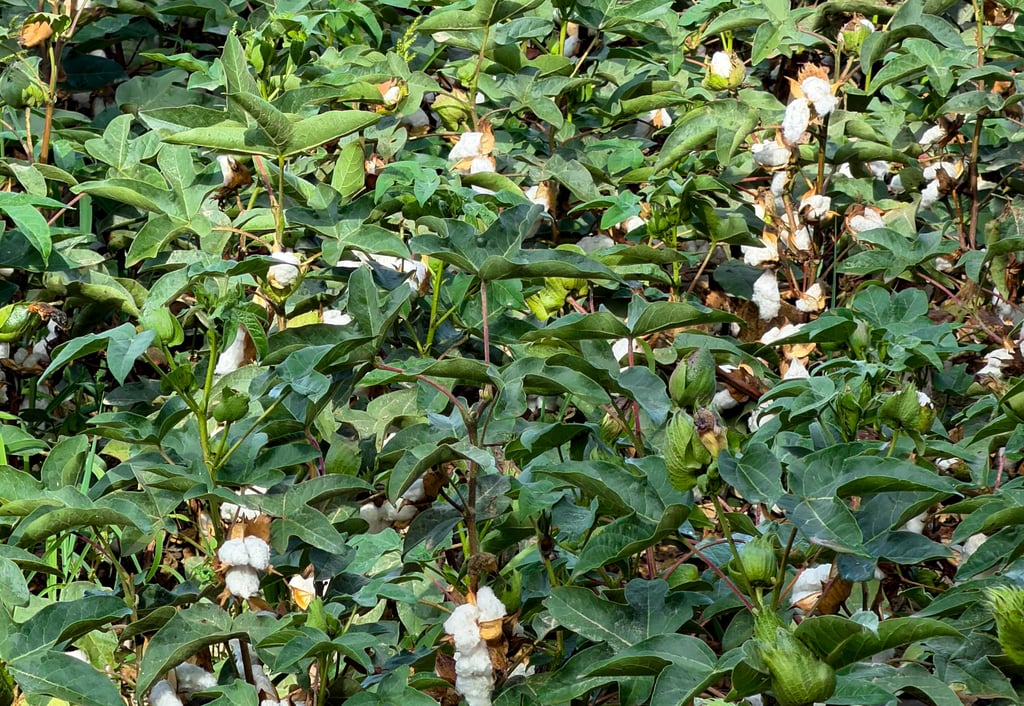
Data from China’s National Bureau of Statistics shows Xinjiang’s cotton output hit a record 6.17 million tonnes last year, accounting for 92.8 per cent of national production.
Meanwhile, China’s domestic cotton consumption is forecast to hit 8.91 million tonnes this year – up from 7.8 million tonnes in 2024 – with about 1.6 million tonnes of raw cotton imported.
The trajectory of China’s domestic market is critical because local consumers already absorb 50 to 60 per cent of the country’s apparel production, according to Lu.
“This means that China’s domestic market can provide an important buffer for Xinjiang cotton,” Lu said. “But it may not be sufficient to absorb unlimited additional production, particularly if domestic apparel demand weakens.”
The long-term sustainability of this strategy would “depend heavily” on China’s domestic consumption and government policies, such as subsidies, he added.
Since 2014, Xinjiang cotton’s production has been supported by a state target-price subsidy programme that has guaranteed a minimum price of 18,600 yuan per tonne for Xinjiang cotton growers.
When initial US sanctions hit, manufacturers faced existential liquidity crises as banks hesitated to lend.
The government intervened to guarantee bank credit and preserve operating cash flow, preventing large-scale shutdowns. Local authorities have also organised peer-sharing forums for sanctioned firms to exchange mitigation strategies, according to the anonymous manager.
Following an August 2024 resolution by the Xinjiang People’s Congress opposing US sanctions, regional policies now pair state cotton target-price subsidies with legal support and financing for tech upgrades to help targeted firms pivot to new markets.
Inside the modernised processing plants, contrary to Western narratives of forced labour, the manager said the main challenge was “an acute labour shortage”.
09:35
How is China building a great green wall to protect itself from desertification
As education levels rise and demographics shift in southern Xinjiang, younger generations increasingly prefer gig-economy jobs, such as food delivery, over factory work.
Rapid industrial automation had also eliminated the demand for low-end manual labour, shifting recruitment entirely towards educated, tech-savvy technicians capable of operating digitised machinery, he said.
Esquel Group has pivoted towards direct-to-consumer retail, expanding its self-owned premium brands Pye and Determinant.
“Esquel remains focused on our ongoing transformation into a knowledge-based innovation company,” the group wrote in a reply to the SCMP.
It added that the company had also launched the Esquel Innovation and Incubation Village in Urumqi, transforming a former manufacturing facility into an incubation platform for agricultural tech and green technologies.
Chilling effect
While corporate pivots show individual resilience, field researchers stress that looking only at the surviving industrial giants paints an incomplete picture, as the impact varies across different nodes of the supply chain.
According to a forthcoming study in the peer-reviewed International Review of Financial Analysis, the sanctions inadvertently spurred asset growth and production efficiency among “smaller, younger, non-state-owned enterprises with high R&D investment”.
Those companies located in central and western China were able to capitalise on domestic brand substitution, the Chinese researchers found, according to the October study.
Some export-oriented firms in coastal provinces, however, were “dealt a huge blow”, other research shows.
“Even for firms that survived by restructuring, the forced pivot has eaten heavily into their profit margins and introduced extra compliance costs that simply would not exist without sanctions,” Lin said.
She said another major destructive effect of the sanctions was the pervasive culture of fear and the “chilling effect” generated throughout the market.
For years, Chinese officials and businesses have faced a delicate narrative balance. If the media emphasises that targeted industries have adapted, Washington will interpret it as a sign that sanctions were insufficient. But if Beijing reports severe economic fallout, Western policymakers will cite it as proof that their measures are working.
Lin said that during her research, corporate leaders expressed fear that media attention would invite “further US punishment”.
To dodge the risk of secondary sanctions and safeguard their own export revenues, some apparel brands in coastal provinces are quietly severing supply ties with sanctioned Xinjiang mills.
Lin also pointed to an unquantifiable “hidden iceberg” of lost economic activity, where foreign multinationals such as Volkswagen and Tesla have abandoned prospective investments or facilities in Xinjiang.
In the US, however, “strengthening customs enforcement has become a critical part of the Trump administration’s trade policy”, Lu said.
This was especially evident in an executive order signed by US President Donald Trump in June prioritising investigations into forced labour and illegal transshipment through heightened audit frequency, stricter disclosure mandates and rigorous supply-chain documentation requirements, he added.
“The recent US Section 301 investigation is pushing more countries not only to implement their own forced labour laws but also to adopt the US legislative framework and criteria. In other words, the Xinjiang cotton ban is expanding beyond the US to the rest of the world,” he said.
04:52
‘New joint arrangement’ on trade as Xi meets Trump at White House
More than 24,300 shipments with a total value of almost US$1 billion have been blocked since the act came into force, according to the US Department of Homeland Security.
US Customs and Border Protection had intensified scrutiny of all major import sources, including potential transshipment routes through Southeast Asia, Lu observed.
But Western fashion companies are not fully decoupling from China.
As of July, China remained the second-largest source of US apparel imports, after Vietnam, and was “increasingly seen as a strategic sourcing destination that offers flexibility, agility, and cost-efficient apparel products, even with relatively higher tariff rates”, Lu said.
In a recent study Lu conducted with the US Fashion Industry Association, respondents indicated that sourcing from China was “somewhat stabilising” this year, and few companies planned to fully decouple from China. Beyond finished garments, China is also regarded as an indispensable supplier of textile raw materials with no easy alternative.
European spillover
According to a May study, researchers from Britain, the European Union and the World Bank found that direct Chinese exports of cotton and cotton products to the US fell by 19 per cent at the intensive margin following the restrictions.
Unlike the US, the EU has not enacted a blanket import embargo against Xinjiang cotton.
However, Jo Van Biesebroeck, co-author of the paper and an economics professor at KU Leuven in Belgium, pointed out that US trade sanctions had triggered unintended spillover effects across Europe.
“We were very surprised that the negative effect on EU imports is as large as we found,” he said.
Their research found that the European retreat from Xinjiang cotton has been driven not by official EU policy, but by voluntary risk avoidance and concerns of “reputational damage” among European importers.
While US customs enforcement heavily targets less processed raw materials and yarns at ports, the drop in European imports is sharpest in finished apparel sold directly to consumers.
He said that because Xinjiang sent very few direct exports to Europe, most European scrutiny fell on downstream manufacturers in other Chinese provinces whose supply chains extended back to the far western region. This indirect link makes traditional factory audits far less convincing to European consumer advocates.
Van Biesebroeck noted that standard compliance audits failed to reassure buyers because European consumer dissatisfaction extended beyond specific forced-labour metrics to broader scepticism towards Beijing’s official narratives.
“I have never seen any real evidence of forced labour, but the overall situation is rather murky,” he said. “It is more the general treatment of the minority population that consumers want to protest.”
Researchers caution against viewing Central Asia or the Middle East as replacements for Western markets, as these regions cannot match the high-margin markets of the US and Europe.
Van Biesebroeck’s work showed that Russia was the only major market that registered a statistically significant increase in Chinese cotton product imports following the US ban.
Lin argued that solution strategies must move beyond micro-level compliance to embrace macro-level institutional support. By building a formal state-corporate community of shared interest, Beijing can prevent cash-flow collapses among Xinjiang manufacturers and avert local unemployment risks.
“Many nations across the Global South have long suffered under the weight of unilateral US sanctions,” she said, adding that by uniting with affected countries and neutral trade partners, China could leverage collective international pressure to gradually rebuild a more balanced global trade order.
KioskNews shows a cleaned-up reading view extracted from the publisher’s page — the original always lives on their site, not ours.