‘It’s inescapable’: will new revelations about enslavement force Britain to finally confront its past?

Over the past 10 days, a series of registers, documents and reports have been published, all revealing the scale of Britain’s involvement in the transatlantic slave trade. The overall picture is one of a nation powered by enslavement and investment in it. This week, I spoke to Chris Osuh, a community affairs correspondent at the Guardian, about these new revelations and Britain’s persistent difficulty in confronting its own history.
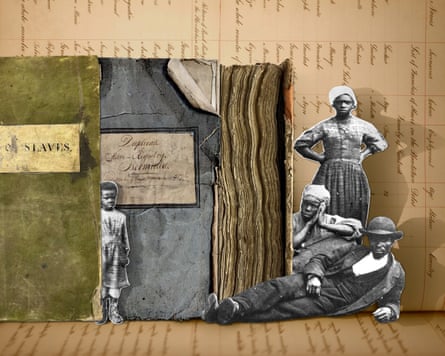
Last week, a Register of British Slave Traders, compiled by historians, was published. Its length and detail exposed that the British financial system was much more involved in enslavement than previously thought. Scrolling through the names is chilling in its prosaicness. There are owners and co-owners of slaving voyages from London to various locations in the Caribbean. There are investors in the Royal African Company, an English trading company that trafficked more Africans to the Americas than any other. There are ordinary people – soap boilers and cheesemongers, surgeons and diplomats – all with various interests, shares, ownerships and investments in the trading of Africans. The register is 636 pages long.
The commodities they traded and profited from were also named a few days later. Earlier this week, the Former British Colonies Enslavement Registers was published, making almost 4 million records of enslaved people across 20 former British colonies searchable to the general public.
People will have different responses when perusing these accounts. But I was most struck by seeing the names of those who were sold into hundreds of years of enslavement and suffering, expressed through the banality of trade and profit details. The relics of the entire system: the ledgers, the neatly written names of the enslaved and their children, reduced to units. Grappling with these records vertiginously brings you face to face with a history that does not feel distant or unrelatable, but something intimate and familiar. This was a business.
Chris draws another parallel between these accounts and the present: there is still a persistent impulse to minimise what happened. “The common thread, to put it bluntly,” he says, is “the same tendency to minimise African pain, suffering and labour. That is something that cuts across centuries. It just expresses itself in different ways.”
“Once upon a time it expressed itself with justifications of slavery,” Chris tells me. “Now it expresses itself with ‘we don’t have to apologise, we don’t owe you anything’.”
Why disavow this part of British history?
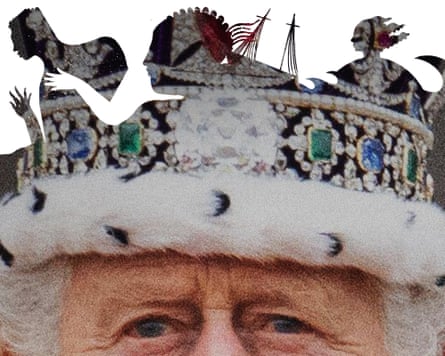
Britain is a nation with a vast cultural appetite for its history – from period dramas, to Henry VIII, to the world wars of the 20th century. So I am always astonished by the absence of enslavement from mainstream historical accounts. If you are a nation interested in documenting your past, forget about the morality of it, you would surely be interested in including a system that played a significant role in Britain’s politics, economy and industrialisation for almost 250 years. Perhaps there has been an offshoring of enslavement in the British collective consciousness, in the same way slavery was geographically offshored to British colonies.
Chris says that these blind spots partly result from the ways that history has been leveraged for national fantasies. There is a perpetual culture war surrounding British history, Chris says, “where one side uses history to engage in a kind of national myth making that makes everybody feel good about their identity. This approach values a heroic narrative in which you are always the good guy.” I am reminded here of the scholar and first prime minister of Trinidad and Tobago Eric Williams, who remarked that “British historians wrote almost as if Britain had introduced Negro slavery solely for the satisfaction of abolishing it.”
In the competing historical practice, history is about learning from the past and preventing future mistakes. In 2023, the Guardian published the Cotton Capital series on its founders’ links to enslavement in Manchester, England. In response to these revelations, it launched the 10-year Legacies of Enslavement programme, which included the creation of the Long Wave and Chris’s role.
“There is a huge blind spot about the reality of empire in the UK,” Chris tells me. “It’s a strange blind spot. It’s almost a taboo. You’re not really supposed to connect the dots. You’re not supposed to ask: ‘Where was Manchester getting its cotton from? Where were the ships from Liverpool going? The insurance industry and stockbrokers in London – what were they selling shares in? Why is there a place called West India Docks’?”
The interesting thing, Chris has gleaned from his reporting, is that “there was much more transparency at the time. Church of England clergy were basically saying ‘we need to colonise for gain’s sake, because England is overcrowded’. That ‘Africans are the fittest hands for plantation work’. Churchmen saying ‘we use African bodies for our support and happiness’. They were not pretending.”
That clarity has become obscured over the years by an enveloping myth about Britain. One that has resulted in, Chris says: “a lot of amnesia about inconvenient histories.” This notion that Britain has built itself alone is challenged by honest accounts of its past, which show that the building of modern Britain was made possible by the unpaid labour and resources of millions of people. Chris tells me: “They interfere with this idea of an island nation that punches above its weight.”
after newsletter promotion
It’s time to face the facts
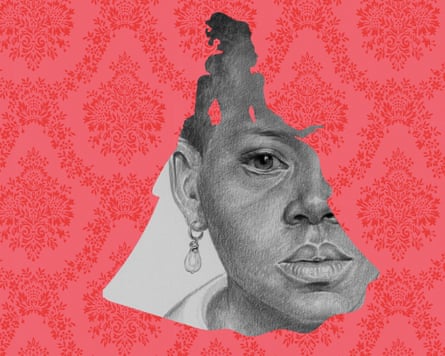
The old myths are colliding with these new accounts. “The scholarship is thriving on different continents,” Chris says, and he describes much of it as an evidence-based account of “who did what, where, and the impact”. Black scholars are at the forefront, but they are joined by white scholars in Europe and America. “This takes it from a place where critics can argue that this is driven by Black self-interest,” Chris says. “Critics would love to frame this in terms of identity, or minimise what happened and make it ideological. But beyond the desire for justice, there is a desire for knowledge.”
By resisting this knowledge, we are denying ourselves a full understanding of Britain’s past, and its present. “This was a commodification of human life on a scale that has never been seen before or since, and an industrialisation of the process sustained by prolonged violence and cruelty,” Chris tells me. He emphasises that these histories show us how that dehumanisation was made possible, with people treated as objects, property, products, as units to generate capital. “It’s inescapable.”
But people and institutions still do want to escape it, not just to avoid shame, but to avoid material loss. As Caribbean nations increasingly mount reparations claims, these records bring us closer to establishing a legal picture of liability.
Even those who refuse to engage with a moral argument must face the fact that there is a case here. “The backlash is being kept alive because it goes to the heart of two things so dear to western societies,” Chris says. “Their identity as heroic, and their money.”
Tap in
Why do you think Britain finds it so difficult to grapple with its role in the transatlantic slave trade? Share your thoughts by replying to this, or emailing us at thelongwave@theguardian.com and we may include your response in a future issue.
KioskNews shows a cleaned-up reading view extracted from the publisher’s page — the original always lives on their site, not ours.