Fourth-grade students discover 1,900-year-old coin during a school trip to the Jerusalem Hills
Sometimes, the most memorable history lessons aren't found in textbooks, but right beneath our feet.
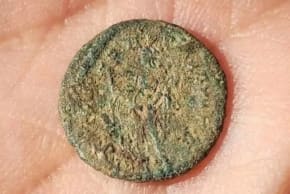
Three fourth-grade students, all aged 10, who took part in a school trip to the Jerusalem Hills on Sunday, discovered an ancient coin, thought to be around 1,900 years old, while playing with an air blower.
The discovery took place at Sataf, on one of the agricultural terraces between Ein Bikura and Ein Sataf. The find may prove to be an archaeological artifact dating back to the period of Roman rule in the Land of Israel.
The trip was led by Amit Feinstein, a tour guide and student at Bar-Ilan University's Department of Land of Israel Studies and Archaeology. According to Feinstein, the three students were playing with an air blower on one of the terraces when they suddenly spotted the coin.
They reported their discovery to their homeroom teacher, who then informed Feinstein.
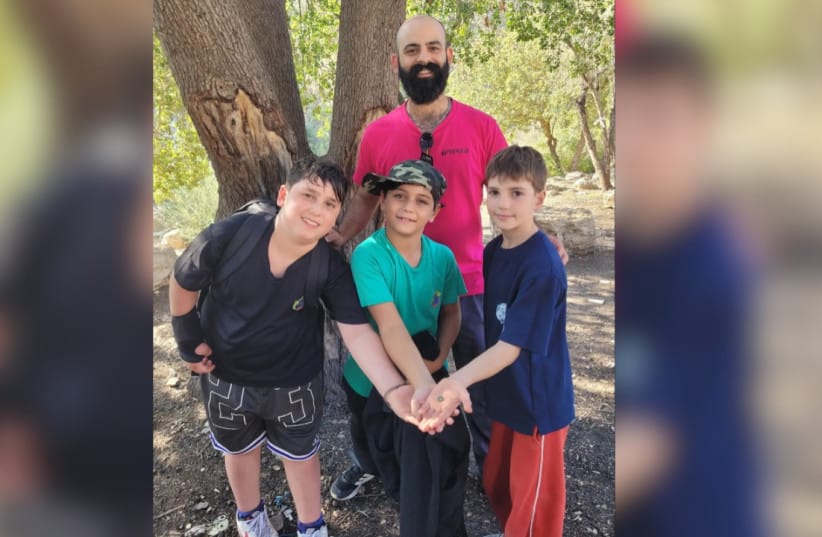
"When they showed me the coin, I suspected it was from the Roman period," he told Walla. Since he is not a numismatics (the study of coins) expert, he photographed the coin and sent the pictures to his university lecturers.
"Their initial assessment was that it was a coin from the Roman or Byzantine period," he said.
However, a consultation with the Israel Antiquities Authority (IAA) raised an even more intriguing possibility.
According to the IAA's preliminary assessment, the coin may have been minted during the reign of Roman Emperor Hadrian, who ruled from 117 to 138 CE and is famed for suppressing the Bar Kokhba Revolt.
If the IAA's identification is confirmed, the coin would be approximately 1,900 years old. However, the authority emphasized that its identity cannot be determined with certainty until it has been submitted for professional examination.
Student wanted to keep the coin for himself
The discovery quickly turned into a practical lesson in antiquities law.
Feinstein explained to the children that archaeological finds are not souvenirs that can simply be taken home. He stressed the importance of reporting discoveries to the IAA and handing them over so that professionals can examine, document, and preserve them.
Not everyone was immediately persuaded.
"At first, the boy who picked up the coin objected to handing it over and wanted to keep the treasure they had discovered," Feinstein recalled.
After a conversation about the importance of preservation and archaeological research, the children understood and handed the coin over to the school principal. Meanwhile, Feinstein reported the discovery to the IAA.
"I tried to get them excited about the ancient agricultural methods at Sataf, but it was only when they found the coin that their eyes really lit up and they began asking me questions about our ancestors," Feinstein said.
School principal holds discussion on antiquities law
The excitement surrounding the discovery extended beyond the students. The school staff was equally enthusiastic, prompting the school principal to organize a discussion with the entire grade about antiquities law and the importance of handing archaeological finds over to the IAA.
For now, the coin is awaiting professional examination, which may shed light on its origin and age.
For the three students, however, it is already a genuine treasure, one that began with a game on an agricultural terrace and ended with an unexpected encounter with the history of the Land of Israel.
KioskNews shows a cleaned-up reading view extracted from the publisher’s page — the original always lives on their site, not ours.