Against Brazil, India briefly glimpsed a future beyond the rankings
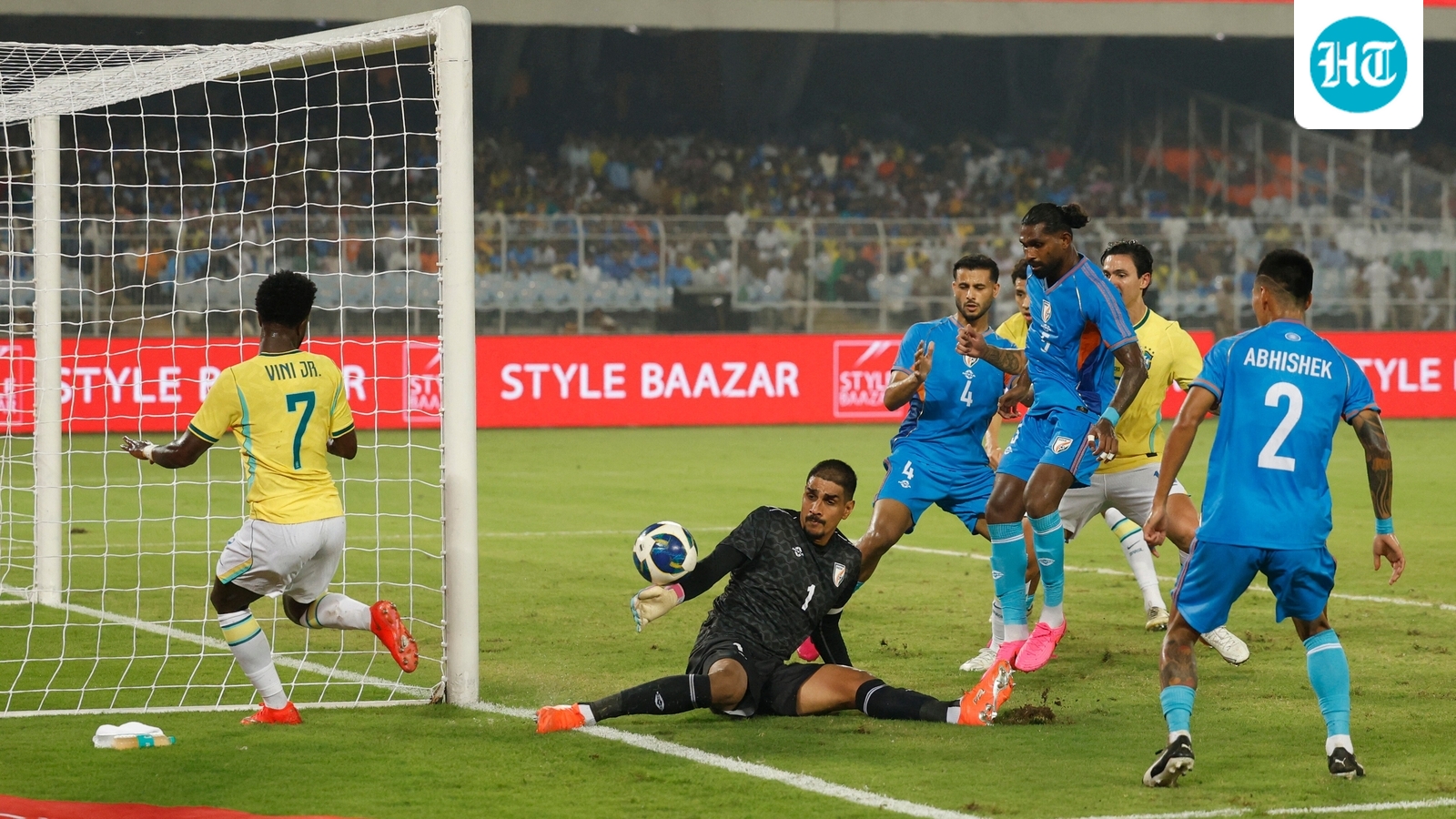
The 4-0 scoreline will survive in the record books. As it should. Brazil were expectedly superior. Once Estevão broke the resistance after 28 minutes, the evening tilted decisively in their favour. But scorelines can be accurate without always being illuminating. For India, the more interesting question after Saturday night was not how they had lost to Brazil, but whether, for once, they had glimpsed a version of themselves that might survive beyond the occasion.
There was enough evidence to suggest they had. Until Brazil scored, India were not overawed. They were organised at the back, aggressive without being reckless and willing to run on the counter. Apuia and Anirudh Thapa helped give the midfield a measure of defensive control, Manvir Singh covered ground almost endlessly, and Ryan Williams provided the threat that India so often lack against stronger opposition.
Williams might even have changed the mood inside the stadium. He forced Mauro Junior into a desperate goalline clearance and then fired narrowly wide from the right side of the area. These were fleeting moments, but they mattered. India were not merely waiting for Brazil to score. They were, occasionally, asking questions of them.
Before the goals came inevitably, a familiar narrative started setting in. India coach Khalid Jamil wasn’t beating around the bush about the lapses. "Till the water break, I was thinking everything will be fine," he said. "Then we conceded a silly goal. And then a second goal. So the calculation has changed a little. We lost our concentration at times."
Carlo Ancelotti acknowledged India's grit as well. "We had difficulty opening the score," he said, before adding that once Estevão scored, Brazil had more opportunity to control the game. For India, that first half-hour was the most valuable part of the evening.
The more obvious story concerned Gurpreet Singh Sandhu. Making his 90th appearance for India and wearing the captain's armband, the goalkeeper endured a difficult opening period and was replaced at half-time. His errors contributed to Brazil's two goals, making him an obvious target in the aftermath. But Jamil refused to blame him.
"It's not because of Gurpreet, he's one of the finest goalkeepers in the country," he said. "The defender didn't close down, then the ball moved from there as well. So overall, everybody's mistake." Jamil didn’t reveal much about Gurpreet's return against Uruguay, but neither did he abandon him. "Gurpreet, definitely he will be back,” he said.
The larger challenge is psychological. India's players were not simply playing Brazil on Saturday. They were playing the weight of their own recent results, the expectations of a home crowd and the fear that comes with facing players who operate at a completely different level every week. "Definitely their quality, their coach is also good," Jamil said. "They've played in different clubs. So to manage them is very difficult, not an easy job."
India can’t afford to treat Saturday as either a miracle or a failure. It was neither. Maybe it’s better to treat it as a reference point. Indian football has spent too long being defined by the gap between what it hopes to be and what its ranking says it is. Saturday offered no evidence that the ranking is wrong. It offered something more useful though—an evidence that the ranking doesn’t have to curb their imagination.
The real danger is elsewhere. One spirited performance against Brazil can quickly become another fond memory, filed alongside other nights when India briefly looked capable of more. The real test comes against opponents against whom India are expected to take the initiative. Against the defeats in recent memory, there is nowhere to hide behind the romance of putting up a fight to a global giant. That is where Saturday's experience will either matter or disappear.
And no one knows that better than Jamil. Asked whether the spirit shown against Brazil could translate into something bigger, he didn’t offer a grand theory or promise an immediate transformation. He just said: “For that we have to play more such matches.”
KioskNews shows a cleaned-up reading view extracted from the publisher’s page — the original always lives on their site, not ours.