Snapchat has finally made it easy to check an account's mutual friends
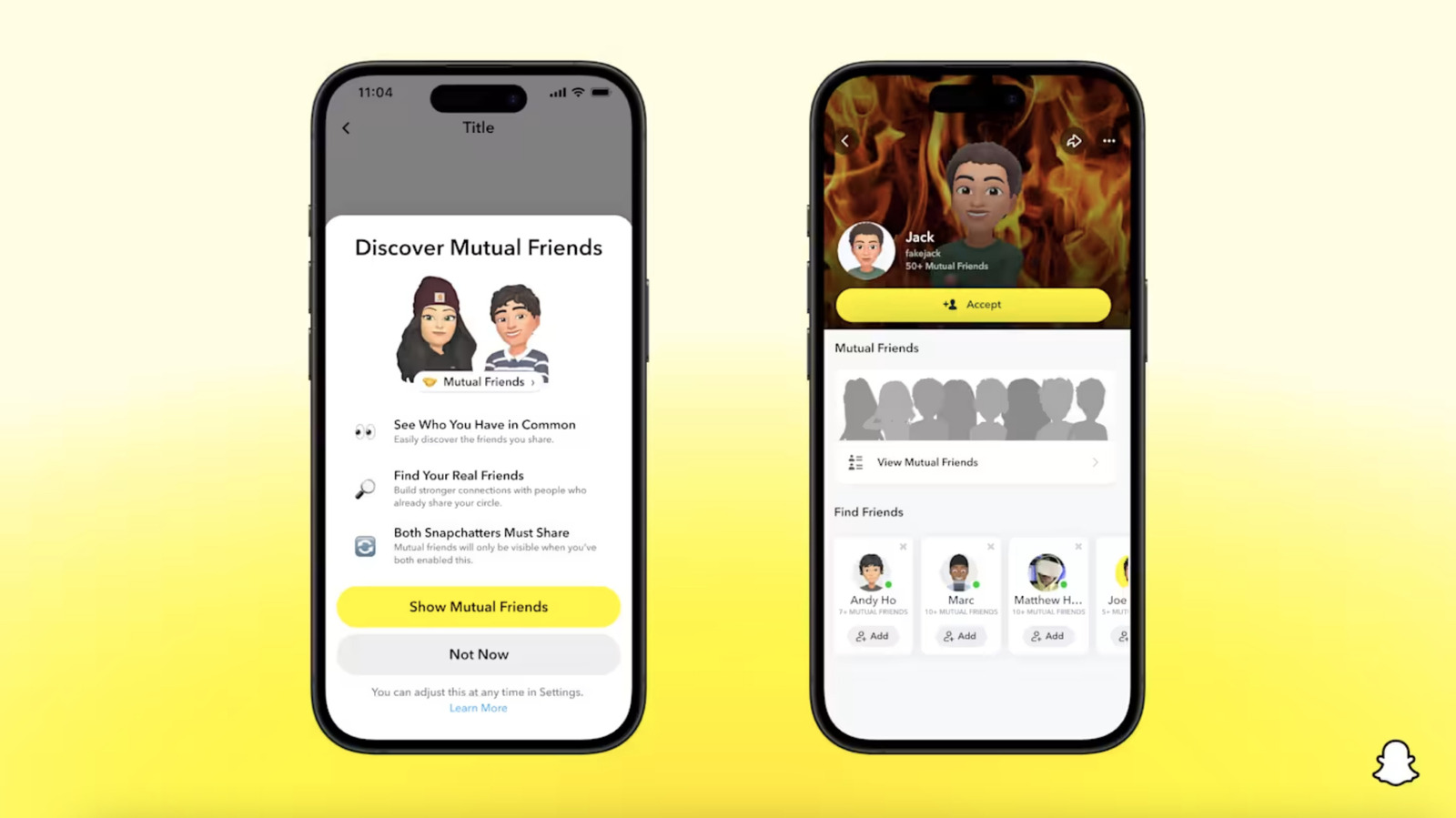
The new feature is available in the US, Australia, France and Sweden.
Snapchat has finally added a Mutual Friends feature, 15 years after the platform launched. As expected, this makes it easy to check accounts for any friends in common. The tool should provide crucial information that informs whether or not a friend request is accepted.
If an account comes through as a request and it's a ghost town with nary a friend in common, it likely indicates a refusal. The same goes if there are too many friends in common and you really just aren't up for sharing. This should help find that Snapchat sweet spot.
It works exactly how you think it does. The mutual friends are displayed directly on the other user's profile. That's pretty much it. This is, however, a fully opt-in experience. That means that both accounts have to turn the feature on in order for it to work. This looks easy enough to do, as it happens via a new prompt. It's turned off by default, as Snapchatters do tend to enjoy discretion.
The Mutual Friends feature is available right now for users in the US, France, Sweden and Australia on both iOS and Android. We don't know when it's coming to the rest of the world, though Engadget has reached out to Snapchat for some clarification. We'll update this post when we find out more.
$SNAP I was recently pitching snap on a buyout of Partiful an event planning site/app but looks like they built their own version in-app, even better @evanspiegel
Introducing Snapchat Plans, a new suite of features that gives Snapchatters a new way to create, share, and manage... pic.twitter.com/KXXFUfbhLv
— Lukas Kafka (@Kafka7invest) September 10, 2026
This is just the latest feature the company has added to its social media platform. There's a new event planning tool and a paid storage option. This has been a good year for the company. It recently boasted of more than 30 million paid subscribers on Snapchat+ and related plans.
KioskNews shows a cleaned-up reading view extracted from the publisher’s page — the original always lives on their site, not ours.