WHERE TO INVEST: Bell Equipment — why hopes of a buyout are keeping a share price afloat
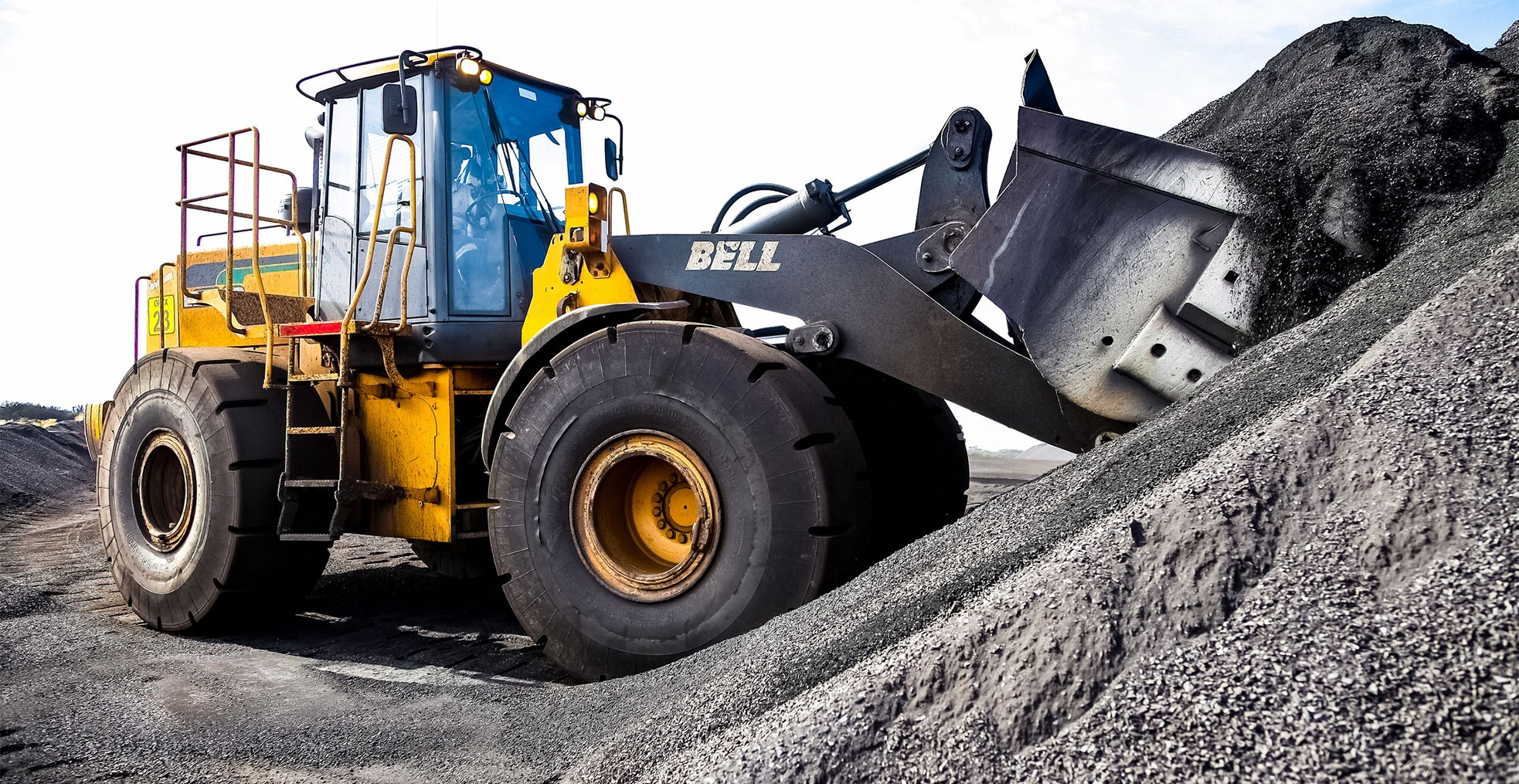
Bell Equipment is an exciting and emotive business. The investor presentations invoke thoughts of birthday parties for preschoolers, with yellow equipment galore. There are images of the company’s iconic ADT vehicles making their way across mining sites, while an assortment of other yellow machinery does everything from crushing rocks to moving large piles of sticks.
Beyond inspiring the contents of an aisle at your local toy store, Bell Equipment is also one of the few examples of a South African industrial company that has survived for multiple decades and spread its wings offshore.
However, this track record is no guarantee of ongoing success, especially in the current environment.
If you look at the share price chart over the past year, you’ll see that Bell is down 3%. For a company that is heavily exposed to the commodities value chain, this is a disappointment for investors.
But, in reality, shareholders have got off lightly. There’s been a shocking drop in headline earnings per share (Heps) of 74% in the six months to June 2026. Before we consider the drivers of the earnings drop, we need to understand why there’s such a deviation between the share price and the earnings.
To understand why the share price has been cushioned, we need to go back a couple of years. In July 2024, the share price “went parabolic” – a technical trading term that describes a rapid, vertical price spike. Bell jumped from R29 to more than R50 per share as the news broke of the Bell founding family making a move to acquire the company.
The price on the table was R53 per share, a substantial premium to where Bell had been trading before the offer. Despite this, a group of minority shareholders blocked the deal in the hope of squeezing a higher price. I’m sure that they are still trying to clean the egg off their faces, as shareholders find themselves two years later with a share price of just over R40 – or roughly 24% lower than the offer price.
But the Bell family is still there, of course, watching what happens to the company that bears the family name. This provides an underpin to the share price, with the market believing that the potential for another buyout offer provides an effective floor for the price. In the absence of such belief, it’s likely that the share price would be under far more pressure, due to the recent struggles.
The valuation is increasingly justified on hope rather than underlying economics, with the latest interim results reflecting a nasty decline in group revenue of 12.4%. The gross profit margin declined from 21.94% to 19.99%.
The combined impact was a 20.2% decline in gross profit. When the top of your income statement looks like that, the rest doesn’t stand much of a chance. Even though total expenses declined by 9.8%, blunting some of the impact, operating profit fell by a nasty 60.3%.
Inventory also fell
The numbers get even worse when you look at the cash flow statement. Cash generated from operations fell by 80%, with one of the pressure points being inventory. A 5% decline in inventory value is well behind the drop in revenue, creating a negative working capital outcome.
Although Bell is still in a net cash position, there’s been a significant drop in closing net cash and the interest coverage ratio. Investors will keep a close eye on the trajectory of these metrics.
Looking at the segmental numbers, the OEM business in Europe suffered the worst sales decline (external sales down by 23.7%), but at least it still generated an operating profit of R12.9-million (down from R52.2-million).
Activity in the Northern Hemisphere has been subdued, with infrastructure spending in Europe one of the many pressure points. The US market is now more difficult to serve thanks to tariffs, while other markets have been affected by a geopolitical shift and a reprioritisation of spending towards defence initiatives. Bell has many impressive products, but they don’t make yellow war machines.
The 6.8% decline in dealer sales in the South African OEM business doesn’t look as bad as what we’ve seen in Europe, but there’s a hideous swing from an operating profit of R60.9-million to an operating loss of R81.4-million. This is where the combined impact of US tariffs and the weaker US dollar was felt the hardest, giving us yet another cautionary tale around the South African industrial sector.
In a tough environment, the manufacturing side of the business has clearly had a terrible time. This part of the business depends on strong throughput to achieve overhead absorption. Friction points in global trade that affect volumes are a difficult reality for the group.
Thankfully, Bell remained profitable because of the Direct Sales Operations segment, representing Bell’s distribution network to end customers. Sales and operating profit were still under pressure in both segments, but at least the South African and Zambian operations achieved operating profit of R84.6-million and R33.3-million, respectively.
The tragedy in the Bell numbers is that a favourable commodity cycle just isn’t translating into sales growth, largely due to issues beyond management’s control.
As we head to 2027, there’s another risk that Bell shareholders should keep in mind: the El Niño weather pattern. Bell is indicating positive demand and a healthy order book for the forestry and agriculture products, but that situation could change if droughts affect Bell’s key underlying markets.
The share price has a 52-week low of R32.50, which is a long way down from current levels. Before the failed buyout offer, Bell was trading in the R20s. With the current earnings trajectory and all the risks faced by the group, for how much longer can the hope of a subsequent buyout offer stop the share price from slipping back towards early 2024 levels? DM
KioskNews shows a cleaned-up reading view extracted from the publisher’s page — the original always lives on their site, not ours.