Taiwan tracks 2 Russian warplanes off eastern coast ahead of Apec summit
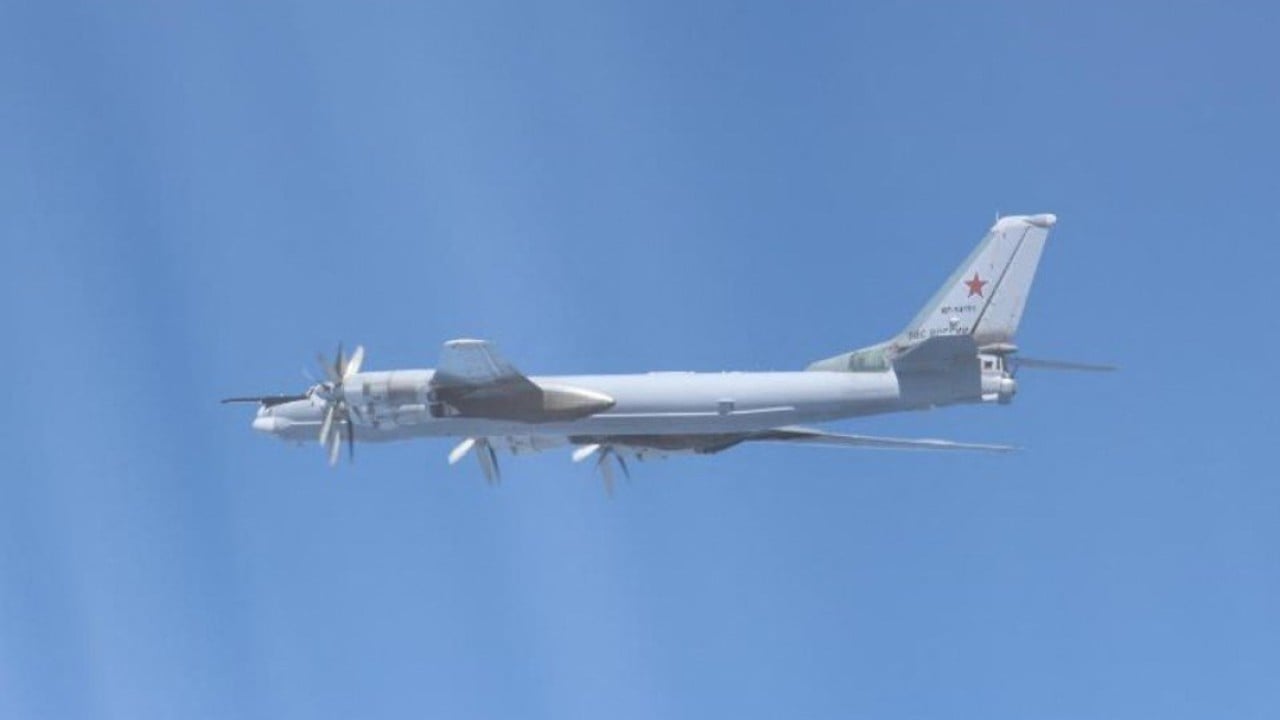
Taiwan’s military said it closely monitored two Russian warplanes flying near the island on Tuesday, the same day that Moscow’s military aviation activity prompted fighter jet scrambles in Japan and South Korea.
The aircraft were detected early in the day approaching from the northeast before flying along the island’s eastern coast and departing to the southeast of Taitung county, according to the Taiwanese defence ministry.
“The armed forces used joint intelligence, surveillance and reconnaissance capabilities to monitor the aircraft throughout their movements and responded appropriately,” the ministry said.
It did not identify the aircraft or say whether Taiwanese fighter jets were scrambled in response.
The unusual activity came as Japan accused two aircraft it believed to be Russian of violating its airspace, while South Korea reported Russian military aircraft entering its air-defence identification zone.
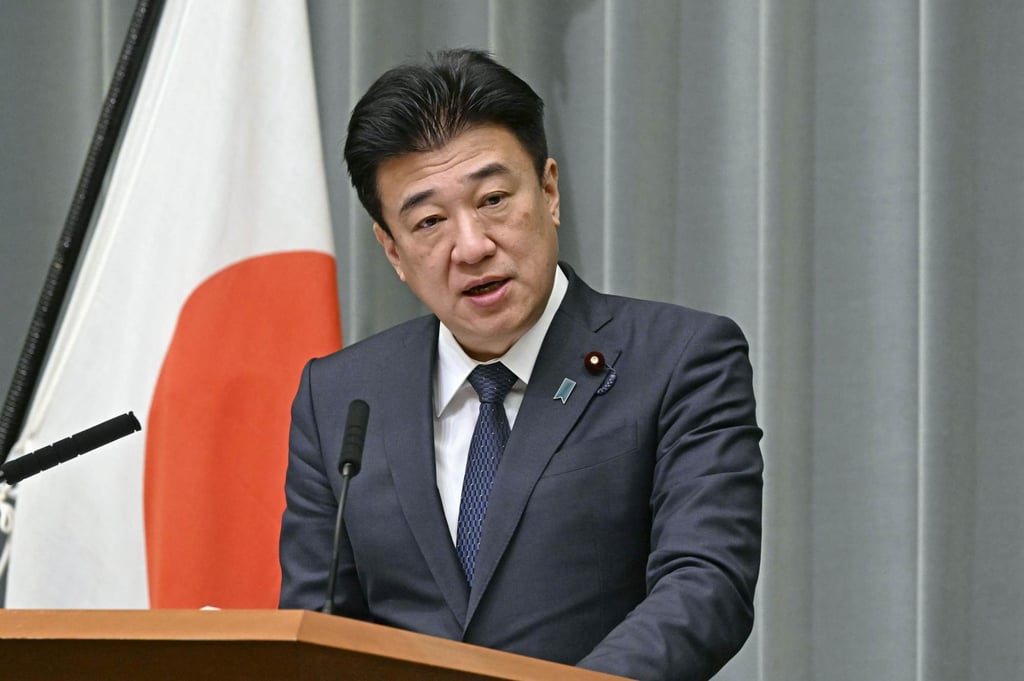
Japanese Chief Cabinet Secretary Minoru Kihara said Tokyo lodged a strong protest with Moscow after the suspected Russian aircraft entered Japanese airspace near the island of Okinoshima, off Fukuoka prefecture.
Japan’s defence ministry said one aircraft entered its airspace between 4.07am and 4.10am local time, while another did so between 4.09am and 4.12am, prompting Japanese fighter jets to scramble.
South Korea’s Joint Chiefs of Staff also reported an unspecified number of Russian military aircraft entering its air-defence identification zone over the Sea of Japan, or East Sea, early on Tuesday, although they did not breach South Korean airspace.
The incidents came a day before the start of the Asia-Pacific Economic Cooperation (Apec) leaders’ meeting in Shenzhen. The leaders of China, Russia and the United States are set to hold a separate trilateral summit on the Apec meeting’s sidelines on Thursday.
According to Max Lo, executive director of the Taipei-based Taiwan International Strategic Study Society, the flights appeared deliberate and were likely intended to test regional air-defence responses.
“It was clearly intentional. If it had been a mistake, two aircraft would not have entered Japanese airspace one after another within such a short interval,” he said.
Lo said the flights near Japan, South Korea and Taiwan suggested Moscow was testing military responses along the first island chain – an arc of islands extending from Japan through Taiwan to the Philippines – while illustrating its ability to project power into the Asia-Pacific region despite its continuing war in Ukraine.
“Russia considers itself an Asia-Pacific power, and the timing allows it to demonstrate that it still maintains a strategic presence and long-range power projection capabilities in the region,” he added.
Lo said the flights could also be interpreted as a warning to the US, Japan and South Korea over their support for Ukraine and sanctions against Russia.
He expected similar operations to recur occasionally and said they were unlikely to become routine.
Chieh Chung, an assistant professor of strategic studies at Tamkang University in New Taipei City, said the timing of the Russian military flights, just two days before the trilateral summit, suggested a deliberate political show of force.
Trump open to nuclear talks with Xi and Putin
Moscow might be seeking to project an image of close strategic cooperation with Beijing on major sovereignty-related issues to strengthen Russian President Vladimir Putin’s bargaining position in Shenzhen, he added.
Zivon Wang, a military analyst at the Taipei-based Chinese Council of Advanced Policy Studies, said the aircraft might have been testing fighter scramble response times but that a two-plane formation would have limited ability to gather detailed radar intelligence.
He noted that Russian military aircraft had previously flown near Taiwan during long-range missions, including flights towards Vietnam.
Given Moscow’s military commitments in Ukraine, Wang considered Tuesday’s operation more likely to be an isolated incident than the start of a sustained campaign.
“If such activities become frequent, we would need to consider whether Russia and the People’s Liberation Army (PLA) are conducting coordinated operations,” he said.
However, Wang said Russia had traditionally exerted military pressure north of Japan and South Korea, while the PLA concentrated on the East China and South China seas.
Chieh said Russian and Soviet military aircraft had flown near Taiwan on previous occasions but that such activity had declined considerably since the Cold War.
He cited a January 2010 incident involving a Russian Tu-95 strategic bomber that approached Taiwan from the northeast before turning towards the Ryukyu Islands following a radio warning from Taiwanese forces.
Chieh criticised Taiwan’s defence ministry for providing few details about Tuesday’s incident, contrasting its brief statement with Japan’s release of flight-path maps and precise timings.
He said that disclosing more information about the aircraft and Taiwan’s military response would help show the armed forces’ ability to monitor unusual military activity around the island.
Beijing sees Taiwan as part of China to be reunited by force if necessary. Most countries, including the United States and Japan, do not recognise Taiwan as an independent state, but Washington is opposed to any attempt to seize the self-ruled island by force and is committed to supplying it with weapons.
KioskNews shows a cleaned-up reading view extracted from the publisher’s page — the original always lives on their site, not ours.