China carries out in-depth investigation of Turkey’s largest rare earth deposit
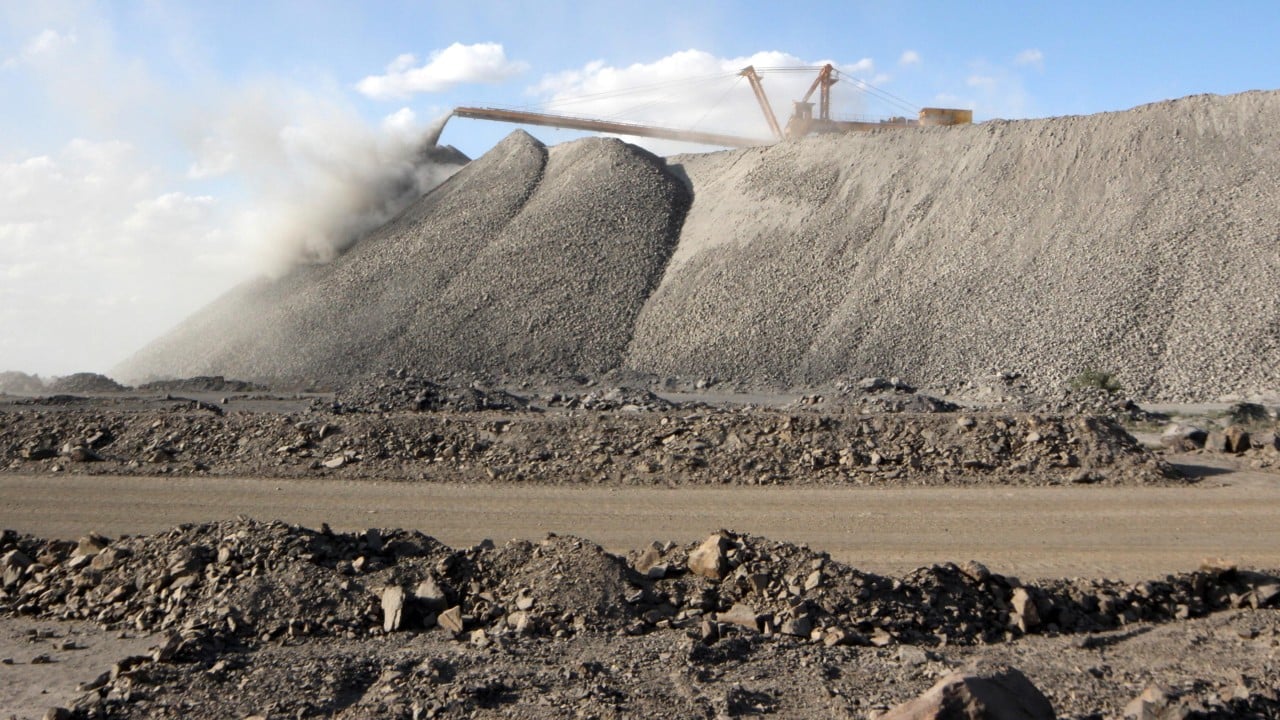
Chinese researchers have mapped the complex geological evolution of Turkey’s Kizilcaoren deposit, offering fresh insights into the country’s most significant known rare earth reserve while dampening expectations over its commercial potential.
Although the findings shed light on how rare earth elements accumulate in carbonatite-related formations, the researchers concluded that the site was unlikely to emerge as a major global alternative to existing producers any time soon.
Lead scientist Professor Yang Xiaoyong noted that the deposit’s mineralisation was “small in scale” and “still far from reaching the large scale of rare earth deposits”. The findings point to the steep geological and economic barriers nations face as they attempt to diversify their sources of critical minerals.
“So far, there is no evidence that Turkey or other countries in the Middle East have substantial rare earth deposits,” Yang, a professor at the University of Science and Technology of China and Hebei GEO University, said in an interview with the South China Morning Post.
“Globally, rare earth resources are concentrated mainly in China, Greenland, Australia, Canada and Southeast Asia,” he added.
The peer-reviewed study, published online in Acta Geologica Sinica on October 9, was co-authored by Ren Yisu of the China University of Mining and Technology alongside researchers from the University of Science and Technology of China, Hebei Geo University, Istanbul University-Cerrahpaşa, Shanxi Energy Institute and the Xian Centre of the China Geological Survey.
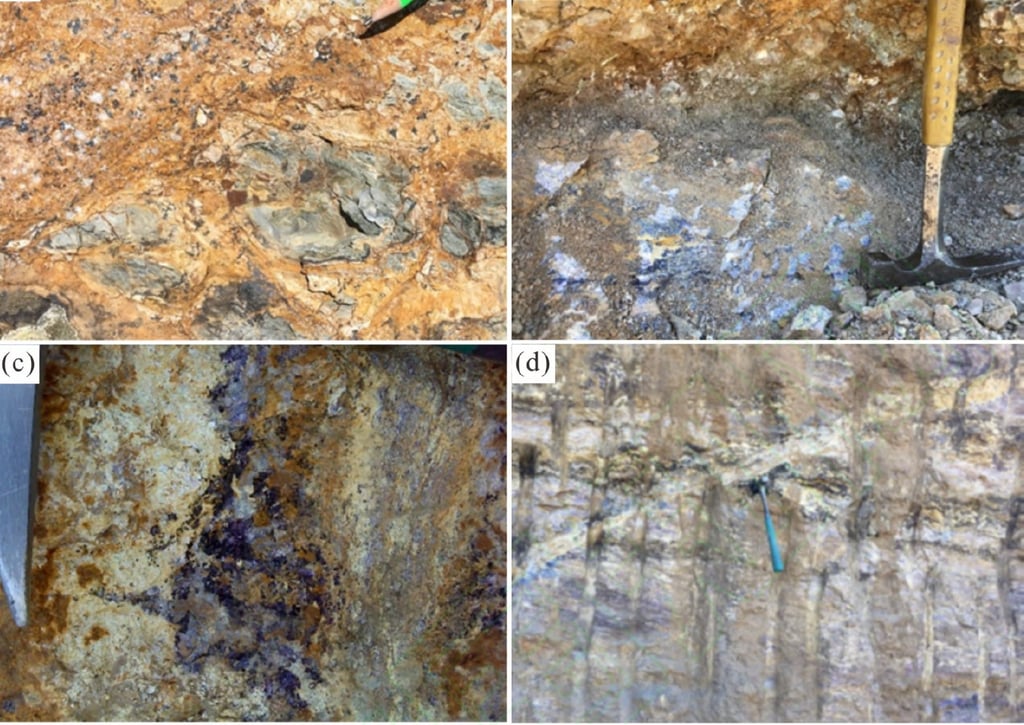
To reconstruct how the deposit formed, the team synthesised whole-rock geochemistry, mineralogical analysis, trace-element measurements of fluorite and strontium isotope data, tracing the site’s history from initial magma emplacement to later hydrothermal mineralisation.
They identified a three-stage process: first, carbonatite magma intruded into surrounding rocks, creating the initial conditions for mineralisation; second, magma evolution triggered liquid-phase separation, generating hydrothermal fluids enriched in rare earth elements, fluorine and sulphate that transported and concentrated the metals.
02:15
Rare earth mining is poisoning Thailand’s Mekong tributaries
Finally, meteoric rainwater entered the system, altering host rocks and precipitating fluorite, barite and rare earth minerals.
Yet deciphering how a deposit formed was fundamentally different from proving it could be mined economically. An earlier estimate cited in the paper put Kizilcaoren’s rare earth ore at around 4.67 million tonnes with an average grade of 2.78 per cent. Crucially, this figure reflected gross ore tonnage rather than processed rare earth oxides.
That scale appears modest when benchmarked against the world’s premier deposits. Yang noted that while Kizilcaoren belonged to the same broad class of magmatic carbonatites as the Maoniuping deposit in China’s Sichuan province, it differed markedly from the massive Bayan Obo deposit in Inner Mongolia.
“Our study shows that Kizilcaoren is different from Bayan Obo, but belongs to the same category as typical magmatic carbonatite deposits such as Maoniuping,” Yang said. “The scale of mineralisation is very small.”
By comparison, Bayan Obo – the world’s largest rare earth deposit – holds over 57.4 million tonnes of rare earth-bearing reserves at an average grade of about 6 per cent rare earth oxides. Maoniuping ranks as the world’s second-largest producing light rare earth deposit.
While divergent reporting standards preclude a direct comparison, the numbers underscore a vast discrepancy in commercial scale.
The assessment follows observations by geologist Li Yang of Peking University and the Chinese Academy of Sciences, who noted on August 17 that Kizilcaoren and Bayan Obo shared core geological traits: “Both are igneous carbonatites, and the basic rules of mineralisation are the same.”
The two views are not contradictory. Shared formation mechanisms do not imply identical grades, compositions or economic viability, and Yang’s assessment places greater weight on the deposit’s specific mineralisation scale.
These geological realities reflect broader industrial bottlenecks. According to the US Geological Survey’s “Mineral Commodity Summaries 2026”, China held an estimated 44 million tonnes of rare earth reserves in 2025, followed by Brazil with 21 million and Australia with 6.3 million, with substantial reserves also in Russia, Vietnam, the United States and Greenland.
Even where mining projects operate outside China – such as Mountain Pass in California and Mount Weld in Australia – extraction represents only the first step in the supply chain. Raw ore must be chemically processed and separated into individual elements before it can be manufactured into high-performance permanent magnets.
A March report by the US Congressional Research Service estimated that China accounted for about 60 per cent of global mining, 90 per cent of processing and separation and 94 per cent of magnet production.
Extraction is further complicated by technical and environmental factors. At Kizilcaoren, select samples contained more than 1,000 parts per million of thorium.
Although that figure represents sampled rock rather than a deposit-wide average, it illustrates the radioactive hazards common to rare earth systems.
“Almost all rare earth deposits have high levels of radioactive elements,” Yang said. “Sometimes these elements are themselves by-products that can be recovered.”
Nonetheless, he added: “There is an environmental cost to mining.”
Yang stressed that the study was purely academic rather than an operational project aimed at developing Turkey’s resources or restructuring global trade flows.
“Scientific research has no borders,” he said. “This is collaborative research and free exploration.”
Yang also cautioned against viewing academic discoveries as immediate commercial solutions: “A single academic paper cannot change a supply chain,” he added.
KioskNews shows a cleaned-up reading view extracted from the publisher’s page — the original always lives on their site, not ours.