In Gujarat, a parallel genomics push: Help athletes, tribals
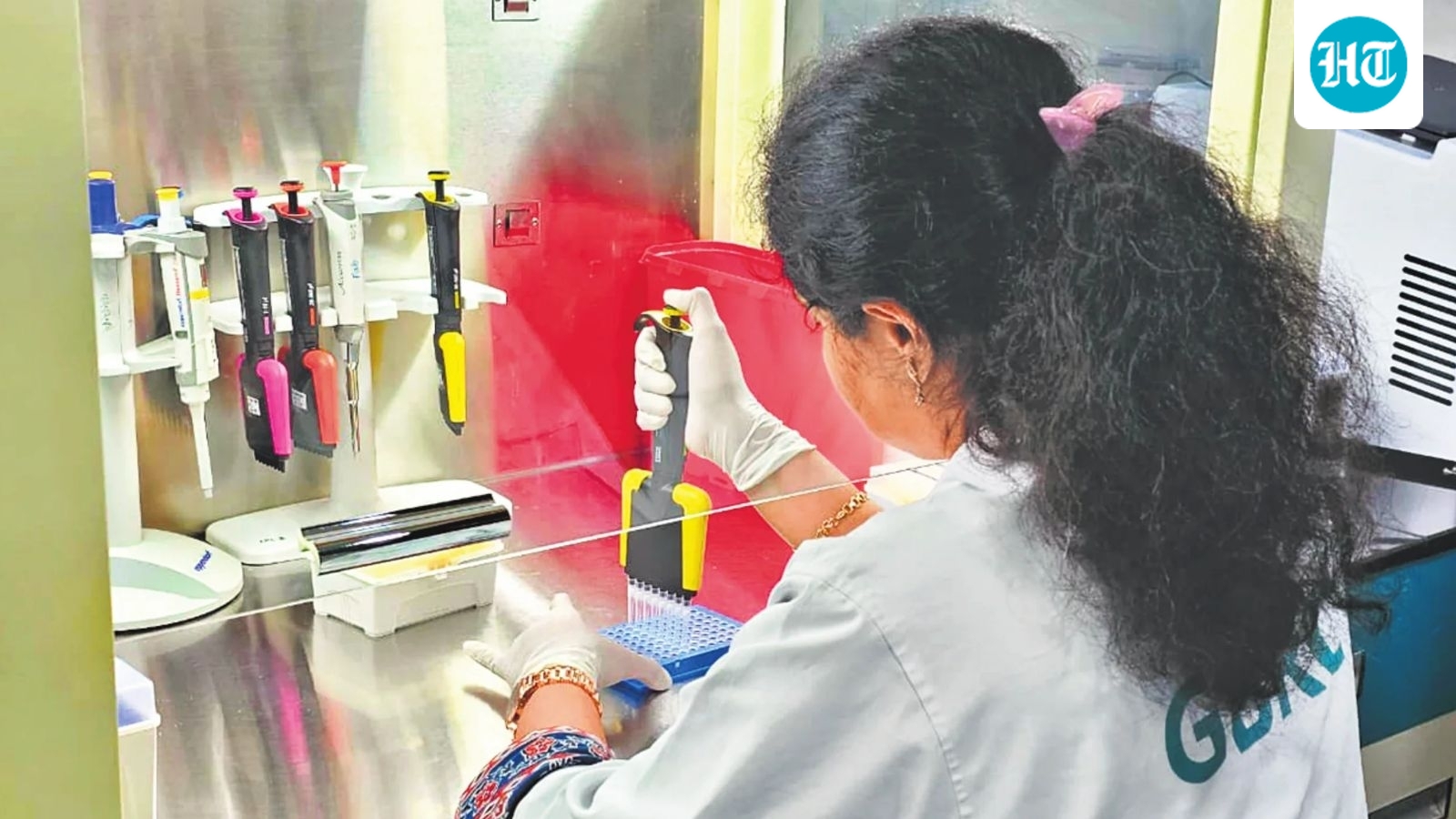
Gujarat has begun collecting DNA samples from athletes for a sports genomics project aimed at improving performance and managing injuries, decades after a government programme sought to develop elite athletes from the Siddi community due to their African ancestry but failed.
Gujarat’s sports genomics programme (SGP) will run parallel to the ongoing tribal genome project, which has already sequenced 100 whole genomes, making it the first such government-led effort in India. It also comes roughly four years ahead of the Commonwealth Games in 2030 in Ahmedabad.
“For the first time in the country, a state government is undertaking such genomic initiatives in both tribal health and sports,” science and technology minister Arjun Modhwadia said.
“While the Tribal Genome Project will create a reference genome database for Gujarat’s tribal population, the Sports Genomics Programme will study athletes’ genetic profiles along with their physiological and performance data,” Modhwadia added.
The projects are being implemented by the Gujarat Biotechnology Research Centre (GBRC) under the science and technology department, and seek to use genomic data for athlete development and population-specific healthcare.
The first samples collected were from tennis players affiliated with the Gujarat State Tennis Association (GSTA). The next batch will cover athletes in archery, fencing, judo and shooting from the Vijayi Bharat Foundation, Modhwadia said, adding that 2,000 samples will be collected this year. The programme has been allocated ₹26.05 crore for five years. GBRC will lead the genomic work in coordination with the Sports Authority of Gujarat, while the sampling strategy and participating sports were being finalised with the sports authority.
Sports genomics is an emerging field that studies the relationship between genetic variations and athletic characteristics such as muscle composition, endurance, metabolism, exercise response, recovery and injury susceptibility.
“Researchers will also try to identify and validate genetic markers linked to athletic performance and sports injuries,” said Snehal Bagatharia, director, GBRC.
Over five years, the programme aims to collect around 10,000 samples across nearly two-dozen disciplines including athletics, swimming, boxing, wrestling, judo, and gymnastics. It will cover athletes below 14, those aged 14 to under 18, and those above 18, with state and national champions prioritised, said officials.
To be sure, the science backing the initiative is sketchy.
A 2023 review in the scientific journal Genes by Ekaterina A. Semenova, Elliott CR Hall and Ildus I. Ahmetov –– researchers working in sports genetics, molecular genetics and exercise science in Russia and the UK –– identified 251 DNA markers that had been linked to athlete status.
However, only 128 of those markers had shown the same association in at least two studies. In other words, many of the reported links between genetic variations and athletic ability have not been consistently confirmed.
“It should be appreciated, however, that elite performance still cannot be predicted well using only genetic testing,” the authors wrote.
In addition, the Gujarat programme proposes to include athletes below 14 and those aged between 14 and 18, creating yet another controversy. A 2015 consensus statement published in the British Journal of Sports Medicine said there was no evidence to support the use of genetic tests for identifying sporting talent or prescribing individualised training.
The Gujarat Athlete Genome Database (GAGD), which will combine genomic, physiological and performance data, could eventually inform personalised training, nutrition and recovery strategies, Bagatharia added. The programme recognises that sporting performance is not determined by genetics alone and that training, coaching, nutrition, infrastructure, social support and other environmental factors also play important roles, he said.
Gujarat has produced champions across sports but is yet to build the depth of talent seen in Haryana and Punjab. At the Khelo India Youth Games in 2025, Gujarat won 13 medals, compared to 117 for Haryana and 47 for Punjab.
At the 2026 Commonwealth Games in Glasgow, athletes from Haryana won 11, including seven of India’s 13 golds. Gujarat won none of India’s 39 medals at the tournament.
The disputed belief that genetics could predict sporting talent is not new.
Also Read | The rise of specialised and genomic testing
In 1987-88, the Sports Authority of India (SAI), under its Special Area Games scheme, started scouting young people from the Siddi community, which traces its lineage to Africa, because of the belief that their lineage conferred an athletic advantage.
The programme was influenced by the performance of athletes of African origin at the 1984 Los Angeles Olympics and sought to identify people who could compete at the international level, including the Olympics. The Siddi-focused programme was suspended in 1993, although SAI continued to train Siddi athletes at its Gandhinagar centre for several years. The experiment eventually lost momentum, with the last Siddi athlete leaving the centre in 2004.
Between 1989 and 1992, Siddi athletes from SAI Gandhinagar helped Gujarat top national athletics meets.
Rafiq Makwana, Raika Yunus, Farooq Amin and Chotiyara were among those who set state and national marks. Kamala Mingel Siddi, who was selected through the Special Area Games programme, won a bronze in the 100m hurdles at the 1993 South Asian Games in Dhaka.
Juje Jackie Harnodkar Siddi, Philip Anthony Siddi and Sharada Siddi also reached the national level.
Then the programme faded. Coaching and funding grew uneven through the 1990s, children were uprooted from their homes, and many athletes eventually took sports-quota government jobs instead.
Raika Yunus, now 52 and a senior deputy head at ONGC’s Sabarmati unit, was part of that intake. In the 1992 national games, he won medals in the 100m, 200m and 400m events.
“After 1992-93, the scheme stopped. Officials were not very interested. Some said, what is the benefit, why work for these tribals,” he said.
“We came from poor families and had limited education. Many of us took government jobs to secure our future. Once we started working, we had to give up sports,” he said.
The tribal genome project has a separate public health objective. The genomic analysis will reveal insights into the genetic architecture and health profile of Gujarat’s tribal populations, said officials.
Approved in 2025-26, it aims to collect 4158 samples from tribal communities across 17 districts.
Also Read | Bridging Kathak and grief, borne by children in war zones, with the music of SOI
Comparative health data from 2019 to 2021 indicate that tribal communities continue to bear a disproportionately higher burden of malnutrition, anemia, low body mass index (BMI), and inherited genetic disorders, underscoring the need for population-specific genomic research and targeted public health strategies, said a scientist associated with the programme.
GBRC has so far collected 919 samples from eight tribal districts; 384 have completed genotyping-based quality control and 100 have been fully sequenced. A detailed bioinformatics analysis is under way, officials said.
“Genomics can add another layer to athlete assessment, but it cannot replace coaching, training, nutrition, physiology or actual performance. The purpose is to understand whether genetic information can improve athlete development over time, not to label a child as a future champion based on a DNA test,” said a scientist associated with the programme.
KioskNews shows a cleaned-up reading view extracted from the publisher’s page — the original always lives on their site, not ours.