Robot vacuums have a major privacy problem you should be aware of
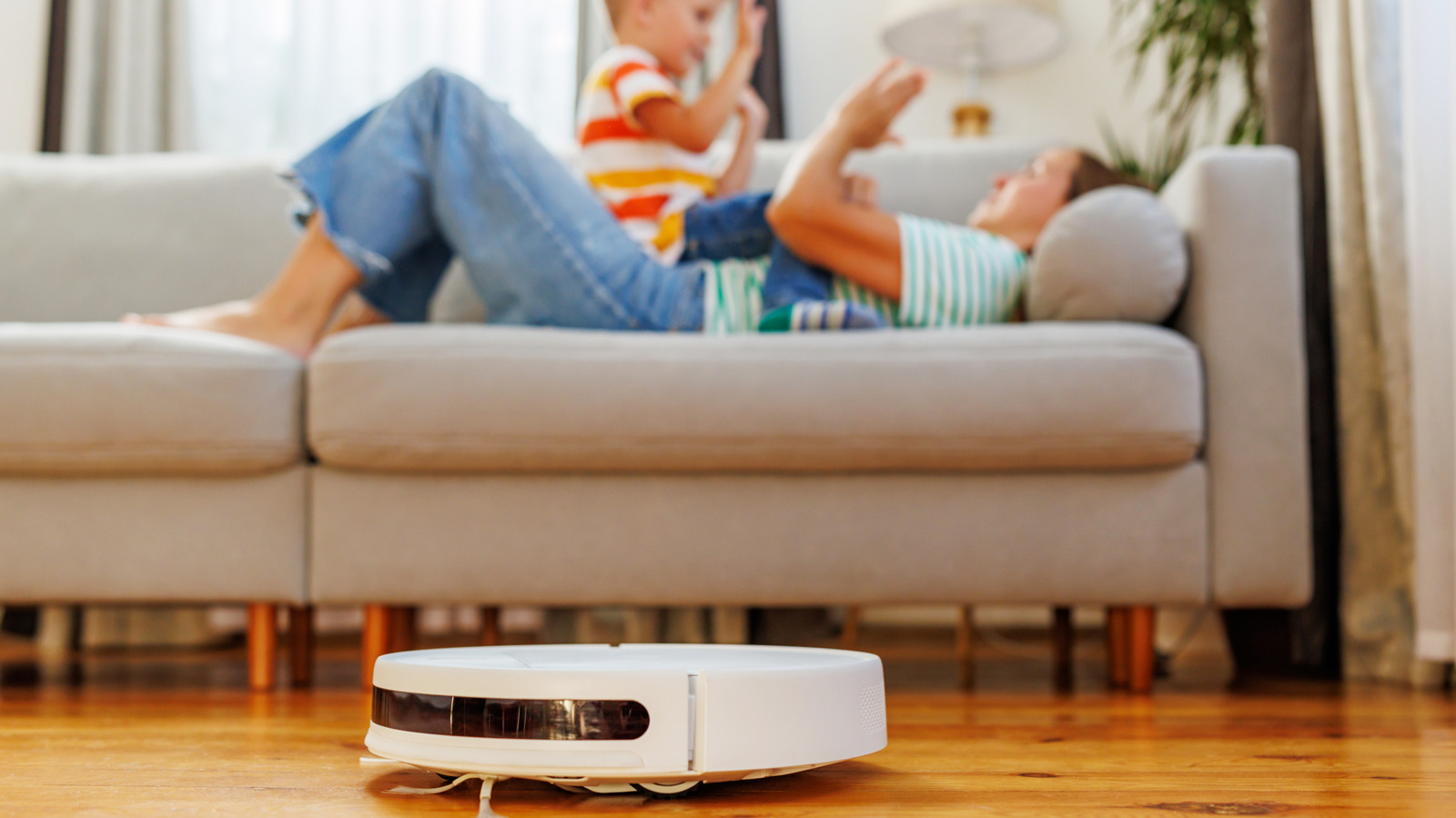
Clean floors shouldn’t come with unclear rules about your personal data.
Andrii Zorii/Getty Images
Depending on the model, a robot vacuum cleaner can potentially generate floor maps, record cleaning histories, watch you take a bathroom break or record your private conversations. Top vacuum models with the most features have various ways to process what's happening inside your home; some include microphones and/or remote video viewing to act as little round drones low-riding on 360-degree wheels. The amount of information they collect and where it goes depends on the model and varies between products.
Cloud connectivity introduces another problem. Robot vacuums that let you check their progress while away from home may communicate through the manufacturer's servers. After all, businesses need to know that you own a Samsung fridge, use DoorDash a lot or accidentally left your dirty skivvies on the floor. Generating a floor map or video is a useful feature, but both are capable of revealing information you'd rather not share with complete strangers.
To be clear, not every connected robot vacuum is secretly recording everything or selling blueprints of your home on eBay. The important takeaway is that there needs to be a clear distinction between data collection and maintaining privacy. Businesses love to bury important information in big block paragraphs of nearly microscopic legalese (the bounded rationality/privacy paradox), but you need to know what is being shared, when and why. Features are fantastic, but that privacy policy is much more important.
The privacy risks of robot vacuums aren't hypothetical
Sammy Azdoufal kickstarted a recent robot vacuum controversy. While trying to remotely control his DJI Romo vacuum, he accidentally became the Commander in Chief of roughly 7,000 robot vacuum cleaners across the world. He was able to control and access all these devices instead of just his own.
According to DJI, it resolved the backend permission issue Sammy stumbled into by issuing two updates on February 10, 2026. This was a specific security risk: the server recognized a legitimate customer but failed to restrict that customer to their own device. Sammy used Claude Code to help reverse-engineer the communications, but AI isn't to blame for the underlying security weakness. The failure was in the security checks, which is something a complex password will never fix.
But that's just one story among many. After all, security breaches aren't the only privacy concerns. A shiny new robot vacuum may send information to its manufacturer throughout everyday routines. That could include cleaning activity, device status, floor maps and objects detected. iRobot's privacy policy says connected models may send more data than just floor maps, including room names, floor types, detected objects, the robot's movements and Wi-Fi network details. That's a lot of info, and you may have no idea it's heading out in a steady stream.
Which robot vacuum is the most privacy-friendly?
Marco_piunti/Getty Images
There's no clear and established winner here, but a privacy-friendly robot vacuum should at least minimize the amount of information leaving your home. Pore over the privacy policy prior to purchase, and keep an eye out for on-device navigation and image processing features to see what they entail.
Mandatory cloud features should be a deal-breaker, and look for details on how diagnostic data is shared. With a camera-free model, you can at least avoid that degree of exposure, though it may still generate maps and send account information. Keep in mind that "no camera" and "no data collection" are not the same.
For a good local-first approach, Matic is worth a look. Its privacy policy says maps are streamed to the app over home Wi-Fi and processing takes place on the robot. It also identifies exceptions. For example, remote app use can transmit data through an encrypted cloud connection only with explicit consent, and only authorized support can involve sharing audio or video. Those are qualifications worth your consideration.
But remember that while a manufacturer's privacy policy generally describes its commitments, it doesn't serve as proof that the product is unaffected by security flaws. Even if a company doesn't plan to share something, an attacker might still be able to access that existing data.
If you're already using a robot vacuum cleaner, make sure to set a strong password, enable two-factor authentication and keep the firmware up to date. If you see "remote viewing" or other connected features that make you hesitate, disable them unless otherwise needed. Be aware of other robot vacuum downsides, too.
KioskNews shows a cleaned-up reading view extracted from the publisher’s page — the original always lives on their site, not ours.