China dilemma in New Delhi
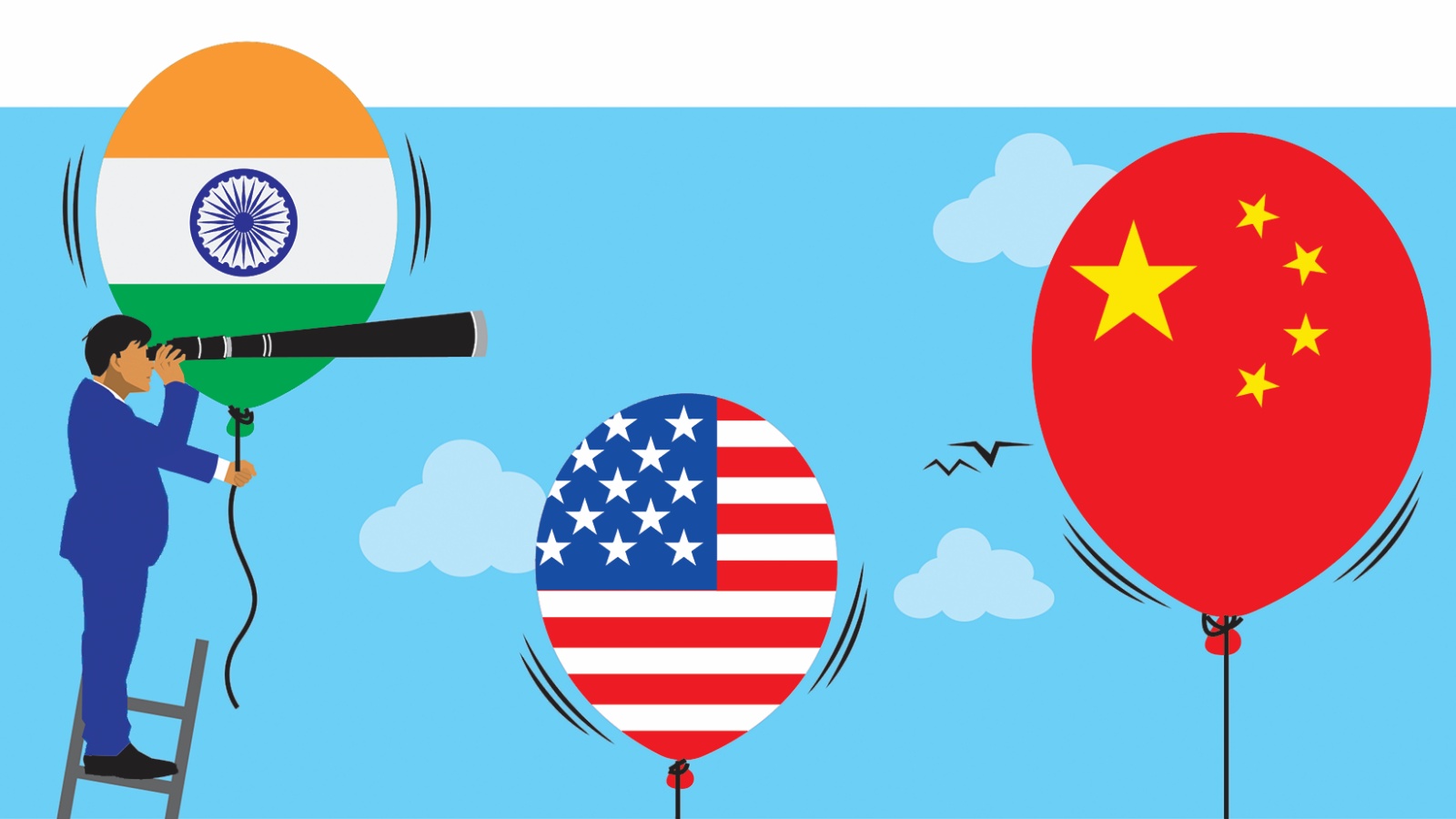
The US has consumed much of New Delhi’s diplomatic bandwidth over the last 12 months, with officers waking up to a fresh surprise every day. This is a relationship painstakingly nurtured by both the Congress and BJP governments over the last 25 years. It continues to remain ever so critical, but has of late required certain deftness to navigate the unpredictability. The results of the mid-term elections in the US suggest the dynamics and engagement strategy will see a change. President Donald Trump no longer enjoys the advantage of a Republican-controlled Congress. With Democrats in majority in both the House of Representatives and the Senate, New Delhi will certainly look beyond the White House, and expand its outreach to the new Democrat lawmakers.
While the challenge posed by the US over the last 12-18 months cannot be downplayed, where New Delhi really finds itself stuck and struggling to move forward is in the relationship with its big and powerful neighbour, China. It has never been an easy next-door neighbour, but India too has been slow to recognise the dependencies Beijing has been building over the years to gain strategic leverage. Under Deng Xiaoping, China started opening up in 1978, and became the factory of the world over the next three decades. Encouraged and aided by a benign and liberal multilateral trade order, it emerged as a global economic power and rivals the US now.
As India continues to reform and push the pedal on economic growth, China has been aggressively pursuing what President Xi Jinping refers to as “new quality productive forces”. He spoke about it first on September 7, 2023, and elaborated on its contours over the next six months. It is necessary, he said, for China “to foster strategic emerging industries including new energy, new materials, advance manufacturing and electronic information, and nurture industries of the future.” These are semiconductors, electric vehicles and batteries, artificial intelligence and robotics, renewable energy, critical minerals including rare earth, and future industries such as commercial spaceflight and quantum computing.
These are all sectors where India will play catch up for a long time.
The dilemma that New Delhi faces today is: Can it and should it really fast track business with Beijing. More than four years of deep freeze in bilateral relations after the military standoff in Ladakh, Prime Minister Narendra Modi and President Xi met on the sidelines of the BRICS summit in Russia in October 2024, endorsed a disengagement deal and decided to resume high level dialogues and restore predictability in relations.
In the four years after the Galwan clashes in eastern Ladakh in June 2020, New Delhi had effectively shut its doors on China. Officials reckon that dismantling the restrictions and restoring normal processes pose considerable challenge. Can New Delhi quickly get back to allowing more business visas, can it expedite security clearances for investments, can it easily allow big Chinese industries to build factories? All this is easier said than done.
But what is striking is even during one of the roughest patches in relations in recent years, India Inc’s appetite for imports from China did not whittle down. Between 2020-21 and 2025-26, bilateral trade jumped 75 per cent to $151 billion from $86 billion. Significant though is the ballooning of India’s trade deficit with China — it almost tripled during the period to $112 billion in 2025-26 from $44 billion in 2020-21. This, in some way, also reflects on India Inc’s dependencies on China. Corporates are not unaware; many share the adverse impact felt by their businesses due to restrictions and export licensing by China. But building domestic capacity is still not seen as an imperative. It is true, imports are not bad, but the government feels cheap and easy imports have lulled India Inc to rising dependencies. In the last six years, companies haven’t quite got down to the drawing board to work on them. They choose to believe business is decoupled from geopolitics. This is so fraught with risks if strategic independence is an aspiration.
The government is fully aware, and on its part has sought to support the industry in its capacity building efforts through programmes like the Productivity-Linked Incentive Scheme. One big success story is of Apple iPhones, with India now becoming its second largest exporter after China. The scheme has helped build a vendor ecosystem with domestic value addition increasing to 22 per cent now from 15 per cent four years ago. This is expected to touch 35-40 per cent by 2030-31.
Amid cooling of tensions, while engagement has resumed, it clearly needs to pick momentum. As India steps up its manufacturing capabilities, allowing Chinese investment, which brings technology along with it, is certainly an option. Security-related sensitivities need strategic calibration with different ministries sitting together on where procedures can be made simple. What Beijing does is not in Delhi’s control. It must do what is the need of the hour.
The writer is Managing Editor,
The Indian Express. Off the Record is a fortnightly column. pv.iyer@expressindia.com
KioskNews shows a cleaned-up reading view extracted from the publisher’s page — the original always lives on their site, not ours.