Russell Brand transformed into ‘monster-like’ rapist before alleged hotel attack, accuser claims
One of Russell Brand’s accusers said he transformed into a “monster-like” rapist and she felt she had nowhere to run after he asked her to take photographs of him in her hotel room.
In emotional evidence in front of the jury at Southwark Crown Court, the woman fought back tears and her voice broke as she recounted details of the alleged attack during the Labour Party conference in Bournemouth in 1999.
The woman said she was “terrified” when she emerged from the toilet to find Brand partially undressed.
“He changed from camp and friendly and effeminate to monster-like,” she told the jury under reexamination by prosecutor Riel Karmy-Jones KC. “I was scared in that moment.”
Brand, 51, did not react as he listened to his accuser from the dock as she gave evidence from behind a screen.
The comedian denies three charges of rape, three counts of sexual assault, and one allegation of indecent assault in alleged attacks against six women as he rose to fame between 1999 and 2009.
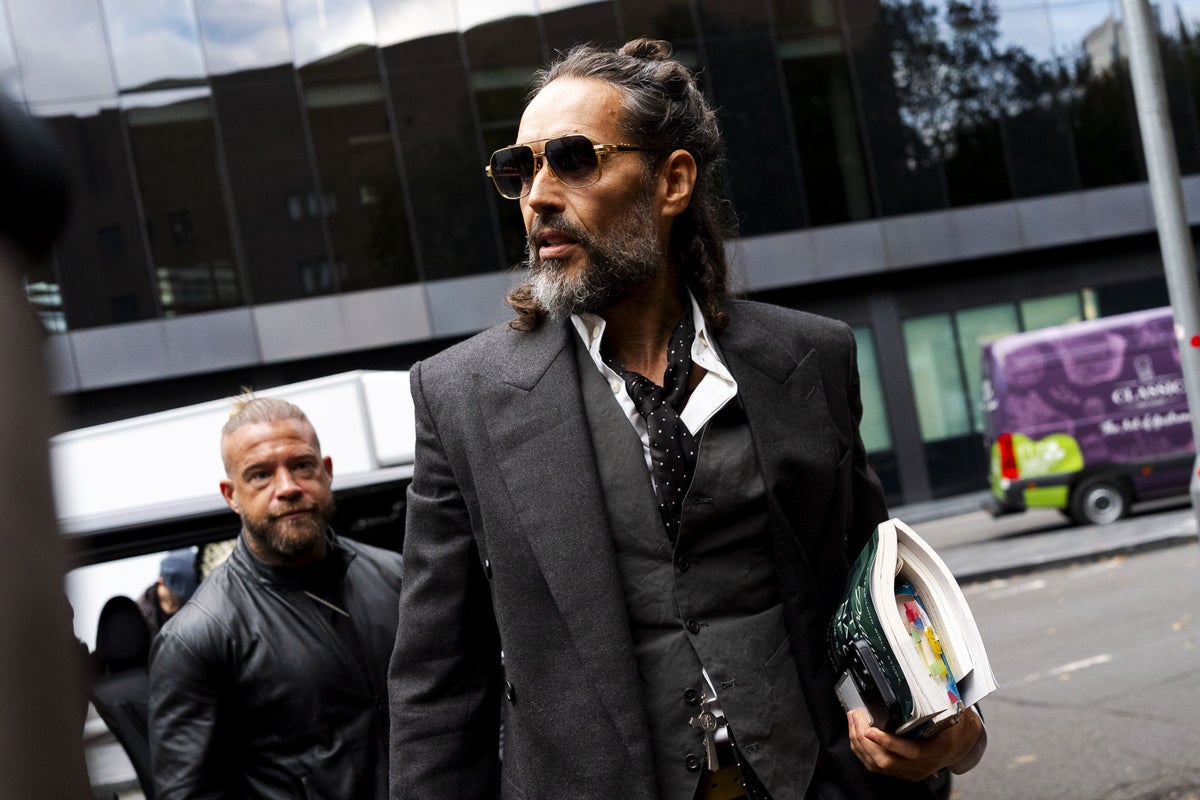
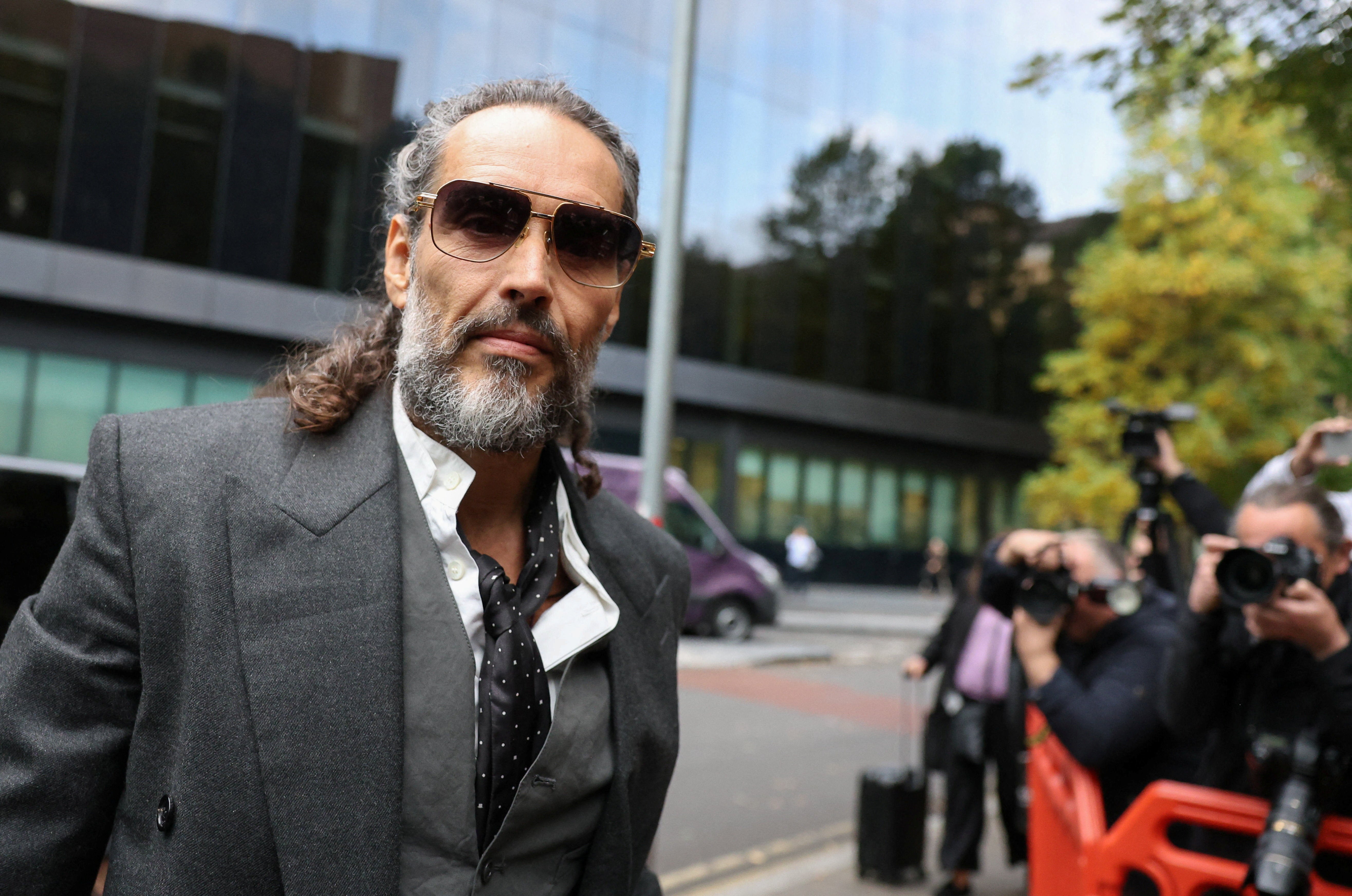
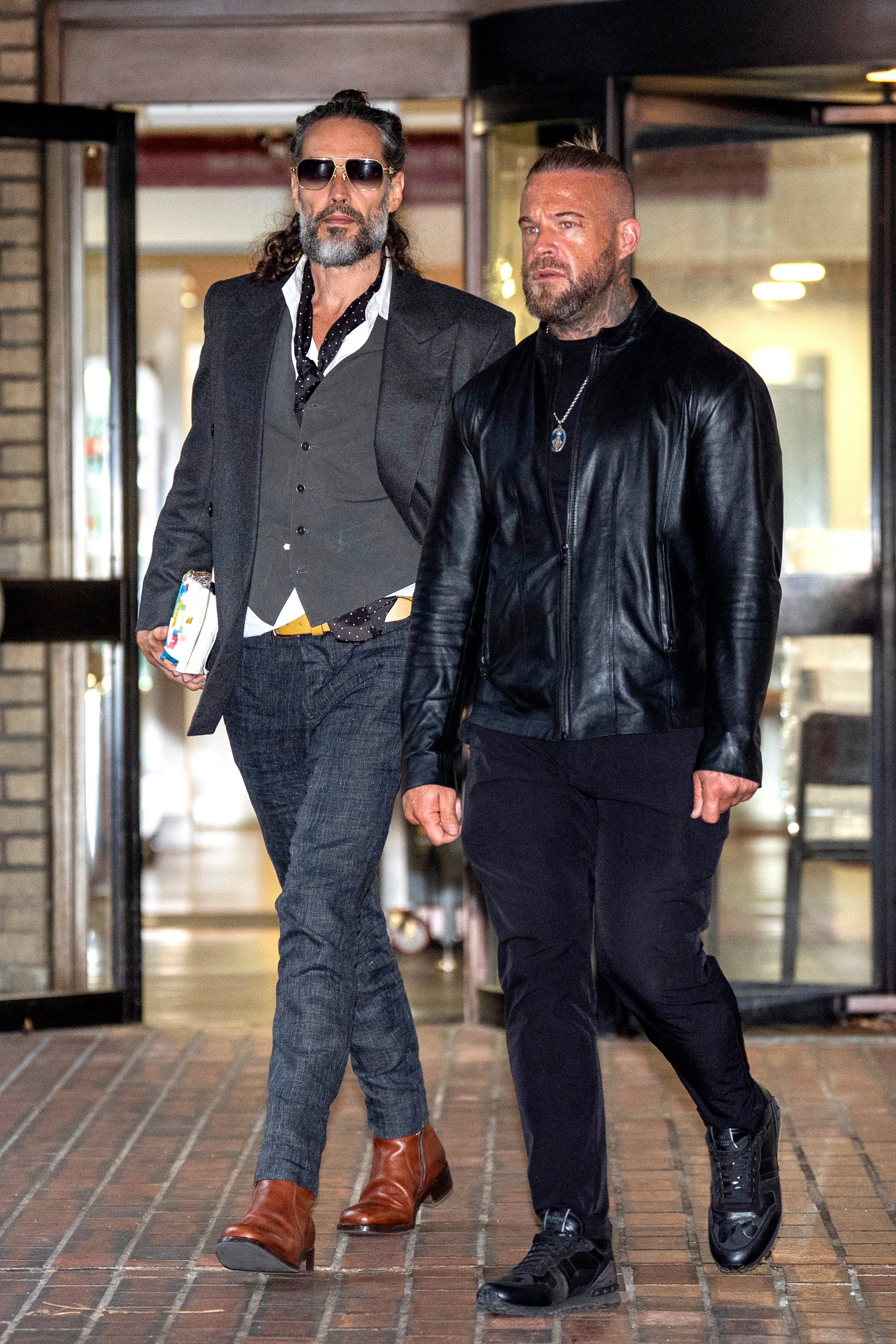
The celebrity wore a grey three-piece suit with his curly hair tied back for the second day of evidence against him, having told photographers he felt “most blessed” when he arrived at court.
The jury heard the first alleged victim met Brand when she went to watch a fringe cabaret event he was performing in at the political conference.
She initially thought Brand was gay and described him as “playful” and “childish” as she recalled him pulling her ponytail and saying “boo” when he approached her at the venue, she told police in a video recorded interview played to the court.
She said they “chatted for hours”, discussing a possible play they could stage, and she invited him back to her hotel room to continue their conversation.
But she returned from the toilet to find him partially undressed, prancing around doing “silly walks” before be pushed her onto the bed and raped her, she said.
She told the police he told her “don’t worry about it, it’s just fun, it’s normal” during the alleged attack, adding: “It was almost like trying to convince me it’s all OK. I’d have to learn to enjoy it.”
During nearly two hours of heated cross-examination, Brand’s lawyer Ian Winter KC accused the woman of not telling the truth about her encounter with Brand, and suggested she would have left the hotel room if she was in danger of being raped.
She claimed she was “terrified” as she complied with Brand’s request that she photograph him and baulked at the idea that she could have fled.
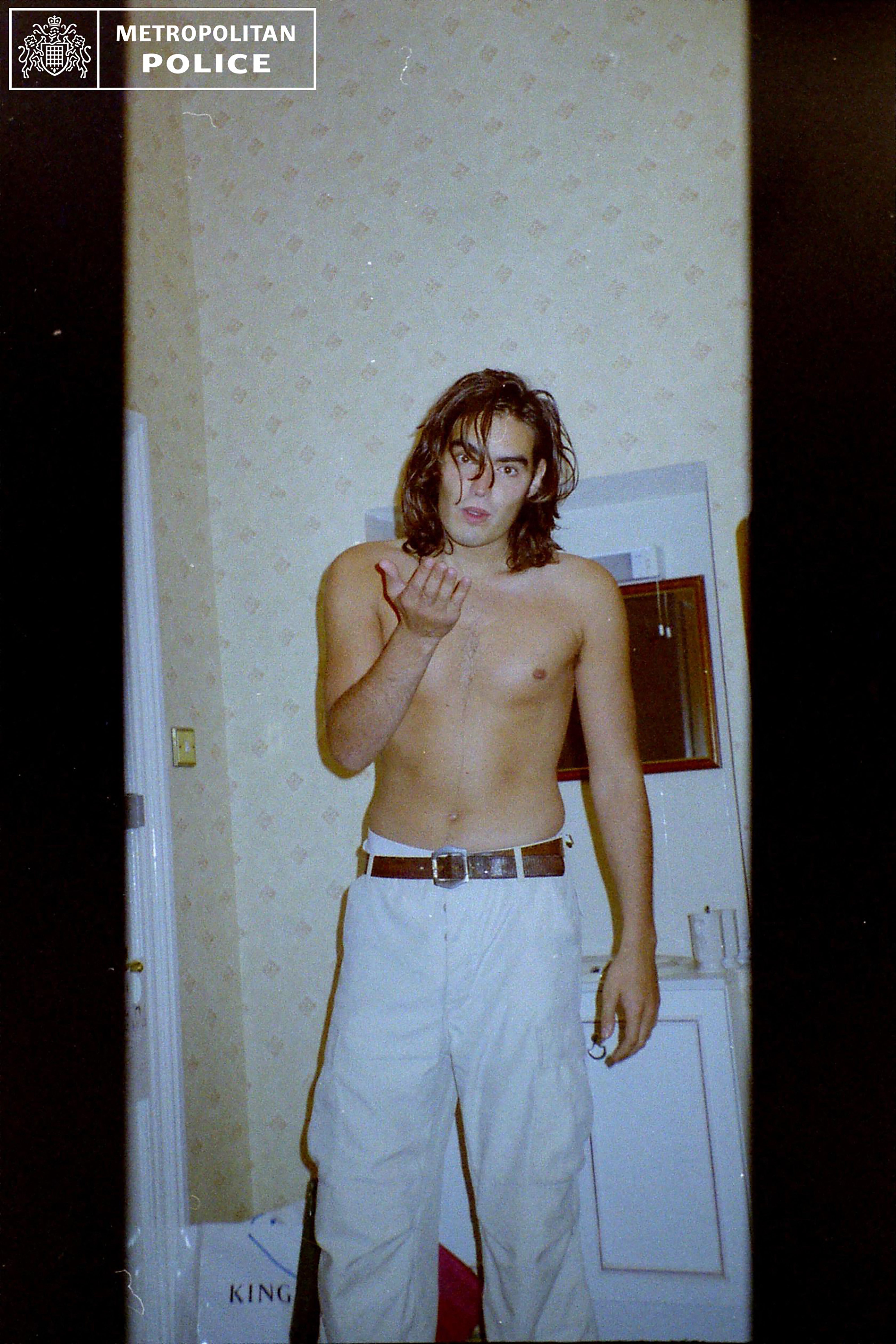
Photographs shown to the jury taken by the woman feature a topless Mr Brand, wearing white jeans, blowing a kiss towards the camera.
She told the court: “At that point I was terrified. I had nowhere to run. I just did what I thought I had to do at that point.
“It was a small room. I had nowhere to run. I had no phone. It was a bedsit, there was no reception. Was I supposed to run into the night and have him chase after me?”
The woman said she had thought Brand was gay and did not find him attractive, telling the court: “I can 100 per cent tell you I categorically didn’t find that man attractive. I thought he was gay, I thought he was sexually safe. He was certainly not my type.”
Challenged by Mr Winter, she insisted Brand did not persuade her to have sex and denied she had fallen “under his spell”.
She told the court: “I didn’t want sex. I didn’t want his dirty penis inside me. I value my body, I have always valued my body.”
At one point, Mr Winter also clashed with the trial judge, Mr Justice Bennathan, who had to “shush” the barrister during a tense exchange in court.
The barrister was questioning the alleged victim on whether she said out loud that she did not wanted to have sex with Brand during the hotel encounter.
When the judge interjected to point out evidence the court had earlier heard on the video-recorded interview with police, Mr Winter said tersely: “Forgive me… I am conducting a cross-examination.”
When the two legal figures then spoke at the same time, Mr Justice Bennathan said to the barrister: “Shush. I’m the judge.”
Mr Winter suggested there was “no power imbalance” between her and the defendant, who was younger than her and was not famous at the time, to which the woman responded: “Everybody was equal at that conference, that’s how I saw it.”
After the alleged rape, she said Brand “acted normal, like nothing had happened” and gave her his email address before leaving, telling her had to go and see his mother.
“He’s so arrogant in his mindset that he’s God’s gift that I must have enjoyed it and I must have wanted more,” she added.
The woman, who is a previous victim of abuse, told the court that she blamed herself in the wake of the incident and did not report it to the police until 2023 after watching a documentary on the former Big Brother’s Big Mouth presenter.
She told the jury: “Since the day this happened I have second guessed myself - was this my fault because I allowed a man into my room? That’s the way the world is going to look at it.
“He raped me and I know the truth. I know what happened. I know how he did it. I know how he manipulated everything about me. He knew I was a woman who wouldn’t report it.”
The jury were warned that the 2023 documentary, which included anonymous allegations about Brand, does not add weight to the prosecution’s case.
Mr Justice Bennathan told the panel of eight men and four women: “A programme (which witnesses may refer to as ‘the documentary’) was broadcast in 2023 in which a few women were quoted making anonymous allegations of sexual misconduct against the defendant.
“Although they spoke to journalists, the women were not prepared to speak to the police. The defendant, at the time, denied all the allegations in robust and detailed terms. Those allegations have never been tested in any court.”
He told them that the defence may suggest the documentary has “twisted” the complainant’s memories.
He added: “The defence may suggest the programme caused the complainants to revisit historic sexual events in their memory and twist them from the consensual events they were to the crimes they now allege.
“You will have to consider these arguments but what you must not do is think that the fact a few woman made anonymous complaints in a television programme adds any support at all to the prosecution case, because it doesn’t and it mustn't.”
KioskNews shows a cleaned-up reading view extracted from the publisher’s page — the original always lives on their site, not ours.