Should you worry about the Philippines’ P21-trillion debt burden in 2027?
Already have Rappler+?
to listen to groundbreaking journalism.

David Castuciano
Economists tell Rappler that while the Philippines' debt burden remains manageable for now, its growing size and cost mean keeping it sustainable will depend on the economy growing faster than debt despite a weak outlook
AT A GLANCE
- The Philippine government anticipates its national debt will reach P21.48 trillion by the end of 2027, with current debt at P19.39 trillion as of July 2026.
- While the debt is manageable for now, concerns are rising due to high borrowing costs and a weakening economy, with interest payments projected to increase significantly.
- To improve the debt-to-GDP ratio, the government aims for economic growth to outpace debt accumulation, but challenges remain due to persistent deficits and low growth forecasts.
This is AI-generated. Read the article for full context. Report any errors.
MANILA, Philippines – The Philippine government expects its debt to balloon to P21.48 trillion by the end of 2027, a number that sounds almost inconceivably large to most Filipinos.
National government debt already reached a record P19.39 trillion as of end-July, breaching the P19 trillion mark in June. It is projected to reach P19.77 trillion by end-2026 before rising by another P1.71 trillion next year.
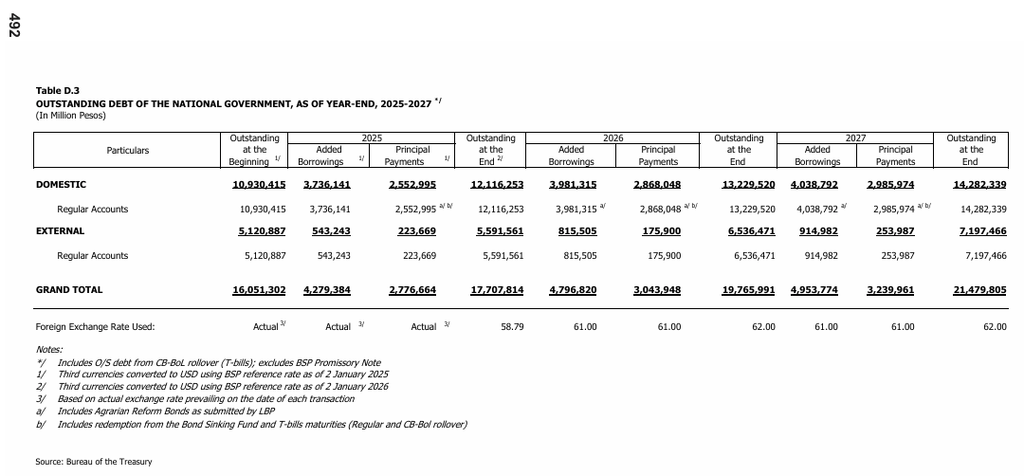
To be clear, the Philippines is not facing an immediate debt crisis, but there are growing reasons to watch the debt more closely, particularly as borrowing remains high while economic growth has weakened.
Economists generally look at debt relative to the size of the economy and at whether the government can continue servicing it without sacrificing essential spending. In particular, they look at:
- Debt-to-GDP ratio, which compares what the government owes with the size of the economy
- Deficit-to-GDP ratio, which measures the gap between government revenues and spending that has to be financed through borrowing
- Debt service ratio, which looks at how much of the government’s resources goes toward paying principal and interest
They also watch how much government revenue is being eaten up by interest payments specifically, as well as how much debt is exposed to foreign currencies.
The current debt status
By those measures, the Philippines’ debt burden is elevated and becoming more costly to carry.
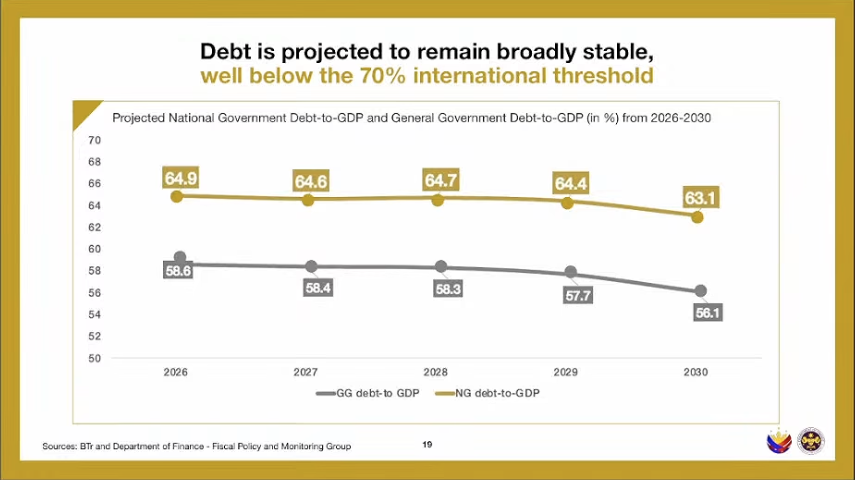
The ratio of national government debt to gross domestic product (GDP) is expected to hover around 65% in 2026, before gradually declining to around 63% by 2030 under the government’s fiscal program. The deficit, meanwhile, is projected at 5.4% of GDP this year and 5.1% in 2027, eventually narrowing to 3.5% by 2030.
There is also the rising cost of servicing that debt. Interest payments are programmed to climb from P950 billion in 2026 to P1.114 trillion in 2027, equivalent to around 15.5% of the proposed P7.2-trillion budget.
Economic managers say they intend to reduce these pressures gradually through fiscal consolidation, with revenues growing faster than spending.
“As revenues grow faster than disbursements, we will see a clear and sustained path towards fiscal consolidation,” Finance Secretary Frederick Go told senators during an August 27 budget hearing.
The rapid buildup doesn’t necessarily mean the government is borrowing more than planned for the full year. Rappler resident economist JC Punongbayan said borrowing can be front-loaded, or done earlier in the year to cover upcoming maturities or lock in better rates. Still, “the pace is concerning,” he said, as persistent deficits, new domestic and foreign borrowing, and a weaker peso continue to push the debt stock higher.
Why it’s manageable for now
Security Bank chief economist Angelo Taningco told Rappler that the Philippines’ debt remains manageable currently, but that “risks are already growing based on larger maturing debt obligations and downbeat GDP outlook.”
Rappler resident economist JC Punongbayan is more cautious about the direction.
“The trend of Philippine debt is worrying,” Punongbayan said. “The debt ratio and interest bill are definitely rising, and these tend to crowd out spending on education, health, and other important public goods.”
There are some important buffers.
The finance chief told senators that around 67% of government debt is domestic, around 90% carry fixed interest rates, and 84% has long repayment periods. This makes the country less exposed to abrupt changes in global interest rates or the peso than it would be if most of its debt were foreign-currency denominated or carried floating rates.
Around a third of the debt is still foreign, however, meaning peso depreciation increases the local currency value of those obligations.
Where the worry comes in
The bigger concern is not whether the Philippines can suddenly repay its debts, but whether servicing them can leave little space for other important programs, such as social services.
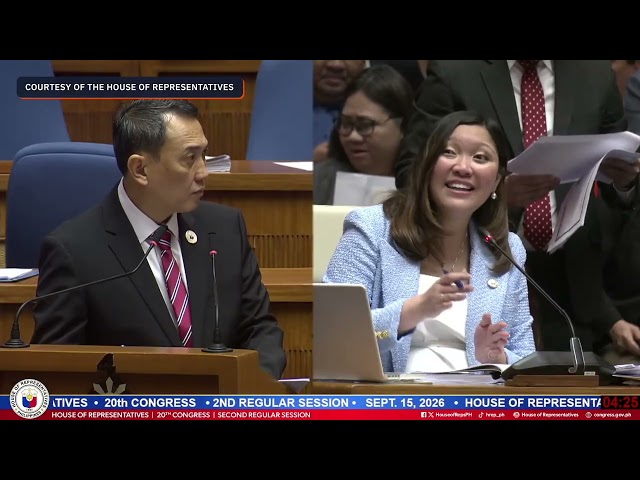
During House deliberations, budget sponsor Mika Suansing acknowledged that rising interest payments “eating fiscal space,” while ACT Teachers Representative Antonio Tinio likewise pointed out that nearly a quarter of the proposed P7.2-trillion budget will effectively be financed through the deficit.
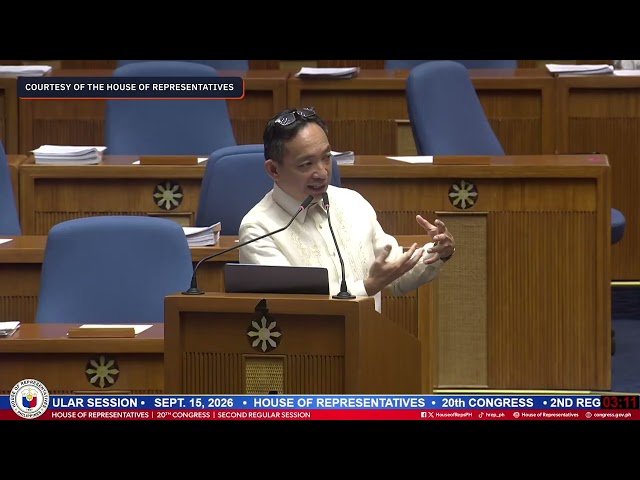
The government plans around P3.3 trillion in gross borrowing in 2027, although around P1.6 trillion of that will refinance maturing obligations rather than fund new spending.
Bringing the debt burden down will depend heavily on whether the country can improve its economic growth and spend more wisely.
Security Bank chief economist Angelo Taningco told Rappler the debt-to-GDP target remains feasible if growth recovers to at least 5% and consistently outpaces debt accumulation. Rappler resident economist JC Punongbayan, however, said the government’s plan becomes much harder amid “meager growth.”
“The way to reduce the debt relative to GDP is to grow the economy much faster, or significantly narrow the government’s deficits,” Punongbayan said. “This requires higher revenues and more disciplined spending.”
“Borrowing for productive investments is defensible, but borrowing for overpriced, substandard, or ghost projects only worsens the debt problem,” he added. – with reports from Paolo Velilla/Rappler.com
KioskNews shows a cleaned-up reading view extracted from the publisher’s page — the original always lives on their site, not ours.