Once a family pastime, Mahjong finds a new table in Delhi’s social scene
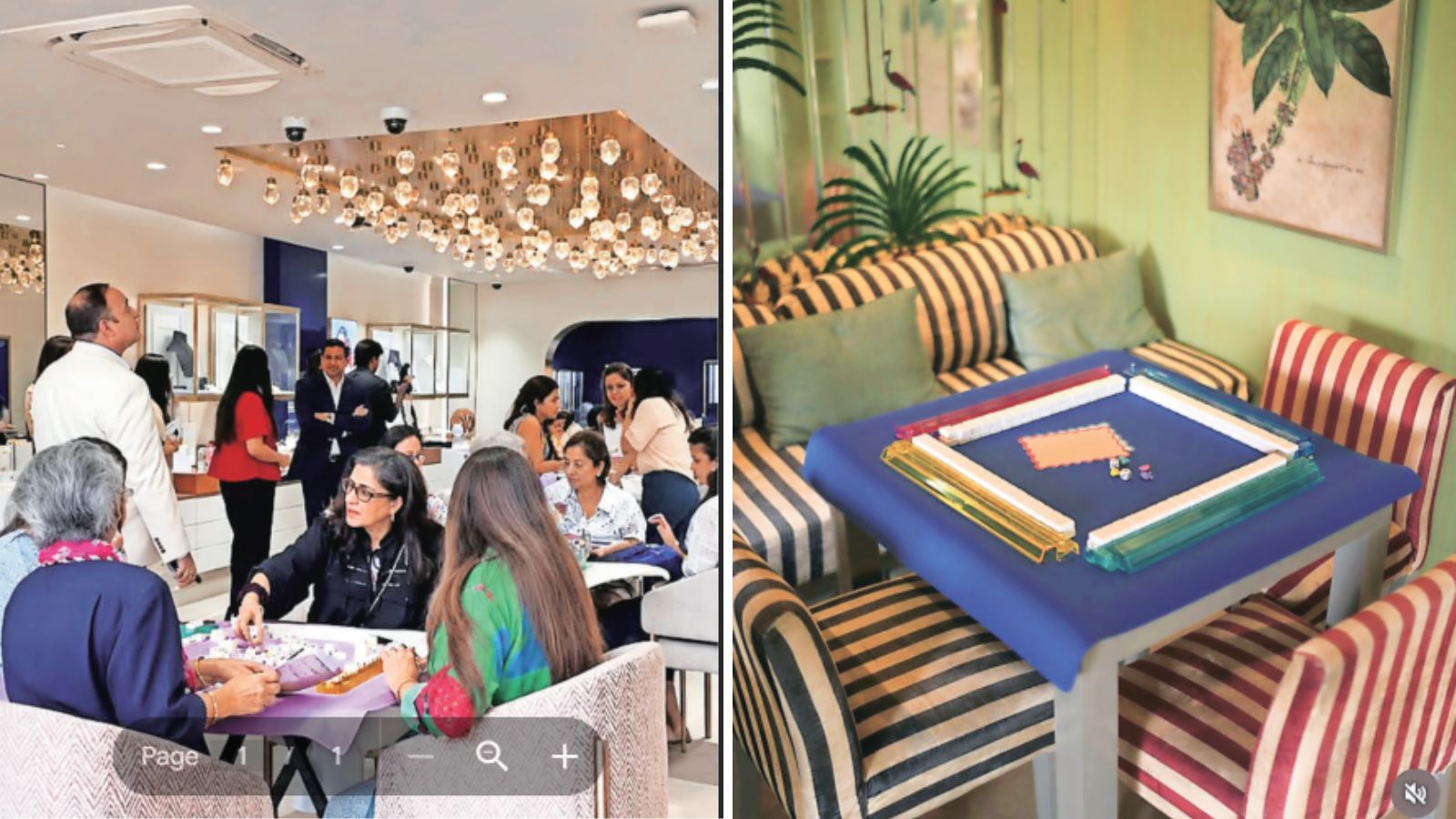
On a Tuesday morning in Jor Bagh, Ferida Chopra’s drawing room is full. Four women – in their 20s to 70s – sit around a square table, their fingers moving across rows of Mahjong tiles. The players draw and discard from 144 tiles, trying to complete a winning combination.
Mahjong means “sparrow”, said to come either from the bird carved on some traditional tiles or from the sound the pieces make when shuffled.
A lawyer who began practising at 50, Ferida learnt Mahjong only recently, taking lessons from two teachers in Greater Kailash. Her 10-year-old grandson had started learning it, and she wanted something to keep her brain active; her 97-year-old mother suffers from dementia.
Her WhatsApp group where one can book Mahjong sessions, named ‘Lutyens’ Delhi’, has members from across Jor Bagh, Nizamuddin, Vasant Vihar and Khan Market. Slots for games played at her home fill up in under half an hour, twice a week, every week.
“The game has helped me reconnect with distant relatives, family friends and acquaintances,” she says.
Ferida is part of a Mahjong boom that has gathered pace in Delhi over the last five years. A game once largely passed between families, particularly in Army and Parsi circles, is now being taught commercially, played at restaurants and organised through WhatsApp groups and tournaments.
The reasons are varied: a post-pandemic appetite for meeting people offline, the game’s visibility on social media, and teachers turning a family pastime into businesses.
Story continues below this ad
Mahjong originated in 19th century China. How it came to India has more than one version.
Ferida, a Parsi, traces its presence in Bombay to the community’s links with China. “My grandfather used to play bridge, while my grandmother dressed in chiffons and pearls to play Mahjong with a beautiful ivory set in a carved cabinet,” she says. “The Parsi traders who went to China brought back silks and Mahjong sets.”
The game has been played for generations in Mumbai. At the Willingdon Sports Club, more than 200 people can play across 10 to 15 tables. She mentions how officers of the East India Company during British rule played Mahjong and, because of that, clubs in Kolkata like the Tollygunge Club had Parsis playing the game.
Another lineage runs through Army families.
Vijaylakshmi (73) was 10 when she learnt to play. In the 1960s, when her father and other officers were posted to non-family stations, her mother gathered the officers’ wives and children around Mahjong tables to keep them busy.
Story continues below this ad
“When she had to go to the kitchen, she would hand her game over to me, and that’s how I learned,” says Vijaylakshmi.
In 2015, Vijaylakshmi started offering professional sessions in Defence Colony. “I was quite astounded at the diversity of my students — geographically, in age, and in their careers and backgrounds,” she says. Her students have included an investment banker, a senior IAS officer’s wife, and a jeweller.
In Greater Kailash, Vasundhara Sinha (39) and her sister-in-law Diya Kaul (41) launched Mahjong Studio last December.
Vasundhara has a master’s in economics from the London School of Economics; Diya practised law for a decade and recently qualified for the Advocates-on-Records examination. Both have put their careers on hold.
Story continues below this ad
“We love teaching Mahjong, it has become our full-time job,” says Vasundhara. They teach the Indian formats, Taiwanese, American, and other advanced variations. The sets are machine-made in China, with acrylic racks and melamine tiles. Their students range from Diya’s 10-year-old son to a 91-year-old man and his wife.
“Initially, mostly women in their 50s came to play. But over the last five to seven months, there’s been a sudden surge of people in their 20s… even college students are coming,” she says. According to the studio, around 80% of its players are women.
The Mahjong Network, founded in Mumbai by Ishira Kumar, Ria Bajaj and Maneka Jain Daswani, now has chapters in Delhi, Mumbai and Bengaluru.
When Maneka (41) moved to Mumbai three-and-a-half years ago and looked for people to learn Mahjong with through a networking group, 200 joined the WhatsApp group in its first week.
Story continues below this ad
For Ria, the game offers lessons beyond the table. “Mahjong helps with business strategy; it teaches you detachment – you play the tiles you are dealt with.”
The network held a tournament in Delhi on September 23. It was a curated Mahjong-themed event, a food and beverage menu, and giveaways.
Restaurants, too, are making room for the game. At Latitude 28 in Khan Market, Mahjong sets were introduced in July. “Two to three tables are usually occupied, while customers also rent the space for parties centred around the game,” said a member of the restaurant’s marketing team.
The new Mahjong culture, however, is not cheap. Classes cost thousands of rupees, sets are imported and a table requires space and several uninterrupted hours. “We don’t think it should stay limited only to those who can afford it. Our goal is to make it accessible to everyone,” says Diya.
KioskNews shows a cleaned-up reading view extracted from the publisher’s page — the original always lives on their site, not ours.