10 Best Visual Gags From The Original Casper The Friendly Ghost Comics
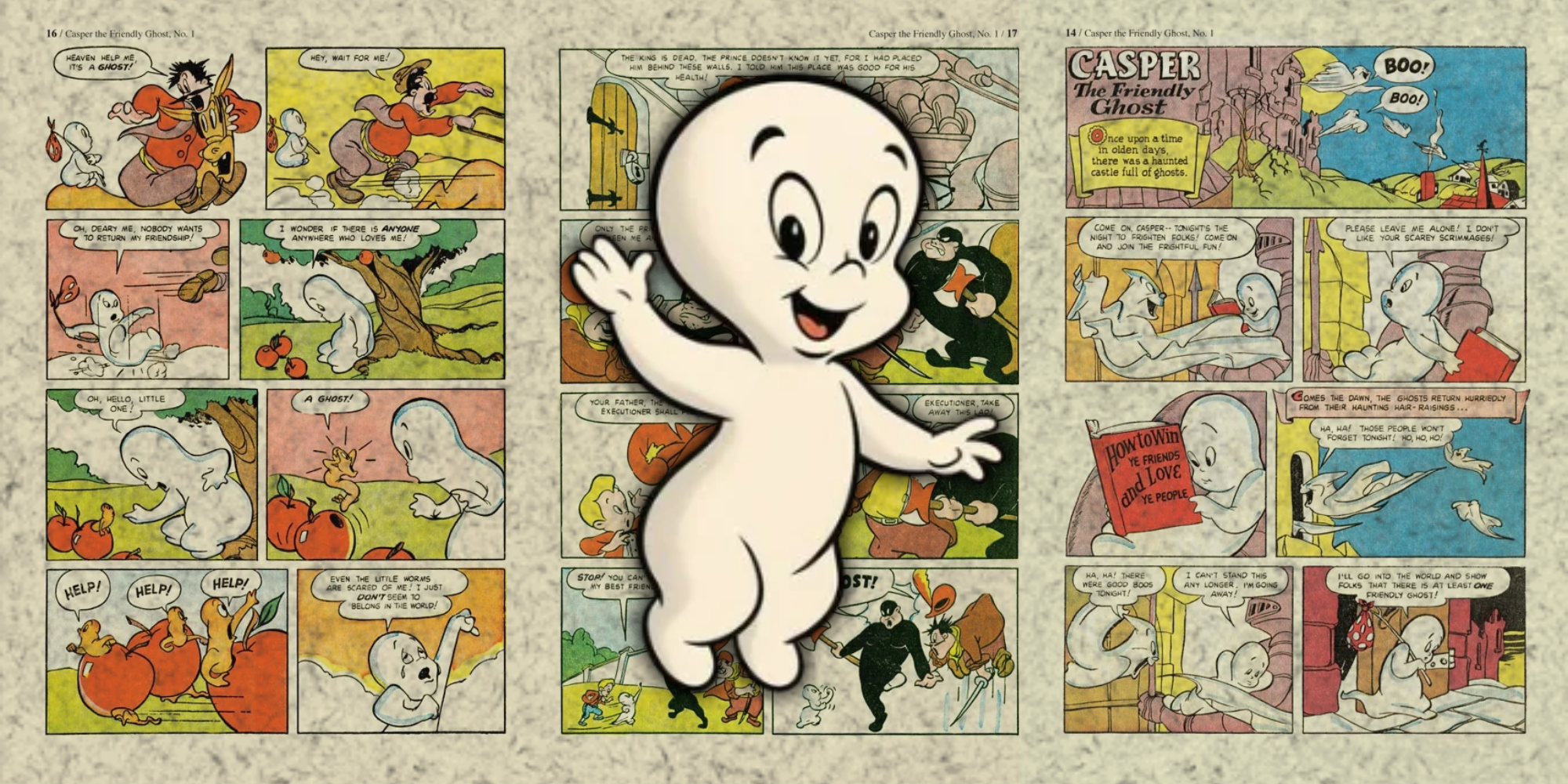
Casper’s best comic-book jokes rarely depend on elaborate punchlines. Harvey’s artists could turn one simple contradiction into a complete gag with a ghost trying to behave like a person, an ordinary object acting like it has a mind of its own, or a supposedly frightening creature being startled by the friendliest ghost around. The covers often delivered the joke before readers even opened the book.
Across the original Harvey runs, those ideas were drawn with bright colors, expressive faces, and wonderfully direct visual storytelling. The following picks span the 1950s through 1980, mixing cover gags with short interior sequences. Each one makes good use of Casper’s unusual abilities, especially his weightlessness, transparency, and talent for accidentally frightening the wrong people.
The Monster At The End Of The “Tunnel Of Fun”
Casper the Friendly Ghost #20 (May 1954)

The title promises a harmless attraction, but the cover of Casper the Friendly Ghost #20 gives the tunnel a far less welcoming occupant. Casper is confronted by a hulking green creature with red eyes, jagged teeth, and raised claws. The contrast between the cheerful wording and the monster’s expression supplies the joke before the story begins.
Casper’s startled pose is the other half of the gag. He is supposed to be the ghost who frightens people, yet here he looks like an ordinary child caught at the wrong end of a haunted attraction. The cover turns a familiar spooky setup upside down, making the friendly ghost the one who needs rescuing. Issue details and cover listing.
“Beware Of Dog” Is No Help To Casper
Casper the Friendly Ghost #62 (November 1957)
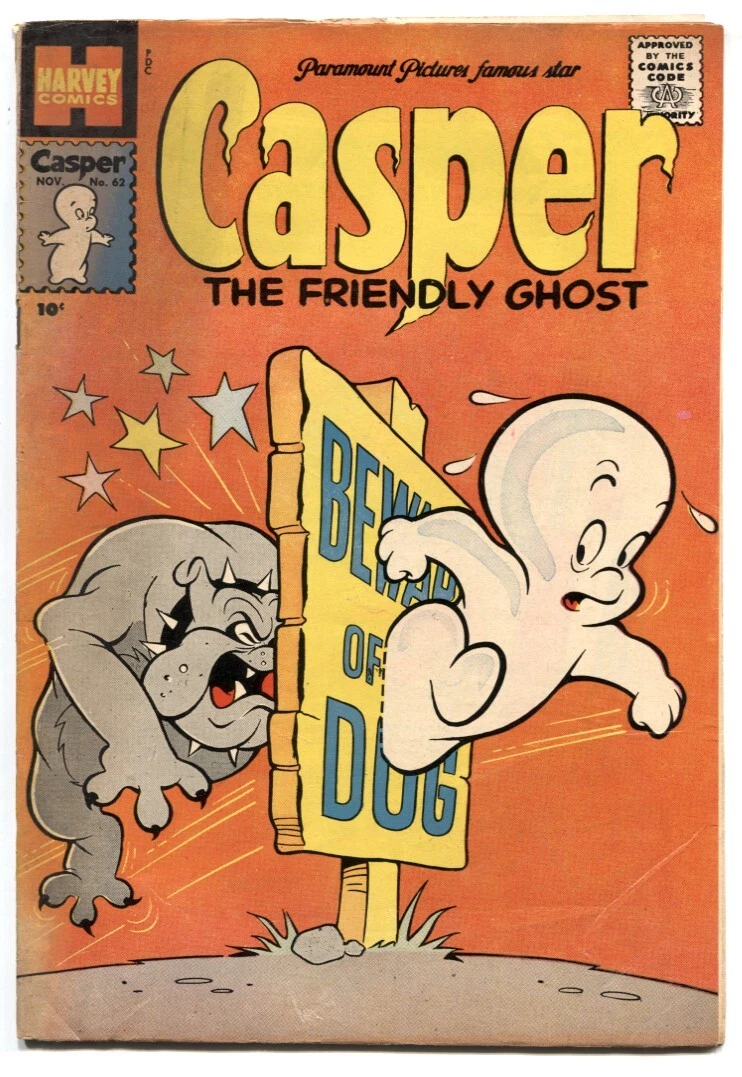
The warning sign on this cover is technically doing its job: there really is a dog nearby, and it is clearly not pleased to see Casper. The ghost is caught in the middle of the chase, with the dog bearing down on him. “Beware of Dog” becomes less a useful warning than a caption for Casper’s immediate predicament.
It is a neat reversal of the series’ usual scare dynamic. Casper is accustomed to being treated as a frightening presence, but a very ordinary dog has him running for safety. The joke also depends on the simplicity of the drawing: one sign, one angry animal, and one ghost who cannot talk his way out of trouble.
A Dream Inside Another Dream
The Friendly Ghost, Casper #1 (August 1958)
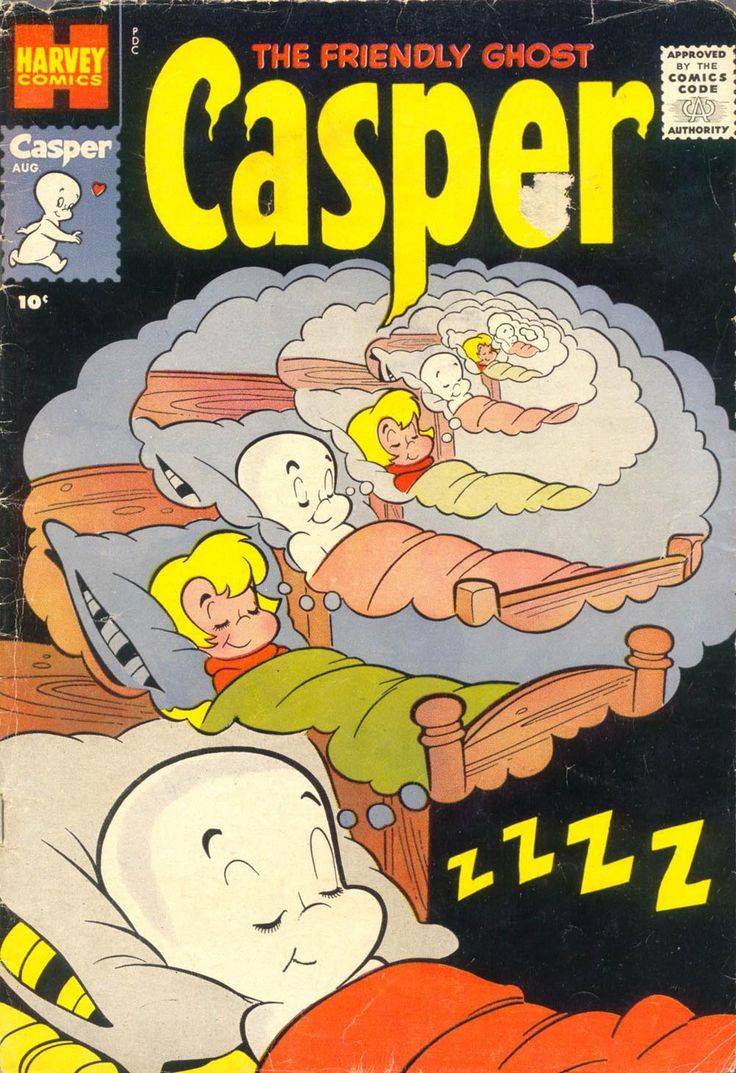
The cover of the 1958 Friendly Ghost, Casper series’ first issue turns bedtime into a visual loop. Casper and Wendy are asleep in separate beds, but the dream clouds above them repeat the same pairing: Casper dreams of Wendy, while Wendy dreams of Casper. The image keeps nesting the two characters inside each other’s dreams.
The gag is funny because the illustration makes a potentially complicated idea instantly readable. The reader can follow the repeated images without a caption explaining the joke, and the matching beds make the scene feel like a shared sleepover that has escaped normal logic. It is a sweet, slightly surreal way to introduce the series’ gentle comic tone.
Casper Gives A Clock A Hand Wash
The Friendly Ghost, Casper #9 (May 1959)

In this cover gag, Casper holds a basin beneath an anthropomorphic grandfather clock, whose face and hands have been turned into features of a living character. The joke is built around a familiar phrase: Casper is helping the clock wash its hands. A literal clock hand becomes something that needs the same care as a person’s hand.
It is a particularly tidy example of Harvey’s visual wordplay. The artist does not need a long exchange or a complicated scene; the basin, the clock’s expressive face, and Casper’s helpful posture communicate the pun immediately. The gag also makes the clock feel like a patient friend rather than an inanimate object.
Even The Fire Is Afraid Of Casper
The Friendly Ghost, Casper #42 (February 1962)

“The Fire’s Out... of Here!” is a perfect title for a cover built around an unusual fear response. Casper is near a fire used for roasting a snack, but the flame itself is presented as an anthropomorphic character frightened by him. The usual source of danger has become the nervous party, while Casper is simply going about his business.
That reversal is classic Casper comedy. People and animals often panic when they see a ghost, even when he is trying to be kind; this cover lets the same logic apply to fire. The visual punchline is stronger because a flame should be the thing that makes others retreat, not something that runs away from a small, smiling ghost.
A Migrating Bird Gets Stuck Inside A Ghost
The Friendly Ghost, Casper #81 (May 1965)

The cover story “Migration Delay” takes Casper’s see-through body and turns it into an unexpected obstacle. A migrating bird flies straight into him, and the one-page follow-up, “Easier In Than Out!,” develops the gag where the bird becomes stuck inside Casper’s ghostly form and cannot simply flap its way back out.
The joke works in two stages. First, Casper is treated like open air by a bird that does not understand what it has flown into. Then his transparency becomes a trap rather than a convenience. The bird is eventually frightened free by a witch, extending the gag without losing the simple visual idea at its center.
Casper's Ghostly Body Can't Hold a Single Gumball
The Friendly Ghost, Casper #165 (January 1973)
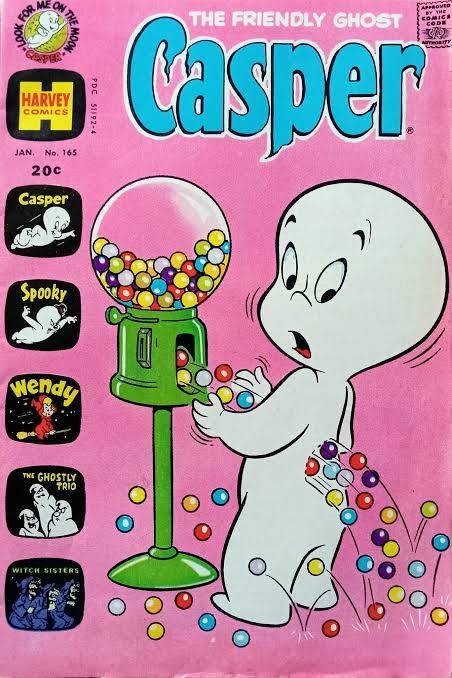
Casper’s transparent body creates plenty of opportunities for visual comedy, and this cover finds a particularly colorful way to take advantage of it. Standing beside a gumball machine, Casper discovers that the colorful treats cannot stay inside his ghostly body. Instead of enjoying his handful of candy, the friendly ghost finds himself dealing with gumballs falling straight through him, turning a simple snack into a rather silly predicament.
The gag is especially effective because it takes one of Casper’s most recognizable supernatural abilities and applies it to something completely ordinary. The artwork proved popular enough to receive a second life, eventually appearing on Casper the Friendly Ghost #5 in November 1991 and a 1992 Golden Books frame-tray puzzle.
Casper Scares The Car Away While Changing Its Tire
The Friendly Ghost, Casper #128 (April 1969)

“Scare Tire!” makes a flat-tire repair into a ghost story with an unusual victim. Casper is helping with the wheel, but his appearance frightens the car so badly that the vehicle bolts. The gag is wonderfully backwards: the car is supposed to be the object being repaired, yet it becomes the one thing that refuses to stay put.
The title does much of the setup, combining “spare tire” with the idea of being scared. The visual joke then gives that wordplay a physical consequence. Casper’s attempt to be useful creates a bigger problem than the original flat, and the inanimate vehicle reacts as though it has spotted a monster.
Pole-Vaulting Is Easier When You’re A Ghost
The Friendly Ghost, Casper #169 (September 1973)
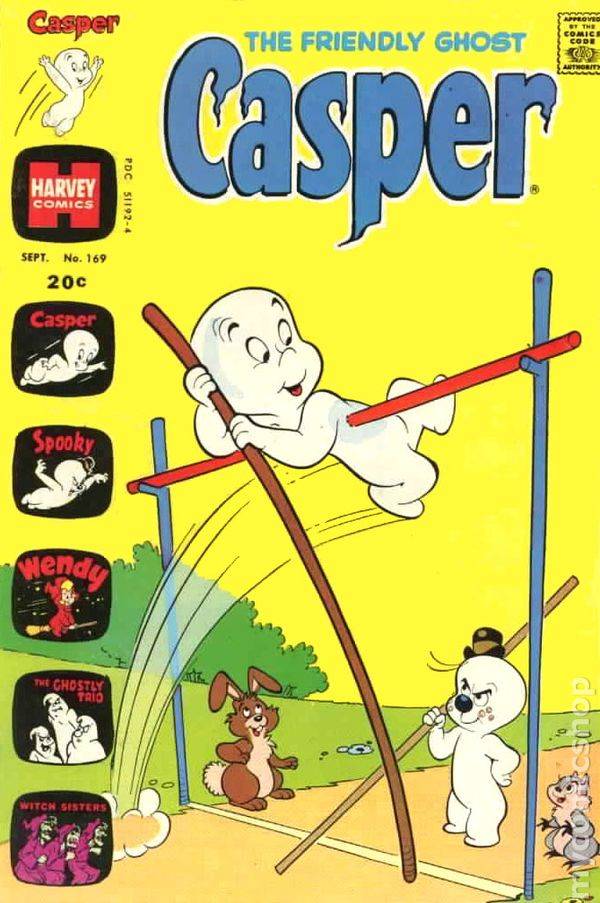
“Casper Passes (Through) the Bar!” is a sports comic gag that only works because its lead character is incorporeal. Casper is attempting a pole vault, but he falls short of clearing the bar in the ordinary athletic sense. Being a ghost, however, gives him another option: he does not have to treat the obstacle like a solid object.
The joke is in the wording as much as the picture. “Passes through” sounds like a description of athletic success until the reader remembers that Casper can literally pass through things. A failed jump becomes a ghostly loophole, and the cover gets a full punchline from one familiar ability.
The Ghost Who Has To Step On The Scale
The Friendly Ghost, Casper #213 (November 1980)

The cover of Casper #213 turns weighing in into an event, complete with a large circular dial, a platform-like pink chair, and an encouraging “Weigh to go, Casper!” The visual setup is funny because the person being measured is a ghost. Casper has no ordinary solid body, making the scale an awkward tool for the job.
The pun lands before the reader has to think too hard about the physics. The cover treats Casper’s weightless nature as if it were just another everyday inconvenience, while the oversized dial gives the scene the seriousness of an official weigh-in. It is a late-series variation on the same comic contrast that made Casper’s ghostly body so useful from the beginning.

- Release Date
- May 26, 1995
- Runtime
- 100 minutes
- Director
- Brad Silberling
- Writers
- Deanna Oliver, Sherri Stoner, Joseph Oriolo
- Producers
- Colin Wilson
KioskNews shows a cleaned-up reading view extracted from the publisher’s page — the original always lives on their site, not ours.