‘Lanterns’ Officially Shows What DC Stands to Lose After James Gunn’s Exit


Hannah covers horror, sci-fi, and games at Collider, where she writes news and features, reviews new releases, and interviews the people who make them. She’s helping build out Collider’s gaming coverage, with Pokémon as one of her specialties. If she isn’t writing about a monster, she’s probably watching one on a tape from her VHS collection.
Sign in to your Collider account
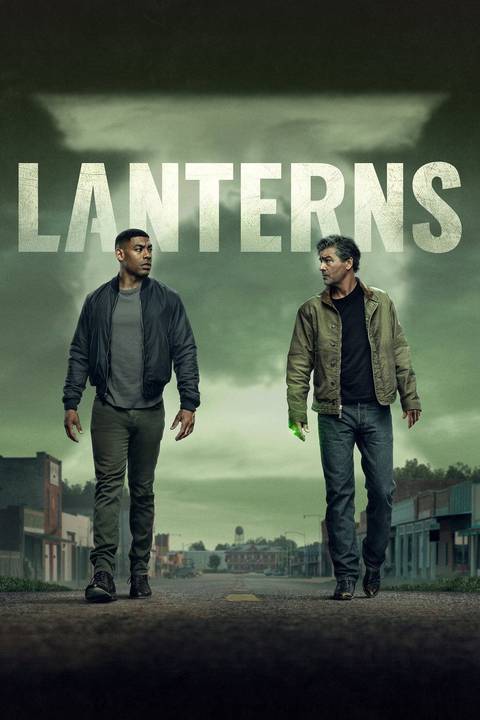
Hal Jordan (Kyle Chandler) is signing autographs at a taco stand when he gets word of possible alien activity in Nebraska. He flies out to investigate, leaving John Stewart (Aaron Pierre) to make his own travel arrangements, and winds up at a crime scene where Sheriff Kerry Kane (Kelly Macdonald) is rightfully in control. For Hal, the possibility of aliens explains why a Green Lantern should be there. For Kerry, there are dead people in her town, and the man who just showed up owes plenty of explanations of his own. The joy of Lanterns is how long it lets those two ways of seeing the same crime coexist. Hal knows things about the universe that Kerry couldn’t possibly know, and Kerry knows things about Rushville that Hal is going to have to earn the right to hear.
That balance is worth thinking about now that James Gunn and Peter Safran are exiting their roles as co-heads of DC Studios and Jeremy Latcham is taking over. Gunn and Safran will still be working on Man of Tomorrow, and there may be more for them with the studio in the future, but their most interesting contribution to DC was the room they gave other people to decide what a story in this universe could be. Lanterns took that freedom far enough to let a murder investigation change what it means for John Stewart to become a Green Lantern. There’s a big difference between signing off on a crime drama with a superhero in it and trusting that crime drama to have a say in who the superhero becomes.
‘Lanterns’ Lets a Murder Mystery Decide What Kind of Hero John Becomes
The first time John sees Hal, he’s a kid watching him on television, and like any kid would, he's looking up to one of Earth's heroes. Years later, John gets to have the much less pleasant experience of working for somebody you grew up admiring. Hal has had the ring long enough to get comfortable testing whether John can handle himself, and there’s a particularly ugly echo of that in the way John’s father used to shoot apples off his head. The boy holds still, and the person pointing the gun gets to call him fearless. You can see how John would grow up believing that what somebody else sees you do under pressure tells them everything they need to know about what you felt.
Then Hal dies, and John has to look into the life of somebody he’s still grieving, without really knowing how to properly do so. Making him a detective under these circumstances is cruel, because every answer he wants as an investigator is something he might be happier never hearing as the kid who watched Hal on TV and has, albeit maybe reluctantly, grown to care about him as a person. By the time John gets one last conversation with a projection of Hal, the mystery has given him reasons to be angry with the man and just as many reasons to miss him. The finale can sit with both feelings because the show has spent enough time with the two of them for either one to hurt.
That’s why John’s new oath landed with so many viewers. Making room for fear is a meaningful choice in a mythology that has given fear an entire corps of its own, and it’s an even more meaningful one coming from somebody who spent his childhood being praised for how well he could hide it. A detective has to care what somebody is afraid of, especially when the answer might explain what they’ve done. By letting John take that understanding with him when he puts on the ring, Lanterns makes its murder mystery part of the kind of Green Lantern he’ll be in every story after this one.
Collider Exclusive · 8 Questions · 2 Minutes Which Superhero Team Should You Join? Avengers · X-Men · Teen Titans · The Boys
Every team is a personality test with a uniform. One saves the world and argues about it the whole way home. One has been fighting for the right to exist since the day it formed. One is still working out who it is while the fighting happens. And one has no powers at all, plus no intention of playing fair. Eight questions decide where you actually belong.
🛡️Avengers(Marvel Studios)
🧬X-Men(Marvel)
🐦Teen Titans(DC)
💊The Boys(Prime Video)
01
What kind of power would you actually want? The power matters less than what you would be willing to do with it.
02
Why join a team at all? Nobody puts on the suit for the reason they say out loud.
03
How do you feel about the people in charge? Every team has a chain of command. Very few of them survive contact.
04
What is your role inside a group? Every roster needs the same handful of people to function.
05
How do you win a fight you should lose? This is the scene the entire film gets built around.
06
What is this work costing you? Nobody does this for free. The bill just arrives differently for everyone.
07
How should the world see your team? Half of this job is public relations, and everybody knows it.
08
The offer arrives. What makes you say yes? Eight questions in, this is the one that decides your team.
Recruitment Is Complete Your Team Is…
Four teams, four completely different reasons to put yourself in danger for strangers. This is the roster you actually belong on, what they would want from you, and what it would cost you to stay.
The Avengers
You belong where the stakes are largest and the personalities are loudest. This is a team of people who are all used to being the most important person in the room, which is exactly why it works and exactly why it keeps nearly falling apart.
- The Avengers are not friends who became a team. They are a team that slowly and reluctantly became friends, and you would recognise every stage of that process.
- You can hold your own among big egos without needing to win every exchange, which is the real entry requirement here.
- The arguing is part of the method. This group does its best thinking mid-disagreement, usually at volume, usually in a very expensive building.
- When the sky opens, they are who shows up. You would want to be standing in that line.
The X-Men
You have never had the luxury of being thanked for this. The X-Men protect a world that has never once been comfortable with them existing, and something in you understands exactly why they keep doing it anyway.
- This is the only team on the list whose central conflict is not a villain. It is being wanted gone by the same people they keep saving.
- You know what it is to be the outsider in a room and to decide, anyway, that you will not make yourself smaller so everyone else is comfortable.
- The X-Men are the most genuine found family in comics. People arrive with nowhere else to go and are never once asked to explain themselves.
- You would not be joining for the glory. There has never been any.
The Teen Titans
You do not want colleagues, you want your people. The Titans are the team where the friendship came first and the world-saving turned up afterwards as an inconvenient side effect.
- Every Titan is somebody's sidekick who decided to stop being one. That decision, not the villain of the week, is what the team is actually about.
- You would be joining people who are all working themselves out at the same time as you, which is far less lonely than being the only one.
- The Titans lose regularly. Then they eat together and come back better, which is a more honest model of growing up than any other team here manages.
- The tower would be loud, chaotic, and the first place that ever felt like yours.
The Boys
You are not asking who to trust. You worked out the answer a while ago and it was nobody in a cape. This is where you go once you have decided the people in charge need watching, and that nobody else is going to do it.
- The Boys have no powers, no mandate and no funding. What they have is leverage, patience, and a very high tolerance for consequences.
- You are the person in the room who notices the thing everybody else has quietly agreed not to mention.
- This is not a heroic team and it has never pretended otherwise. It is a group of damaged people doing necessary work in ways nobody would call clean.
- You would not sleep well. You would keep going anyway.
‘Clayface’ Gives Gotham to the Man Batman Would Be Looking For
It was wonderfully mean to make the first person to show us around the DCU’s live-action Gotham and an actor going through the worst time in his life, but it certainly let us see some of the ugliest parts of the city. Matt Hagen (Tom Rhys Harries) has good reason to believe people will treat him differently once they see what’s happened to him. The prospect of getting his face back is so appealing that you can know exactly what kind of movie you’re watching and still find yourself hoping the treatment works.
James Watkins told Collider that Gunn gave him the freedom to reinvent Gotham, and the most consequential thing he does with that freedom is decide whose suffering the city is going to make us look at first. There are plenty of Batman stories where Matt’s transformation would be the awful thing that happened before the hero got involved, but instead, Clayface spends a movie with Matt while he can still imagine getting his old life back. That approach makes what happens to his body feel worse the longer you’ve spent hoping he might be right, until the movie reaches its tragic ending.
Those projects also give audiences two different ways to get invested in DC. A horror fan can walk into Clayface wanting to see what Watkins does with one of the superhero genre's best uses of body horror. A crime drama fan can come to Lanterns because they want to know what happened in Rushville. In exploring other genres first and superheroes second, both found a way to make those types of fans leave caring about a character they might not have sought out on their own. That’s a valuable thing for a shared universe to be able to do, especially when it has as many corners as DC does.
DC Could Keep Its Continuity and Still Lose Its Range
Lanterns and Clayface can share a universe without asking the audience to watch them for the same reasons. I wanted to know what happened in Rushville because the show made me care about what the people there were keeping from each other. I wanted to know what would happen to Matt Hagen because I understood why he’d agree to something that looked like a terrible idea from the moment he heard it. There’s real value in a studio being able to earn both kinds of investment, especially when it has enough characters to spend decades making movies and television about them.
What I liked about getting Lanterns and Clayface from the same studio was that, after seeing both, I had less idea what the next DC project would be, and for the first time in my life that was a positive thing, not a negative. I knew more about the world they shared, and I could imagine more kinds of people living in it. I’d like the next filmmaker who comes in with a story about one of DC's characters to have as much say over what we get to see as the people who took Green Lantern to Nebraska.
- Release Date
- August 16, 2026
- Network
- HBO
- Showrunner
- Chris Mundy
-

Hal Jordan
-

Aaron Pierre
John Stewart
-

Sheriff Kerry Kane
-

William 'Will' Macon
- Directors
- Alik Sakharov, James Hawes, Stephen Williams, Geeta Patel
- Writers
- Damon Lindelof, Chris Mundy, Tom King, Vanessa Baden Kelly, Justin Britt-Gibson, Breannah Gibson
- Franchise(s)
- DC Universe
- Creator(s)
- Tom King, Chris Mundy, Damon Lindelof
KioskNews shows a cleaned-up reading view extracted from the publisher’s page — the original always lives on their site, not ours.