Proms, parties and gender politics: amazing photos from American dancefloors – and what they tell us about a changing nation
Life magazine launched in 1936. Its aim: to show the US the world, in pictures. At a time when television was still an experimental medium, a golden age of photojournalism brought the outside world into people’s homes. Life ran weekly until 1972, spanning a transformative time in US culture. Photographers were dispatched across the globe, covering wars, political manoeuvres, social trends, hemlines and Hollywood. And in December 1936, the magazine dedicated its cover feature to dance, with dancers from the new School of American Ballet gracing the front page. As such a vividly visual medium, dance would become a regular feature in Life’s pages across the years.
When I was asked to write the text for a new book featuring a collection of dance-themed images from the Life archive, it was a kid-in-a-candy-shop situation. For a dance fan there were some absolute gems to be found: the great George Balanchine crafting his ballet The Seven Deadly Sins – and cooking dinner in his Manhattan apartment; Margot Fonteyn and Rudolf Nureyev taking New York in a piece headlined The Hottest Little Team in Show Biz; or an ageing Agnes de Mille going full-throttle in rehearsal.
But the archive told a much bigger story than that. It was fascinating to see the reflection of society through the way people danced: in ballrooms, nightclubs, proms and parties. In the array of social dancers: from the waltz and tango to the lindy hop, mambo, twist and the frug, themes of the 20th century play out. You can see a story of growing individualism in the shift from structured couple dancing to going freeform on the dancefloor – gender politics, too, as it was out with “May I have this dance?” and in with the democracy of the disco. Life columnist Albert Goldman asked: “Has there ever been a decade for dance like the 60s?” as he wrote of a power shift from the stage to the dancefloor, from the professional performer to the “inventive amateur”. There’s the birth of the teenager, too, bringing an explosion of pop culture and spreading dance trends on TV shows such as American Bandstand.
The archive also tells a story of the US’s shifting relationship with race, showing dancers in segregated bars and newly desegregated schools. But more than that, we see the way music and dance styles from Black communities and from Latin America were adopted, appropriated and absorbed into the US mainstream, whether tap, jazz, Charleston or cha-cha-cha.
Dance even had something to say about cold war politics and paranoia. For a series comparing American and Soviet education systems, which found the US lagging worryingly behind, Life took photos of Moscow students in a dance class to demonstrate their iron-clad discipline, compared with easygoing American schools. The magazine captured visiting folk dancers from the USSR, as well as reporting on Khrushchev denouncing the dancing in a Hollywood film, and by extension, casting judgment on western culture.
So much of life can be observed through dance, in the ways people choose to move their bodies and how they display themselves, how they relate to each other, celebrate and communicate. There’s a real treasure trove of images to explore.
LIFE. Let’s Dance is published by Taschen.
Step back in time: six pictures from Let’s Dance
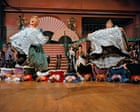
On the set of Can-Can, 1959 (main image)
The sheer raucous joy in this picture of Shirley MacLaine and Juliet Prowse leaps off the page, captured on the set of movie musical Can-Can, the story of a Belle Époque Paris cabaret whose dancers are arrested for public indecency. It was a stance approved of by Soviet premier Nikita Khrushchev, who was visiting the 20th Century Fox studios during filming and pronounced the dance routines depraved.
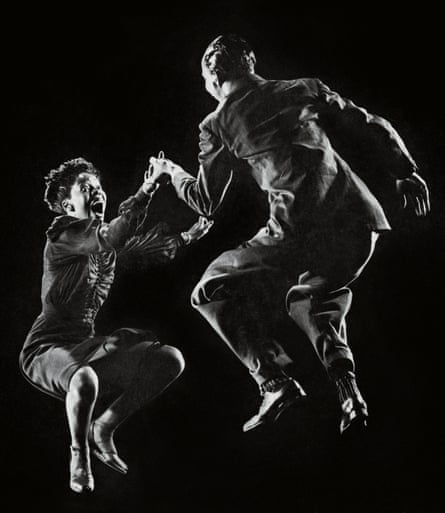
Willa Mae Ricker and Leon James, 1943
Ricker and James were members of Whitey’s Lindy Hoppers, one of the finest, and most awesomely acrobatic, dance troupes of the 1940s. The lindy hop originated among Black dancers in the clubs of Harlem (it was named after pilot Charles Lindbergh’s “hop” over the Atlantic in 1927) but by 1943, Life was calling the lindy hop “America’s national dance”.
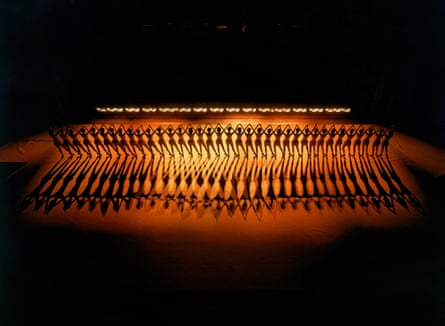
The Rockettes, 1958
Modelled on high-kicking British group the Tiller Girls, all-American precision dance troupe the Rockettes took things up a notch with their machine-tooled synchrony. Launched in 1925, they’re still going strong today, proving the enduring allure of the showgirl (Taylor Swift can’t be wrong), and have even trademarked their signature dance technique.
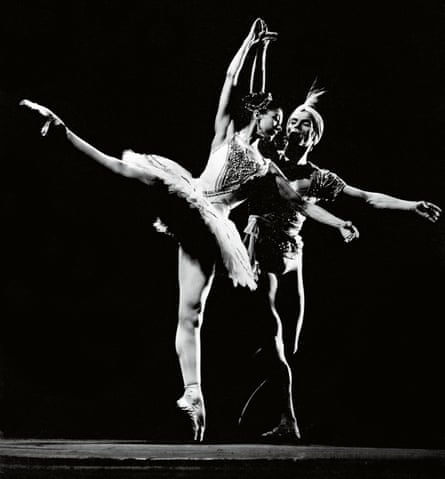
Margot Fonteyn and Rudolf Nureyev in La Bayedère 1965
It is hard to imagine now that two ballet dancers could be as famous as Margot Fonteyn and Rudolf Nureyev were in the 1960s. Rudimania peaked on the Royal Ballet’s 1965 tour to the US, when mounted police were stationed outside New York’s Metropolitan Opera House to save Nureyev from being mobbed.
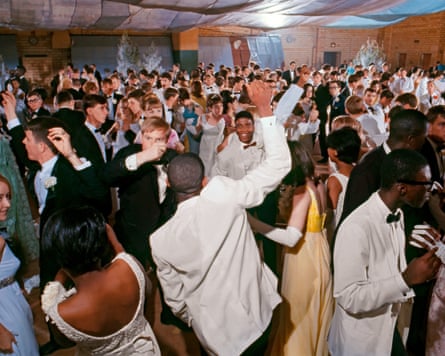
School prom, 1967
Teens dancing at the annual prom at Central High School in Little Rock, Arkansas. Ten years earlier, after the supreme court had ruled against segregation in public education, Arkansas’ governor called up the National Guard to stop nine Black students enrolling at the same school. Life’s journalist at the prom reported that “the school sees itself as desegregated rather than integrated”.
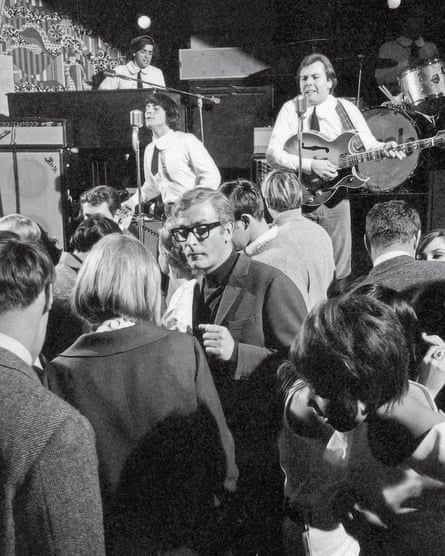
Michael Caine on the dancefloor, 1966
Such a keen dancer he was once known as Disco Mike, here’s Michael Caine at an LA club. Decades later he gave a tutorial on doing the twist on Jonathan Ross’s chatshow, a dance craze that had swept the world, meriting a seven-page feature in Life in 1961. From hipsters to socialites to suburban grandmas, everyone was caught up in “pulsating, gyrating, hip-swinging mania”, it reported.
KioskNews shows a cleaned-up reading view extracted from the publisher’s page — the original always lives on their site, not ours.