Notes from Central Taiwan: Taiwan’s margin debt: How much danger lies behind the headlines?
July’s sell-off brought no widespread wave of forced liquidations, but borrowing beyond margin accounts leaves gaps in the picture of investor risk
By Michael Turton / Contributing reporter


The spectacular rise of the Taiwan Stock Exchange (TWSE) in recent months has fueled great excitement among individual stock traders. Gate News reported that the stock market swelled 59 percent in the first half of this year, with margin trading volume surging nearly 20 percent. Local newspapers tell stories of stock buying “on the margin” by individual investors, often with dire results. The implication is that small investors are teetering on the brink of disaster should there be a market “correction.” How real is this threat?
This scenario actually occurred this summer. In July the market fell nearly 4,000 points.
“The total margin balance fell by NT$61.65 billion (approximately [US]$1.9 billion) on July 28 and 29, dropping to NT$507.01 billion (approximately [US]$15.7 billion), a recent low, as market panic surged,” reported BigGo Finance.
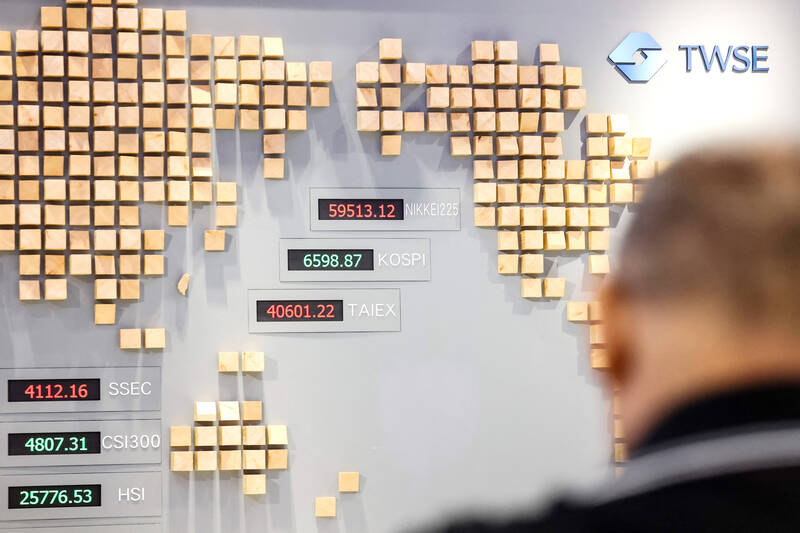
A man in May walks past a board showing numbers of the TAIEX Index, center, and other markets at the Taiwan Stock Exchange in Taipei. A growing number of people are using debt to buy into Taiwan’s stock market, which soared 59 percent in the first half of the year thanks to booming demand for AI hardware. But while the prospect of vast returns has lured and repaid many handsomely, others have suffered hefty losses or been tricked by scammers, prompting authorities to issue warnings about the risks.
Photo: AFP
MARGIN CALL
TWSE officials immediately moved to reassure the public. Across all accounts, they said, the credit maintenance ratio remained between 165 percent and 175 percent. When the ratio for a particular account falls below 130 percent, the account holder will face a margin call.
What do these numbers mean? Under stock trading rules, an individual investor can borrow 60 percent of the cost of the stocks they are buying. The other 40 percent must come from their own funds. To engage in margin purchasing, an individual investor must meet certain requirements and set up an account with a securities firm.
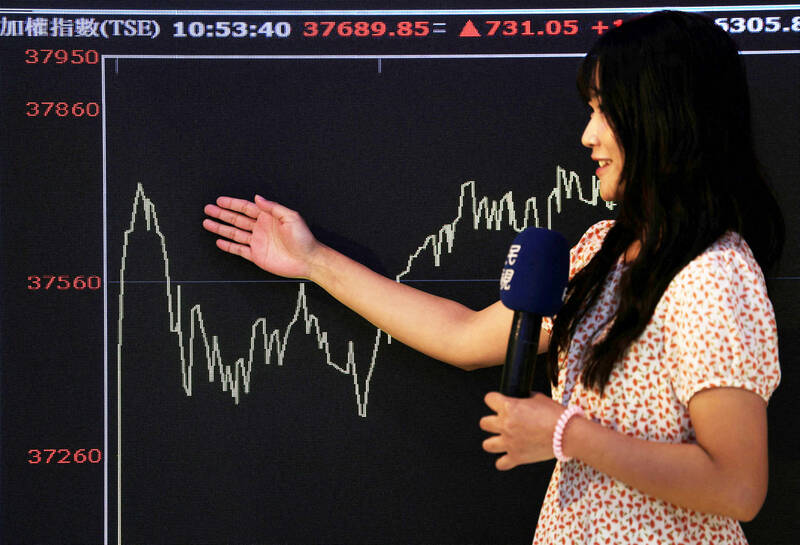
A news presenter in April reports on the TAIEX index at the Taiwan Stock Exchange in Taipei.
Photo: Reuters
To simplify, imagine that a Mr Chen makes a NT$2.5 million margin purchase, funded by NT$1 million of his own money and NT$1.5 million borrowed. The NT$2.5 million in stock he owns serves as collateral for the loan. The credit maintenance ratio discussed above is the ratio of his collateral to his debt. For that total purchase of NT$2.5 million, his margin call debt ratio is 166 percent (2.5 million in stocks as collateral/1.5 million debt).
The next day, Chen’s stock loses value, falling to NT$1.8 million. Now his collateral/debt ratio is 120 percent, below the legal limit of 130 percent. According to regulations, Chen must make up the difference within two days from service of the margin-call notice or face forced liquidation of his position.
The proportion of individual investors like the fictional Mr Chen is one of the ways the Taiwan market is unusual.
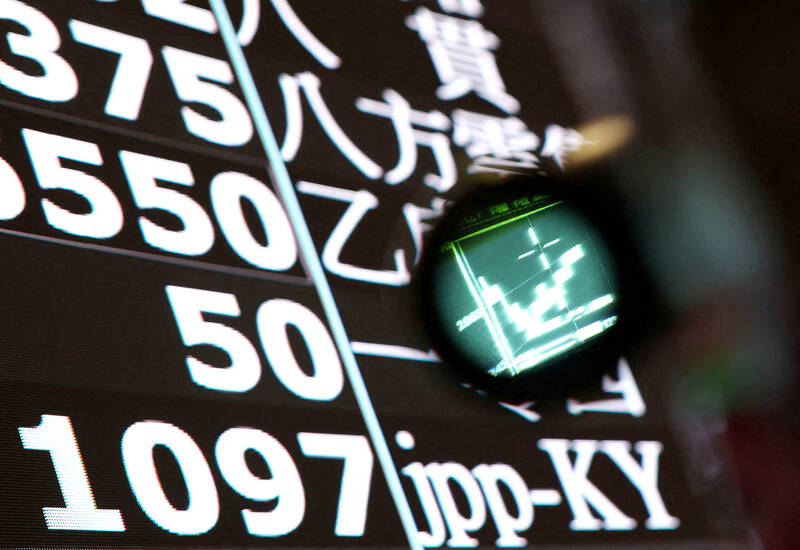
TSMC stock price at the Taiwan Stock Exchange in Taipei on April 21.
Photo: Reuters
“Domestic individuals generated 52.11 percent of TWSE trading value last year, compared with 35.28 percent for foreign institutional investors” writes Nigel Daly in an analysis for this paper.
Other markets have fewer individual investors. However, 47 percent of the market value is held by foreign investors. Hence, Daly observes, local individual investors generate much of the market trading and liquidity. A recent TWSE document states that in the first half of last year, “individual investors accounted for 50 percent of all transactions, domestic institutional investors for 13 percent and foreign institutional investors for 37 percent.”
Because of this, in practice regulators closely watch the market and monitor individual investors and their credit maintenance ratios. The securities firms themselves also closely monitor the accounts they handle. In addition to stock market officials, the Financial Supervisory Commission (FSC) also watches the securities firms.
In response to FSC pressure, brokers last month began warning account holders when their credit maintenance ratios fall below 150 percent, instead of the previous 140 percent. Some brokerages have raised this to 155 percent. This is perhaps a signal that market regulators worry individual investors are overleveraged. Indeed, just before the July question, bank regulators said both personal and private enterprise monthly increases in lending reached record highs in June, TVBS reported on Sept. 1.
MARKET CONCENTRATION
Another peculiarity of the stock market is its concentration. Taiwan Semiconductor Manufacturing Co (TSMC, 台積電) accounts for well over 40 percent of its value, and the top three firms account for over 50 percent. Few other markets have that degree of concentration of wealth in just a few firms. TSMC’s proportion of the market’s entire value continues to rise. If it were to suffer a sudden collapse the suffering among small investors would be great.
A sharp CommonWealth magazine piece by Lu Pei-hua and Lisa Lin from June points out that one dangerous consequence of market concentration is that investors ignore traditional firms and smaller firms, making it harder for them to obtain financing through the local stock market. They must either attempt to list in foreign stock markets, or take out loans from banks. This makes it more difficult for them to operate.
A key risk of this system is growing individual investor debt. According Lu and Lin, “outstanding debt amassed to buy stocks on margin on the main exchange and over-the-counter market has reached an all-time high, with the amount of stock pledged as collateral exploding 23-fold over the past 10 years.”
This has led to a phenomenon colloquially known as “four loans under one roof” (四貸同堂, credit card, home mortgage, margin loan and other loans such as car loans or second mortgages) to pay for stock purchases. A broker interviewed last month for a United Daily News (UDN) piece on debt and individual investors noted that the market has risen from 9,382 in 2019 to over 40,000 today. Investors have become used to a consistently rising market.
Many articles have noted that small investors sometimes turn to dodgy gray market funding methods such as pawn shops and loan sharks to fund their stock purchases. As the broker in the UDN piece points out, this means that government regulators cannot turn off the flow of margin lending, lest individual borrowers turn entirely to underground sources to find money to buy stocks. Individual investors also face borrowing fees if they fall into margin debt.
Business Today noted last month that some brokers believe one reason the July correction occurred is because individual traders were taking on debt faster than the market was rising.
Did small investors show any caution after that July event? The Liberty Times (the Taipei Times’ sister newspaper) reported last week that regardless of how investor debt is measured, securities firms’ data show that it is rocketing up again. Some experts quoted in the local media said that the frenzied margin buying would die off after the July correction, but it doesn’t look that way at the moment.
Is there a frenzy? The media seems to think so. The numbers and stories they present suggest it. Yet, as a TWSE explainer dated Sept. 24 observed, at the end of July, the “TWSE-listed market had approximately 14.6 million trading account holders, of whom approximately 170,000 had outstanding margin loan balances, representing approximately 1.2 percent of the total.”
For that devastating month of July, the subject of so many media reports, the average number of individual investors receiving margin calls each day was just 728, the explainer said.
As the TWSE points out, a cascade of margin calls has not occurred. The overleveraged small investor appears to be more of a Frankenstein construction, a media monster, built of anecdotes.
Notes from Central Taiwan is a column written by long-term resident Michael Turton, who provides incisive commentary informed by three decades of living in and writing about his adoptive country. The views expressed here are his own.
KioskNews shows a cleaned-up reading view extracted from the publisher’s page — the original always lives on their site, not ours.