Blackhaine: Saints in the Wethouse review | Alexis Petridis's album of the week
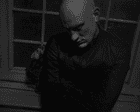
On the second track on his debut album, Tom Heyes accuses lesser artists of copying him. “What the fuck you even take me for?” he barks on Northside Needs Me, over a grinding, distorted bassline that comes punctuated with stammering, rave-y vocal samples. “Too much noise shit, replicating what I played before.”
Of course, charging that others are merely imitating what you did previously is a venerable rap tradition: the track that gave said practice its longstanding name, Bite’n My Stylee by Original Concept, is now 40 years old. Perhaps it’s true that others have been copying the approach that Heyes has minted under the alias of Blackhaine, but if so, it seems faintly remarkable, because his approach is so determinedly unique.
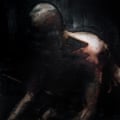
Whatever you thought the early 2020s were going to throw up musically, it’s highly unlikely you would have predicted the arrival of an artist who expresses northern working-class despondency through dance – involving choreography Heyes suggested was inspired in equal part by Japanese butoh theatre and the staggering gait of synthetic cannabis users – and a sound that that splits the difference between UK drill and extreme electronics. The comparison that kept suggesting itself during Blackhaine’s more scourging moments – 2021’s And Salford Falls Apart, or Cold Summer, his 2023 collaboration with French producer Aho Ssan – was Whitehouse, notorious pioneers of post-industrial power electronics, whose early pitch involved making “the most violently repulsive records ever conceived”.
Heyes’s creativity seemed destined to exist entirely on the far left-field margins, but no. He ended up working with a pre-cancellation Kanye West and appearing on stage as a choreographer/dancer/hype man with Playboi Carti (“bald British guy the GOAT” offered one impressed Carti fan online). At the other extreme, his work has been presented at the Venice Biennale, Tate Modern and Centre Pompidou. This album arrives on XL Recordings, which makes him a labelmate of Radiohead, the xx and Fontaines DC, and it’s executive produced by Wraith9, known for working with EsDeeKid and Drake.
Nevertheless, his music remains far from the mainstream. There are moments Saints in the Wethouse at least vaguely resembles a straightforward UK rap album, albeit one of a spectacularly bleak, noir-ish hue (as on Pyrex) but they’re outnumbered by tracks that seem to have slipped the moorings of that genre entirely. The influence of Whitehouse is still much in evidence here, particularly on 5 Days, which dispenses with a rhythm entirely, and sets Heyes’s vocal against a mass of punishing electronics and squeals of feedback, and on Born from Wound [Floodlights], with its screamed vocal and ominous tones that give way to a wall of noise that, depending on your mood, could feel either deeply distressing and claustrophobic or oddly cathartic.
Elsewhere, Heyes leans into standard rap tropes only to subvert them entirely. There’s his voice, which is certainly aggressive, but usually presents itself as a desperate, garbled bark, filled with panicky gulps for breath. He sounds like a cornered man, frantically yelling at gunpoint, which serves to utterly undercut the sprinkling of boasts and threats in the lyrics: “Do you even know you’re fucking with a real one?”; “The north side needs me, I’m the drug they abuse”; “You used to fucking stand for summat.” Rap has been awash in Auto-Tuned vocals for 20 years, but it’s hard to think of an example of their use that sounds more despairing than at the end of Consumer, already a discomfiting listen with its siren-like synths and raw samples of dancehall MC Mad Cobra and its funereal thud in lieu of a beat. The aforementioned stammering rave-y vocal sample on Northside Needs Me keeps repeating the phrase “jump, baby”, an invitation to dance that, coupled with the increasingly worrying lyric – “stare out the tower, girl, it’s easy to fall” – takes on a profoundly disturbing resonance.
There is also, of all things, an acoustic ballad, The Wind, which unexpectedly emerges from the raw-throated chaos of Born from Wound [Floodlights]. It has an unexpectedly pretty melody, delivered by Heyes’s reverb-soaked voice, but rather than feel like light relief, it’s overwhelmed by its context: something of the surrounding darkness seems to seep into it, it ends up feeling not calming but creepy.
Conjuring a mood so intense that it’s capable of swallowing anything nearby is hugely impressive: Saints in the Wethouse is an experience that wrings the listener out, dragging them headlong through an unforgiving musical landscape, its sound informed by lyrics that variously touch on mental illness, substance abuse, despondency and rage. Whatever Blackhaine claims about copyists, he sounds pretty inimitable.
after newsletter promotion
This week Alexis listened to
Steven Wilson – Now Departing
It says something about the above album of the week that Steven Wilson’s folk horror concept album Requiem for a Village feels like light relief by comparison, but no matter: the woozy/menacing psych-unto-prog of Now Departing is a joy.
KioskNews shows a cleaned-up reading view extracted from the publisher’s page — the original always lives on their site, not ours.