Indonesia’s Prabowo sacks chief of staff as wiretap scandal tests alliance with Widodo
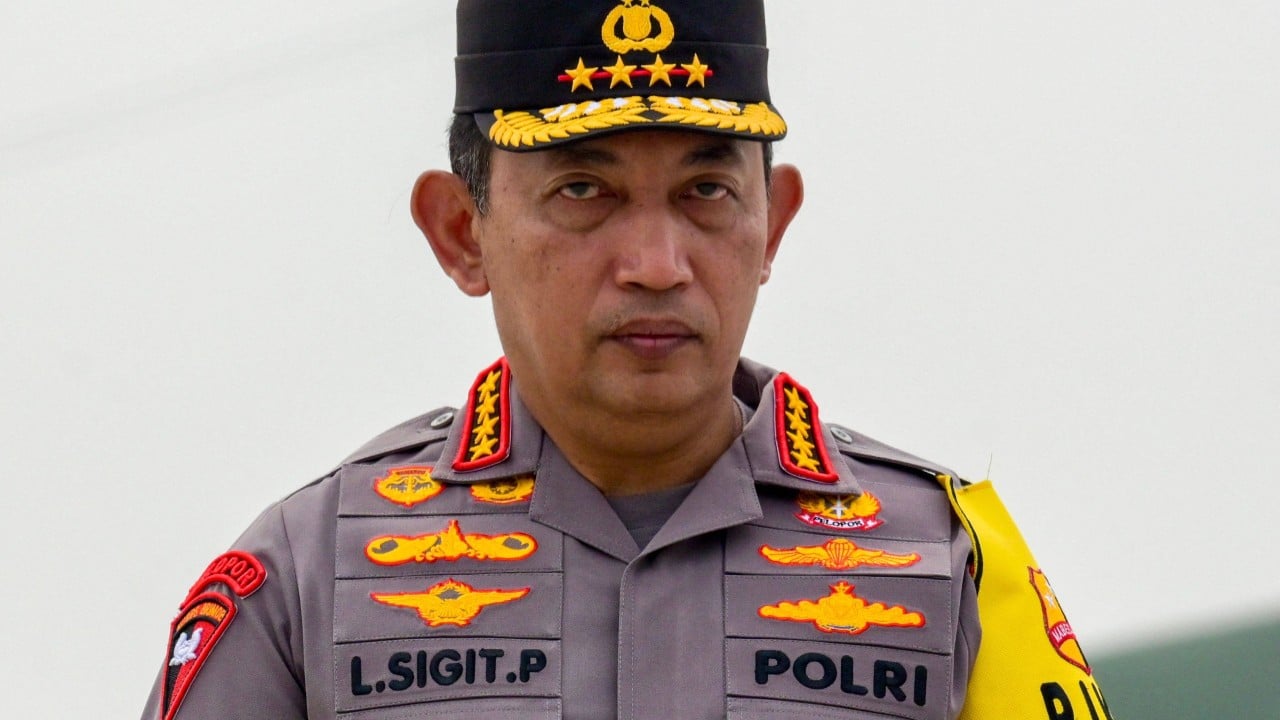
In one of the biggest scandals to hit the Indonesian National Police (Polri), President Prabowo Subianto on Wednesday sacked his chief of staff, former national police chief Listyo Sigit Prabowo, after his arrest for allegedly wiretapping the president, cabinet ministers, politicians and journalists.
The government raised the stakes on Wednesday when presidential spokesman Prasetyo Hadi addressed reporters in Jakarta, warning that the surveillance could amount to “treason” and endanger state security.
“What was done may have fallen into the category of being considered as leading to treason,” Prasetyo said.
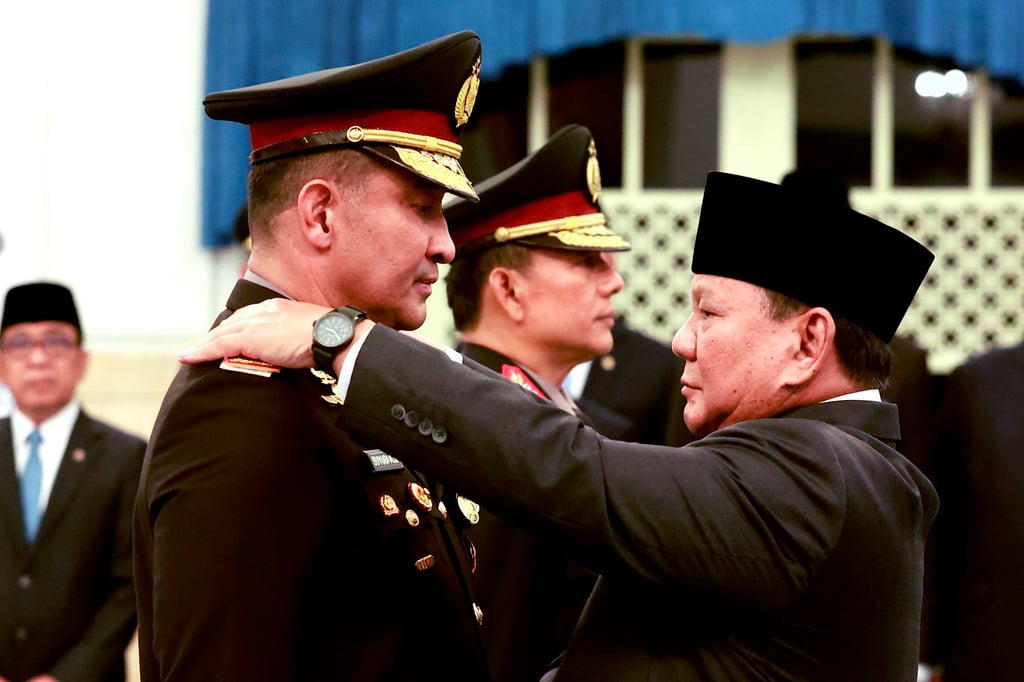
Listyo served as national police chief from 2021 under former president Joko Widodo, better known as Jokowi, before Prabowo replaced him on October 1 and appointed him presidential chief of staff the same day.
Observers say the scandal could expose a widening rift between Prabowo and his predecessor. They also warn that the political fallout could cut both ways, given the former police chief’s long-standing ties to both leaders.
Two other high-ranking police officers – Inspector General Ahrie Sonta Nasution, a former adjutant to the president, and Inspector General Eko Hadi Santoso – have also been named suspects in the case.
At a late-night news briefing on Tuesday, Criminal Investigation Agency chief Asep Safrudin said the trio were questioned over the “non-procedural use and access to the interception management system”.
Police said the suspects could face charges over illegal interception, unauthorised access to electronic systems and the deletion of electronic information, offences carrying maximum prison terms of up to 10 years.
“Between 2025 and 2026, our internal investigation alerted us to several phone numbers being entered into the system illegally, as they were unconnected with any official investigation,” Asep said.
Asep added that the suspects had ordered the deletion of surveillance logs in October: “They sought to scrap the files to leave no trace behind of their illegal activities.”
At a separate briefing, Yusril Ihza Mahendra, the Coordinating Minister for Law, Human Rights, Immigration and Correctional Institutions, called the case “a serious matter for the nation” that was “conducted against the highest office in the land”.
Yusril confirmed that Prabowo had been fully briefed.
Muradi, a professor of political and security studies at Padjadjaran University and a former adviser to two national police chiefs, told This Week in Asia that the arrest of the three police officials signalled part of a “general culling” of the vestiges of Listyo’s lingering influence within the police force by new chief Suyudi Ario Seto.
“Their transgression in tapping the president and others [could be] real, but it is essentially an ongoing multilayered clean-up by Suyudi to consolidate his command of the force,” Muradi said.
On October 2, his first full day in office, Suyudi ordered a reshuffle affecting 88 senior and mid-ranking police officers. He followed that with another major reshuffle on November 2 involving 264 senior and mid-ranking officers.
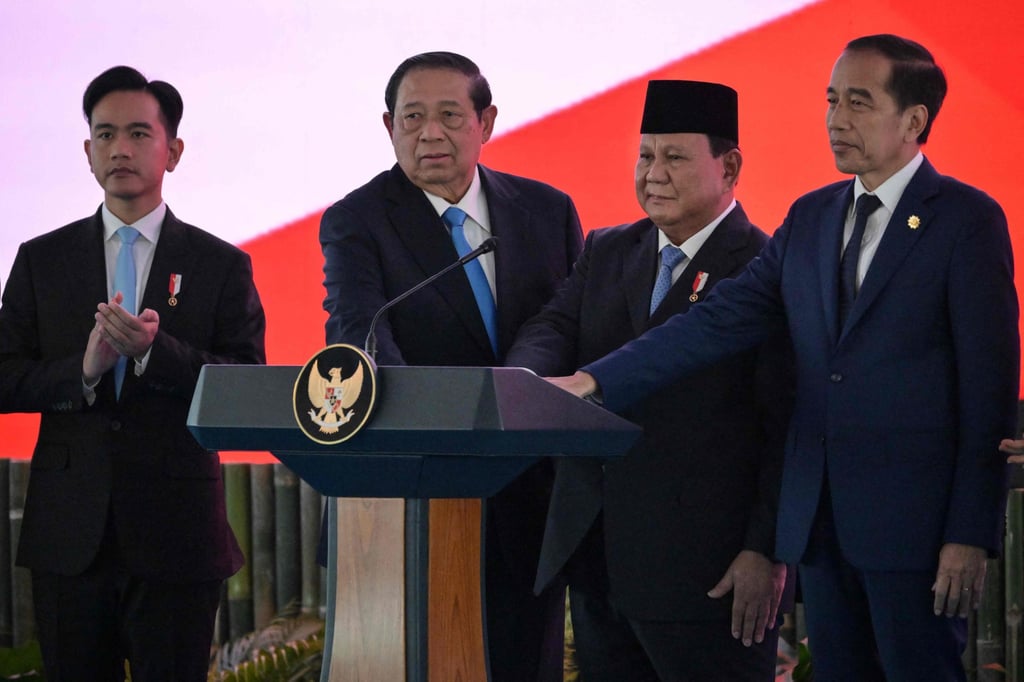
Listyo’s long-standing links to Jokowi have fuelled speculation among analysts over whether the case could deepen tensions between the former president and Prabowo.
Rendy Pahrun Wadipalapa, a political scientist at the National Research and Innovation Agency, said: “Listyo’s arrest reads less as a legal matter and more as an open rupture between Prabowo and the Solo [Jokowi’s] camp.”
However, according to Rendy, the scandal was a double-edged sword, since Listyo was widely seen as playing a key role in Prabowo’s 2024 campaign with running mate and Jokowi’s son Gibran Rakabuming Raka, now the vice-president.
“Whatever comes out of this case may embarrass Prabowo as much as Jokowi.”
Political fallout
The surveillance scandal has already reverberated through Indonesia’s political establishment. The Indonesian Democratic Party of Struggle (PDI-P), the only party in parliament outside Prabowo’s ruling coalition, voiced outrage over the incident.
“This exposé should become the momentum to push for further investigation into possible abuse by law enforcement agencies against civil society figures, government critics and journalists,” said PDI-P secretary general Hasto Kristiyanto.
Muradi said the situation marked a tipping point in relations between Prabowo’s “Kertanegara camp” – named after his private residence in South Jakarta – and Jokowi’s “Solo camp”.
“Listyo was a crucial asset for Jokowi and with his decimation comes the diminishment of Jokowi’s influence as well.”
Rendy noted that the scandal also presented Prabowo with a political dilemma: “Letting it slide may help preserve his ties with Jokowi but on the other hand, only a weak president lets his wiretappers walk free.”
The scandal comes at a precarious moment for the president, whose domestic standing has been tested by slowing economic growth, a looming market downgrade and sustained public demonstrations over haze pollution.
Recent polling has pointed to a sharp decline in Prabowo’s public standing as he marked two years in office last month.
An SMRC survey conducted in July found that 51.1 per cent of respondents approved of his performance, down from 81.2 per cent in November 2025, while 46.9 per cent said they were dissatisfied.
Prabowo’s weakened state presented Indonesian civil society with two options, Rendy said.
“It could either become a catalyst to push harder for real changes, or they could hold back until the elite rupture runs its course,” he said.
Muradi, however, argued the shake-up might have a silver lining: “By the end of the kerfuffle, there will be no factionalism within Polri.” This, he continued, could pave the way for a “more professional” police force.
KioskNews shows a cleaned-up reading view extracted from the publisher’s page — the original always lives on their site, not ours.