Why a midterm mauling for Trump will not bring Asia trade relief
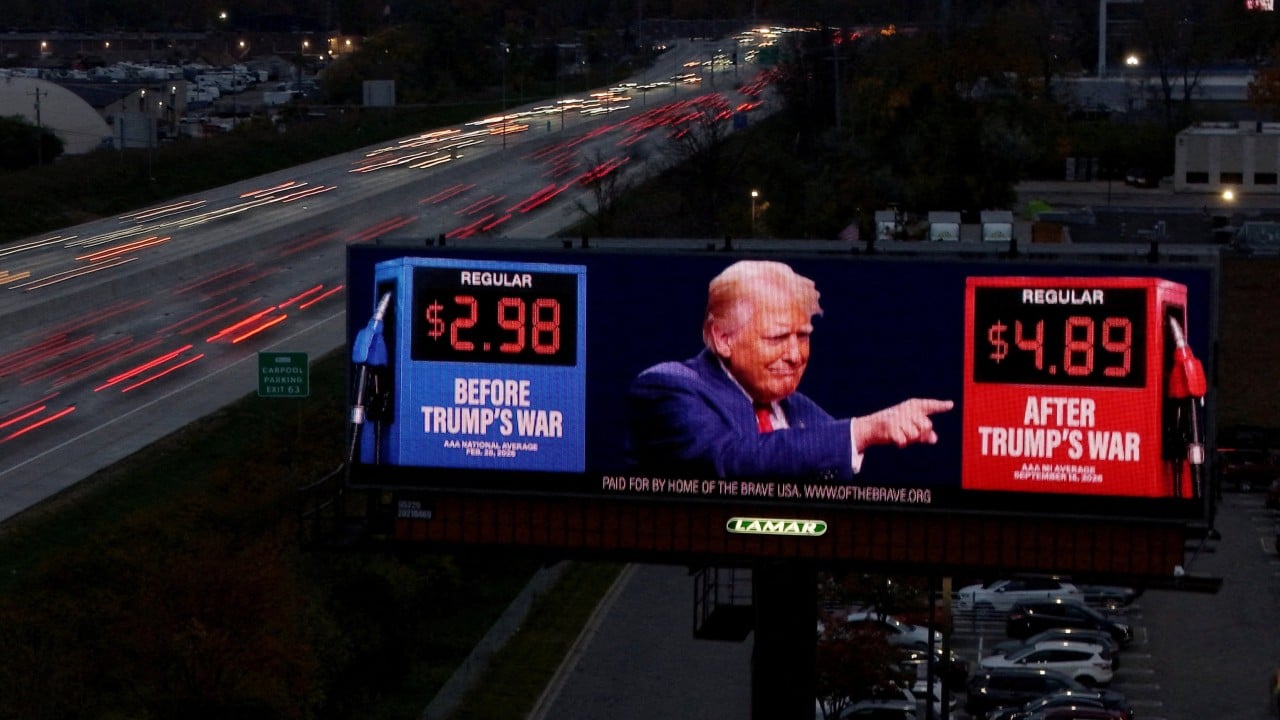
Since returning to the White House in January last year, US President Donald Trump has upended the global trading order with his scattergun approach to tariffs and launched a war on Iran that sent oil prices soaring.
On Tuesday, American voters hurting from nagging inflation and the high cost of living that have defined Trump’s second term have the opportunity to deliver their verdict on his Republican Party in the midterm elections.
Polls suggest that the Republicans, who currently control both chambers of Congress, may lose the House of Representatives to the rival Democratic Party, while control of the Senate remains a toss-up.
Yet even if Trump’s party suffers a midterm mauling, analysts caution that Asia needs to brace for further trade turbulence.
“Should the Republicans lose one or both houses [of Congress], it is likely that there will be action taken to limit President Trump’s ability to unilaterally conclude trade agreements, which in turn would weaken the US bargaining position,” said Jamus Lim, an associate professor of economics at ESSEC Business School.
“However, it should be kept in mind that executive powers can still be applied.”
Constitutionally, the US Congress has the power to regulate foreign commerce and levy tariffs, but the current legislature has shown little appetite to reassert its authority, leaving Trump free to bypass the need for legislative approval through the use of executive actions and emergency statutes.
Few Asian governments have successfully entered into legally binding, fully operational trade commitments with the second Trump administration since he first launched his so-called Liberation Day “reciprocal” tariff regime in April last year.
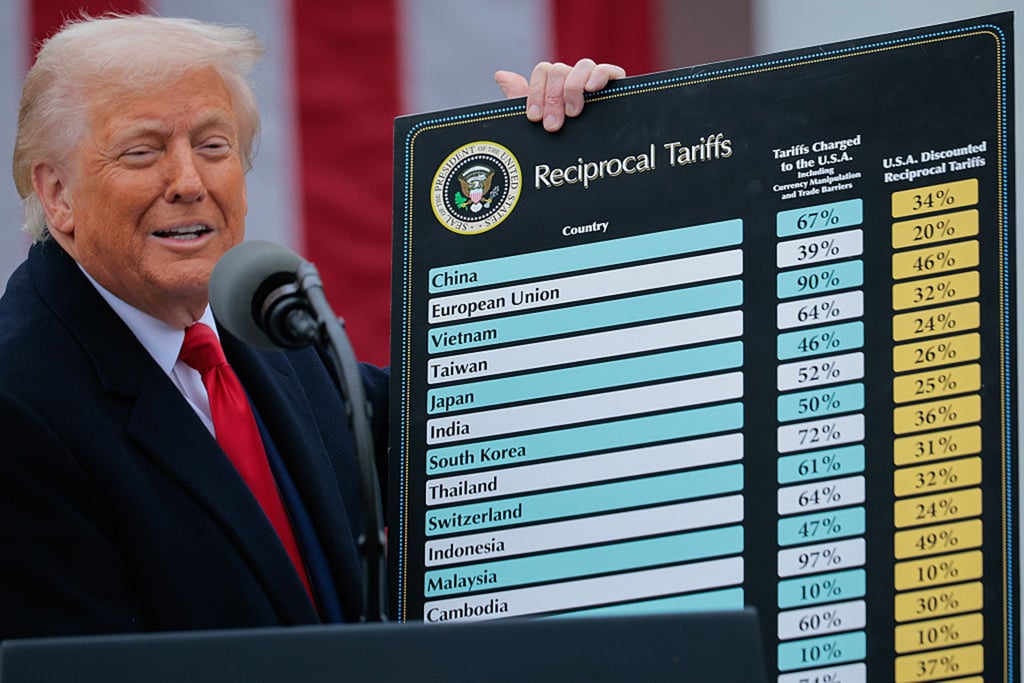
Instead, the White House has treated some of these agreements – such as those reached with Malaysia and Indonesia – as executive-led bilateral pacts, while others – such as with Thailand and Vietnam – have been explicitly framed as “frameworks” or memorandums of understanding.
A Supreme Court ruling in February this year that struck down the legal basis for Trump’s April 2025 tariffs further muddied the waters.
While a Democratic-controlled Congress could, in theory, pass legislation to repeal or block specific tariffs, any such bill would require a two-thirds supermajority in both chambers to overcome a presidential veto, presenting a near-insurmountable hurdle based on current polling.
“Moreover, the Democrats have traditionally been less pro-free trade than the Republicans,” Lim said, seeing this as further limiting “moves towards trade liberalisation”.
Still, he said both political parties had an incentive to get “affordability under control” and could take aim at “tariff and other commercial policy” to achieve this.
Manufacturing costs in many South and Southeast Asian nations, including India, Vietnam, Indonesia and Malaysia, are significantly lower than those in the United States, which, as the world’s largest importer of goods and services, remains a top market for many of Asia’s exporting nations – though trade realignments and growing intra-Asian demand have increasingly provided them with an alternative.
‘Executive domination’
Should the Republicans lose both the Senate and the House, Trump would likely resort to “high-powered executive domination” or ruling by fiat, according to Vivek Mishra, deputy director of strategic studies at India’s Observer Research Foundation think tank.
This could spur him to return to his punitive tariff campaign against nations that have high trade deficits with the US or flex his executive authority by launching further strikes on Iran – adding to the months-long energy crisis afflicting Asian energy importers, Mishra said.
Since the Iran war began in late February, benchmark Brent crude has shot up from around US$70 per barrel to more than US$104 as of Tuesday morning, while global spot prices for liquefied natural gas have almost tripled.
Biswajit Dhar, a distinguished professor of economics at New Delhi’s Council for Social Development, likewise expects Trump to double down on punitive tariffs, call for the reshoring of manufacturing and push for greater foreign investment in the US in the final two years of his second term.
He will become even more aggressive because he will have a point to prove
“He will become even more aggressive because he will have a point to prove,” Dhar said, further noting that Trump’s norm-busting musings about a constitutionally barred third term in office would require him “to become ultranationalist”.
Asian nations would be best served by continuing their emphasis on trade diversification rather than pinning their hopes on more favourable US trade policies in future, Dhar said.
Uday Chandra, a visiting professor of political science at India’s Ashoka University, said a hostile US Congress could complicate Trump’s domestic agenda, investigate his administration’s policies and constrain government funding.
But given the difficulties of overcoming a presidential veto, the effect even a sizeable midterm loss for the Republicans might have on Trump’s trade policy remains an open question.
03:00
The global impact of the coming US midterm elections under Donald Trump
“Much would depend, of course, on whether Republicans begin to distance themselves from a lame duck president, particularly as attention shifts towards the 2028 election,” Chandra said.
“Asian governments should recognise that the unpredictability of American economic policy is unlikely to disappear with Trump’s departure.”
KioskNews shows a cleaned-up reading view extracted from the publisher’s page — the original always lives on their site, not ours.