Castro tells Duterte camp: Law allows gov’t to extradite accused to ICC
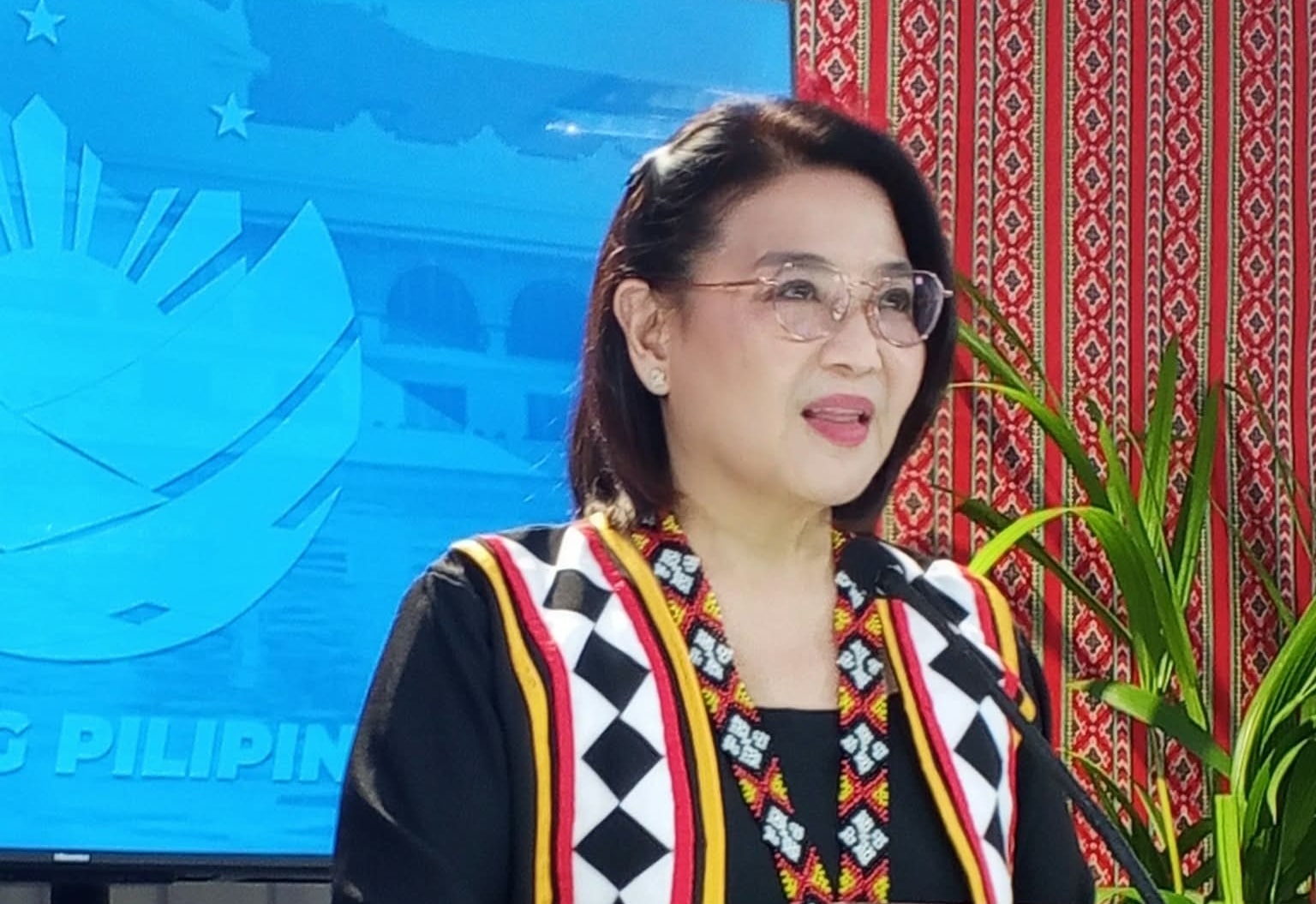

MANILA, Philippines — Malacañang reminded the camp of former president Rodrigo Duterte that a law allows the Philippine government to extradite individuals accused of crimes against humanity to international tribunals if the international body has begun prosecuting such crimes.
During a press briefing in Baguio City on Thursday, Palace press officer and Undersecretary Claire Castro was asked to comment on the statements made by Duterte’s daughter, Vice President Sara Duterte, regarding the Supreme Court (SC) decision to dismiss the petitions for writs of habeas corpus.
READ: ‘Beyond Court’s powers’: SC junks Rodrigo Duterte habeas corpus bids
Article continues after this advertisement
The younger Duterte said on Wednesday that the petitions for writs of habeas corpus—which, if granted, would have compelled authorities to produce her father—should not have been dismissed because no foreign court, such as the International Criminal Court (ICC), should stand above Philippine sovereignty.
FEATURED STORIES
NEWSINFO
NEWSINFO
NEWSINFO
However, Castro pointed to Republic Act No. 9851, or the Philippine Act on Crimes Against International Humanitarian Law, Genocide, and Other Crimes Against Humanity, particularly Section 17.
“So, kung sovereignty ang pag-uusapan, tandaan po natin ang RA 9851, kung saan ang Section 17 na puwedeng i-surrender sa international tribunal ang isang accused or respondent na inaakusahan ng crime against humanity, genocide, or the like ay nasa batas po natin,” Castro said.
(So, if sovereignty is the topic, let us remember RA 9851 wherein Section 17 states that we can surrender to an international tribunal a person or a respondent accused of committing any crime against humanity, genocide or the like, which is in our law.)
“At noong ito ay naging batas ay wala tayong anumang question sa nasabing batas, kung isu-surrender man ang sinuman sa international tribunal; hindi pinag-uusapan ang sovereignty,” she added.
Article continues after this advertisement
(And when this became a law, we did not question this; there was no discussion on whether surrendering anyone to an international tribunal involves sovereignty issues.)
Castro was referring to Section 17 which states that the Philippine government can exercise jurisdiction over individuals suspected or accused of a crime defined and penalized under R.A. No. 9851, as long as one of the following conditions are met:
Article continues after this advertisement
- the accused is a Filipino citizen
- the accused, regardless of citizenship or residence, is present in the Philippines
- the accused has committed the said crime against a Filipino citizen
However, the subsequent paragraph also stated that local authorities may dispense with an investigation or prosecution of the crime “if another court or international tribunal is already conducting the investigation or undertaking the prosecution of such crime.”
Instead of probing or trying the accused, the same section states that the government may just “surrender or extradite suspected or accused persons in the Philippines to the appropriate international court, if any, or to another State pursuant to the applicable extradition laws and treaties.”
This exact provision became one of the bases for Duterte being stopped from leaving the Ninoy Aquino International Airport on March 11, 2025, resulting in his eventual transport to the Netherlands, where the ICC is based.
READ: Rodrigo Duterte camp to seek SC reconsideration of habeas corpus ruling
The former president is accused of committing the crime against humanity of mass murder due to his war against illegal drugs. While many of his supporters laud the anti-drug campaign, progressive groups called his government out for alleged human rights violations.
Castro said that because this law was accepted and not deemed unconstitutional, having accused tried by the ICC, like Duterte, would not undermine the country’s sovereignty.
“Dahil tinanggap natin, ito ay batas at nagsalita rin po ang Supreme Court noon na anumang krimen o anumang aksyon na naganap bago nag-withdraw ang Pilipinas sa ICC ay may jurisdiction ang ICC,” Castro said.
(Because we accepted this and this became a law, the Supreme Court had already said before that any crime or action done before the Philippines withdrew from the ICC still falls under the jurisdiction of the ICC.)
“So, kung tanggap natin ang RA 9851 at tayo ay dating miyembro ng ICC, hindi pinag-uusapan ang soberanya dahil tayo po mismo ay naging miyembro, voluntary naging miyembro at gumawa tayo ng batas RA 9851,” she added.
(So, if we accept this RA 9851 and we are a former member of the ICC, sovereignty is no longer a topic because we volunteered ourselves as members and we came up with a law, RA 9851.)
On Tuesday, the SC dismissed, 9-4, the consolidated petitions for a writ of habeas corpus filed by the former president’s children—his first-born, Davao City Rep. Paolo Duterte; Davao City Mayor Sebastian Duterte; and Veronica Duterte—as the ex-leader is outside the court’s coercive powers.
The majority ruled that a writ of habeas corpus, a legal remedy used to challenge unlawful detention and secure a person’s release, is strictly a domestic remedy that is enforceable only within the country.
Lawyer Paolo Panelo Jr., counsel for Veronica, said that the former president’s camp will file a motion for reconsideration seeking to overturn the SC’s initial decision.
Vice President Duterte, meanwhile, said the SC should not have “lightly” dismissed the petition as it contains issues involving life and liberty.
READ: Sara Duterte hits SC dismissal of petitions vs father’s ICC arrest
“The protection of the life, liberty, and fundamental rights of every Filipino citizen must remain paramount,” she said.
Your subscription could not be saved. Please try again.
Your subscription has been successful.
“No Philippine court should lightly dismiss a petition as moot, when the underlying issues concern national sovereignty, constitutional accountability, and the government’s duty to protect the life and liberty of every Filipino from foreign interference,” she added. /jpv
KioskNews shows a cleaned-up reading view extracted from the publisher’s page — the original always lives on their site, not ours.