They live on the same street, but their landed homes have different tenures
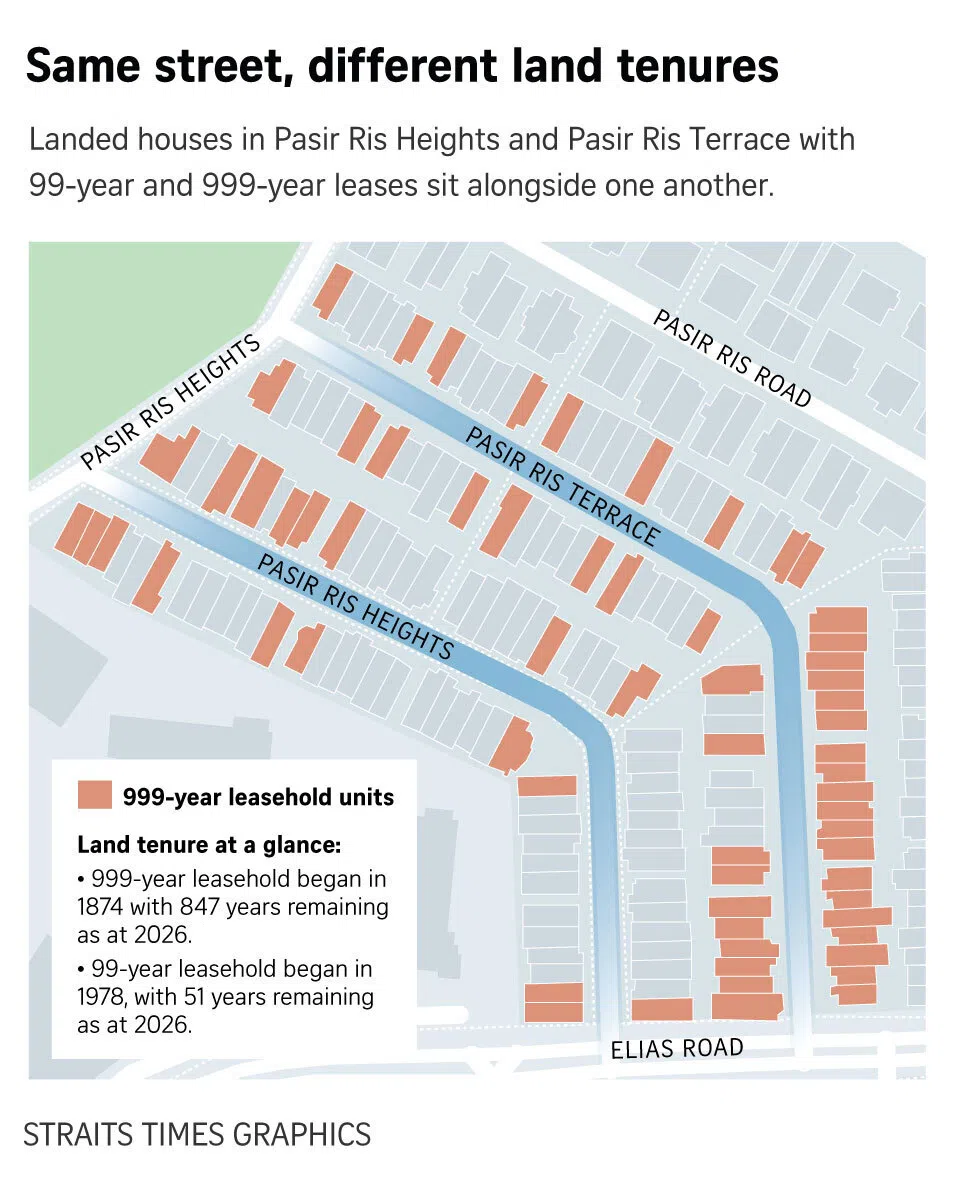
SINGAPORE – When Rajen Nair bought a new home in 1990, he could have chosen a 99-year leasehold terrace house in Pasir Ris Heights or a nearly identical one on a 999-year lease just a few doors down.
The 73-year-old paid $340,000 for the home with the shorter lease, but now regrets his decision.
“I told (my late wife) I won’t live till 100 years old. Now I regret the decision. I should have bought a 999-year leasehold,” said Nair, who now lives alone.
With just 51 years left on his lease, he worries that the value of his home will drop as the lease runs down.
Pasir Ris Heights is among 113 streets in Singapore with mixed land tenures, where houses with 99-year leases stand next to freehold homes or those with 999-year leases.
Other such streets include Andrews Terrace, Begonia Drive, Eng Neo Avenue and Holland Road Grove, according to data from property portals 99.co and SRX.
Over the past decade, prices of landed homes have generally risen faster than those of condominiums.
Latest data from the Urban Redevelopment Authority (URA) shows that landed property prices rose 2.9% from July to September 2026, outpacing a 1% gain for non-landed homes in the same period.
Year to date, landed home prices have climbed 5.1%.
The price gaps between homes on different land tenures have become more significant as 99-year leases tick down, said property experts.
As at December 2024, about 73% of landed properties in Singapore were freehold, while 14% were held on 999-year leases. The remaining 13% had shorter leases.
Land tenure is among the factors that can lead to houses of similar sizes on the same street commanding vastly different prices, experts said.
On Aug 31, two terrace houses in Andrews Terrace near Sembawang Park – both around the same size – were sold with a price difference of $1.24 million.
One was a freehold property built in 2005, sold for around $3.89 million. The other, a 99-year-old leasehold house a few units down the street built in 2008, changed hands for $2.65 million.
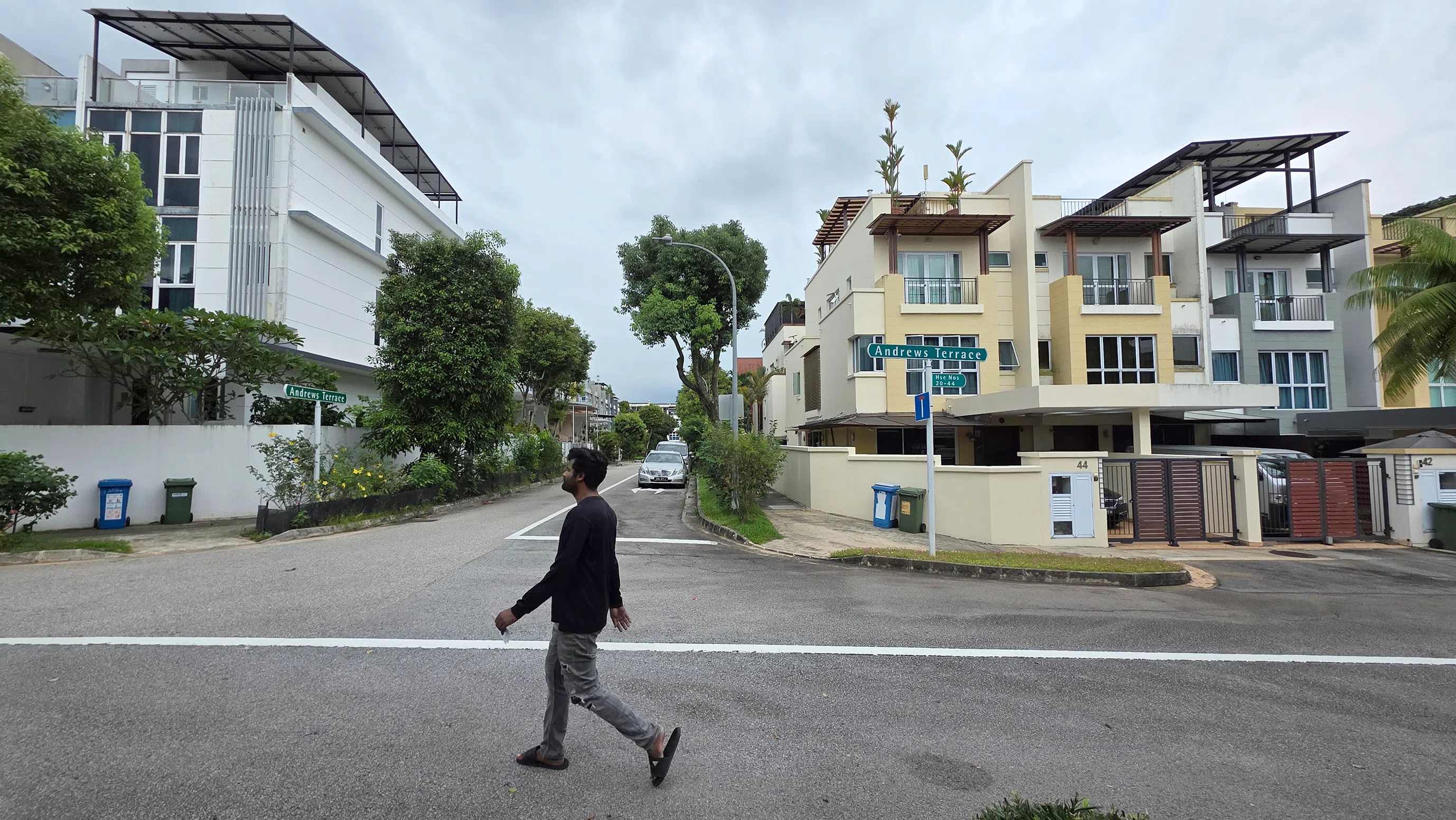
On Aug 31, two terrace houses in Andrews Terrace near Sembawang Park – both around the same size – were sold with a price difference of $1.24 million.
ST PHOTO: JOYCE LIM
Chief data and analytics officer of 99.co Luqman Hakim said his analysis shows that the price gap between freehold and 99-year leasehold houses on Andrews Terrace has widened over the years.
In 2011, developers sold new leasehold houses for between $1.85 million and $1.89 million. At the time, freehold resale homes on similarly sized land plots fetched about $1.82 million to $2 million, amounting to a premium of less than 10%.
By 2019 to 2020, the freehold premium widened to around 25% to 30%. In 2026, it rose to roughly 40% to 50%.
One caveat is that transactions record land area, not built-up floor area.
“We can’t tell whether the two houses (in Andrews Terrace) differ in number of storeys, attic or basement space, renovations or general condition. Where each house sits on the street may matter too,” said Luqman.
Why land tenures differ
Different land tenures on the same street typically trace back to Singapore’s colonial past, when land was granted under different terms.
The first 999-year leases were issued in 1826.
By the 1880s, there were about 18 types of land titles, ranging from short-term leases to permanent ownership, according to a 2018 publication by the Centre for Liveable Cities under the Ministry of National Development.
The British colonial government later moved towards shorter leases out of concern that freehold land would be costly to acquire for future development.
In 1947, it passed rules making 99-year leases the standard for new land grants.
In Pasir Ris Heights, where Nair lives, the mixed tenures date back to the estate’s development in the early 1970s.
His neighbour, former Changi MP Teo Chong Tee – who paid $118,000 for a two-storey home with a 999-year leasehold on the same street – recalled that many houses remained unsold when he moved in 1977.
“Those empty houses were later sold to HUDC (Housing and Urban Development Company), which were offered for sale on 99-year leases,” said Teo.
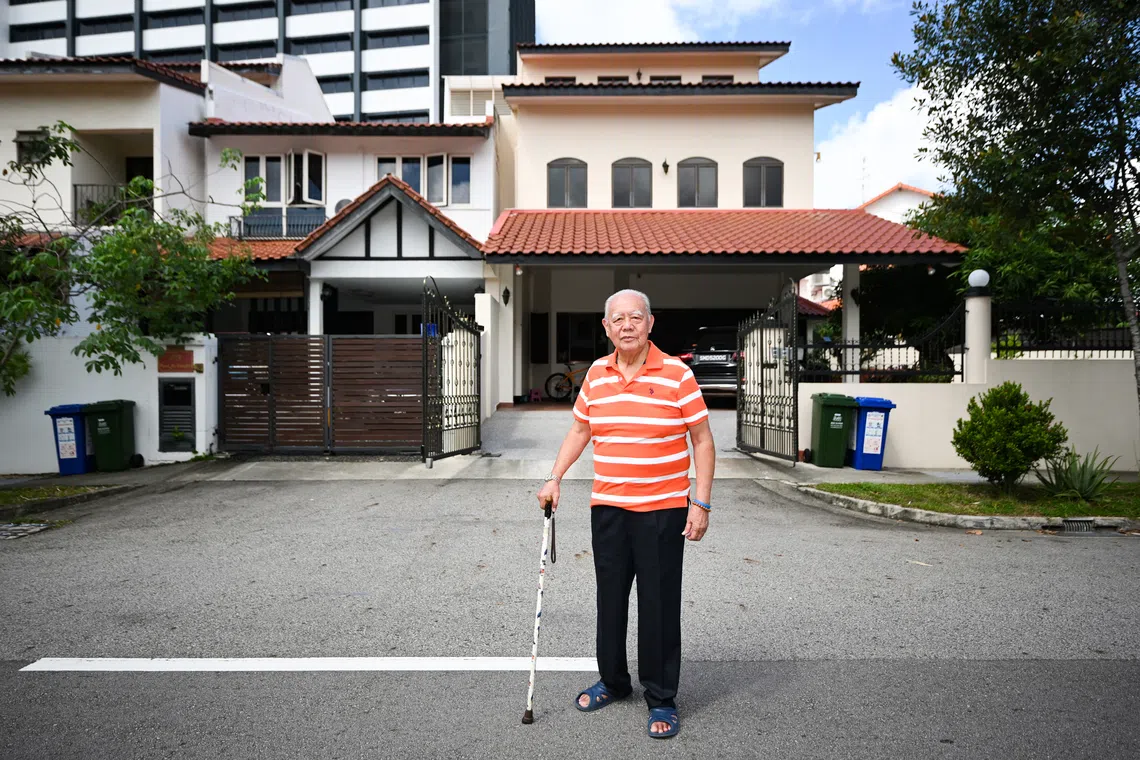
Former Changi MP Teo Chong Tee - who paid $118,000 for a two-storey home with a 999-year leasehold on the same street - recalled that many houses remained unsold when he moved in in 1977
ST PHOTO: LIM YAOHUI
The 999-year leasehold houses in the estate had leases commencing in 1874, while the 99-year leases began in 1978.
For Nair, the falling value of his 99-year leasehold property has become a concern.
The Asia sales director at a heavy machinery company, who is also vice-chairman of Pasir Ris Beach Park Residents’ Network, said he is representing residents in seeking government approval to top up their leases to a fresh 99 years.
“We are aware that we need to pay, and we hope it is an affordable amount,” said Nair.
“Many residents regard their homes as retirement nest eggs, which they may eventually sell or pass on to their children.”
Nair, who has a son, 41, and a daughter, 38, said his children have suggested that he move to a condo, but he is reluctant.
“I have lived here for 35 years. I know everyone here. It’s like living in a kampung.”
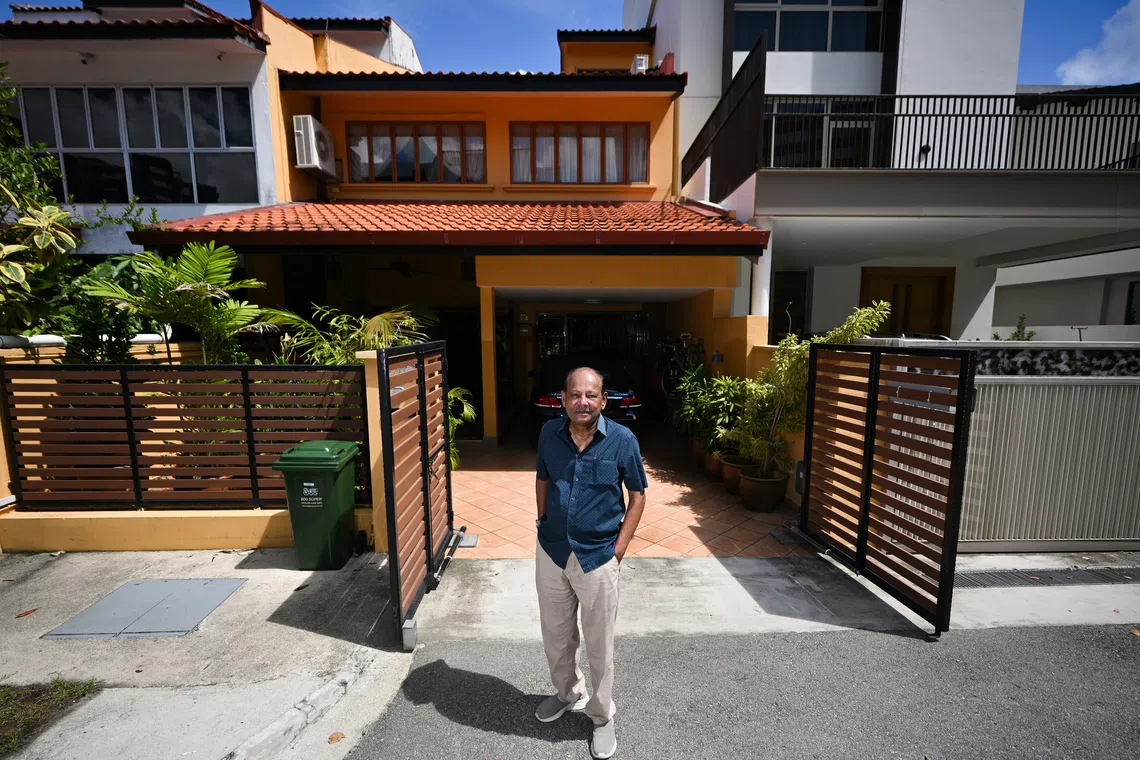
Rajen Nair paid $340,000 for a home with the shorter lease, but now regrets his decision.
ST PHOTO: LIM YAOHUI
He added that he is unsure whether he would sell his property in the future.
Retired photojournalist Mohd Ishak, who lives in a 99-year leasehold terrace house opposite Teo, said he has enjoyed living in the estate for more than 20 years.
The 66-year-old retiree said he chose the spot for its peaceful surroundings and proximity to the beach.
Ishak paid $645,000 for his terrace house in 2007. At that time, a comparable freehold or 999-year leasehold landed home cost about $300,000 to $400,000 more, he recalled.
“I like to stick to my budget. I felt like I was paying an HDB price for a landed property,” said Ishak, who spent another $80,000 on renovations.
Sing Tien Foo, provost’s chair professor of real estate at NUS Business School, said land tenure should not affect how home owners use and enjoy their properties, provided the remaining lease is long enough for their needs.
“Unless they are very old leasehold properties with a short remaining lease, in which case the decaying value will set in, and investment value will diminish,” said Sing.
He noted that while freehold properties may command a premium for their scarcity and potential redevelopment value, they are not immune to compulsory acquisition.
Freehold land can be reduced over time through redevelopments and amalgamated sites, added Sing.
KioskNews shows a cleaned-up reading view extracted from the publisher’s page — the original always lives on their site, not ours.