OpenAI to put invisible watermark on ChatGPT text in the EU, Malaysians won’t get it by default
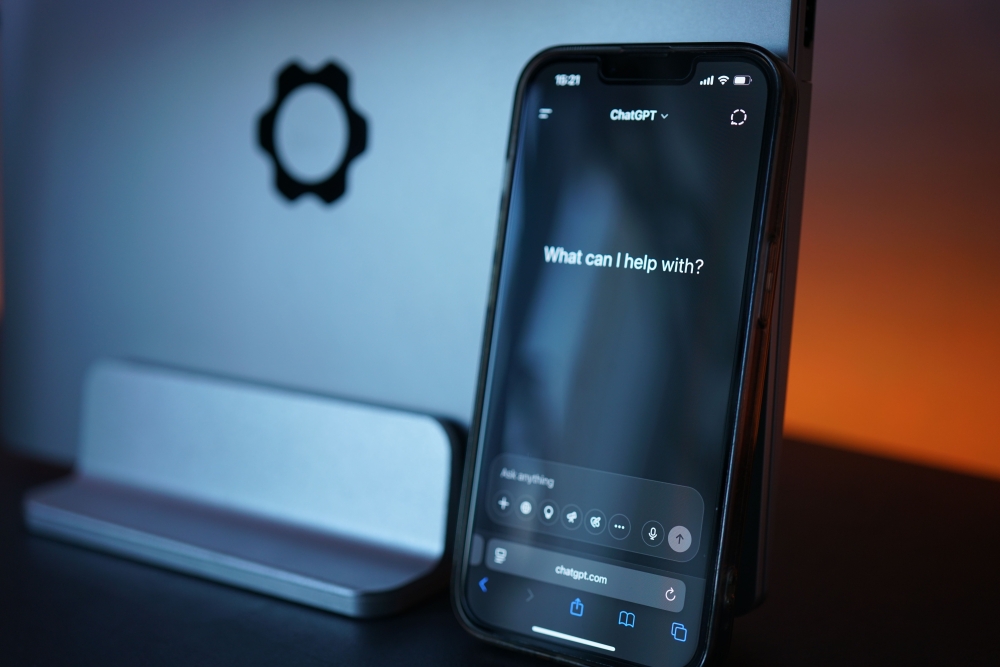

OpenAI announced on October 5, 2026 that it will begin adding an invisible watermark to ChatGPT text in the EU over the coming weeks, but not by default elsewhere, including Malaysia. — Pexels pic
By Malay Mail
First Published: Monday, 12 Oct 2026 12:40 PM MYT
KUALA LUMPUR, Oct 12 — Picture two university students asking ChatGPT to draft the same assignment summary, one in Petaling Jaya and the other in Munich.
Both paste the text into their papers with only a few tweaks. The Munich student’s wording would carry a hidden statistical pattern that a special detector could later pick up, but the Malaysian’s would not.
That is the gap created by OpenAI’s plan to add an invisible watermark to text generated by ChatGPT and Codex only in the European Union, which the company announced in a blog post today to comply with the bloc’s new rules on AI-generated content.
EU-only for now
The watermark will roll out over the coming weeks to eligible ChatGPT and Codex users on all plans in the EU, and OpenAI said it is not making text watermarking a global default at launch.
The EU AI Act’s transparency rules, which took effect on August 2, require AI companies to mark AI-generated content in a way that other systems can identify.
Malaysian developers using OpenAI’s API can opt in to watermarked text for select models from today, although the feature is off by default.
OpenAI said it is also working with cloud partners to offer watermarking for its model outputs accessed through their services in the coming weeks.
How it works
The watermark is not a visible symbol but works by subtly shaping the model’s word choices, leaving a pattern readers cannot see and a detector can.
OpenAI’s method, called textGrain, uses a secret key to sort the model’s next-word predictions, and hundreds of these nudges add up to a signal that a detector can read using only the text and the key.
Because the signal lives in the words themselves, it travels with the text when it is copied and pasted.
OpenAI said the watermark does not identify the user, and that it saw no meaningful change in its models’ performance with it switched on.
Easy to weaken
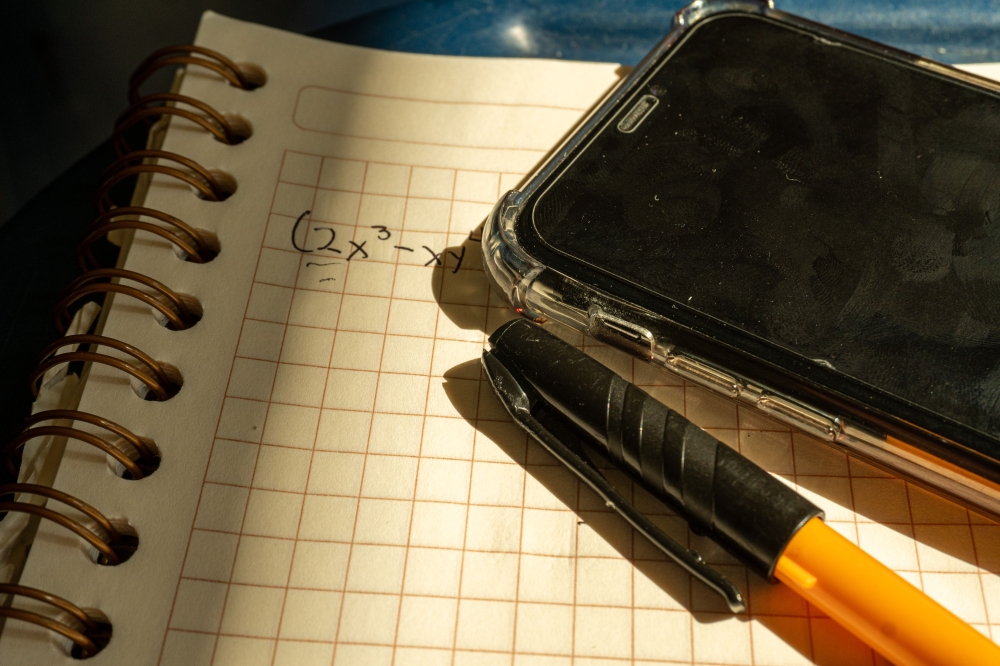
The watermark is far from foolproof, and OpenAI’s own tests, including to answers for maths questions, show how easily it can be weakened. — Pexels pic
The watermark is far from foolproof, however, and OpenAI’s own tests show how easily it can be weakened.
In one test on 400-token passages, replacing 10 per cent of words with synonyms cut detection from about 92 per cent to 66 per cent, while replacing 25 per cent of words dropped it to 17 per cent.
Short passages, mathematics answers and translated text are also harder to detect, with the detector flagging about 80 per cent of 200-token passages compared with about 95 per cent of 400-token ones.
Citing these limits, OpenAI will initially grant detector access only to approved researchers and expert organisations, who can apply from today.
That means students and teachers will not be able to check text themselves for now.
What a watermark can’t tell you
OpenAI also cautioned that a missing watermark “does not prove human authorship”, as the text may be too short, heavily edited, translated or produced by another company’s AI.
Even when a watermark is found, it only indicates that an OpenAI system generated or processed part of a passage, and says nothing about how much human judgement or creativity went into it.
In practical terms, the rollout affects eligible ChatGPT and Codex users in the EU, developers worldwide who choose to switch the feature on, and researchers granted detector access.
Who else is doing it
OpenAI is not the first AI company to act on provenance, though text is the harder frontier.
Google already embeds its SynthID watermark in content from its own tools across text, images, audio and video, and OpenAI itself already marks images and audio with SynthID and Content Credentials, with a public verification tool at openai.com/verify.
Meta uses its own Content Seal watermark for material made with its tools, while Microsoft’s Copilot and Adobe’s Firefly attach C2PA Content Credentials, a metadata standard recording how a file was made, at the point of creation.
Anthropic announced in August that it would watermark text from Claude worldwide, a decision that drew backlash from some users who argued they had supplied the instructions, context and decisions while Claude was merely a tool.
Anthropic, Google, Meta, Microsoft and OpenAI are among the companies that have committed to the EU’s code of practice on AI-generated content, but open-source models outside these industry partnerships can still produce unlabelled content, and each company’s detector generally recognises only its own marks.
KioskNews shows a cleaned-up reading view extracted from the publisher’s page — the original always lives on their site, not ours.